
What Happens When Vishnu Closes His Eyes?
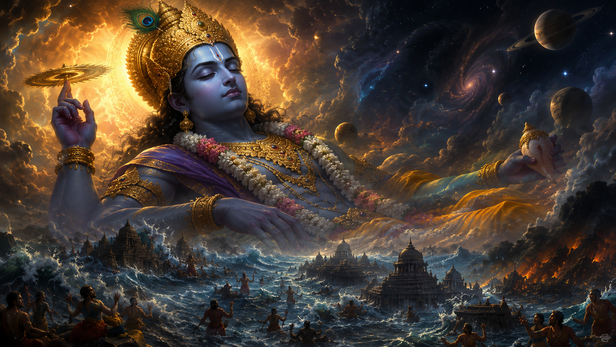
Every year, millions of devotees observe Chaturmas, the sacred four-month period when Lord Vishnu is believed to enter Yog Nidra, or divine cosmic sleep. But this raises a fascinating question. If the Preserver of the Universe is resting, who takes care of creation? Does the world continue on its own, or is there another divine plan at work? According to popular Hindu devotional traditions, each phase of Chaturmas is associated with different deities who bless and guide the world through sacred festivals. The story is both spiritual and deeply symbolic.
The Beginning of Chaturmas
Chaturmas begins on Dev Shayani Ekadashi, when Lord Vishnu is believed to enter Yog Nidra on the cosmic serpent Sheshnag. Spiritually, this period symbolizes reflection, discipline, and inner transformation rather than inactivity. Many devotees observe fasting, avoid auspicious ceremonies, and dedicate more time to prayer and self-improvement. The belief reminds us that even divine rest carries a higher purpose in the cosmic order.
Why Every Festival Has a Divine Purpose
As Chaturmas unfolds, India celebrates a series of sacred festivals. Guru Purnima honors spiritual teachers. Shravan is dedicated to Lord Shiva, Janmashtami celebrates Lord Krishna, Ganesh Chaturthi welcomes Lord Ganesha, Pitru Paksha remembers ancestors, Navratri worships Goddess Durga, and Diwali honors Goddess Lakshmi. According to popular devotional belief, these celebrations symbolically highlight the divine qualities needed to guide humanity during Vishnu's sacred rest.
The Symbolism Behind Each Deity
Each deity worshipped during Chaturmas represents a different life lesson. Lord Shiva teaches detachment and inner strength. Lord Krishna inspires wisdom and devotion. Lord Ganesha removes obstacles and grants clarity. The Pitrs remind us of gratitude toward our ancestors. Goddess Durga symbolizes courage, while Goddess Lakshmi represents prosperity earned through righteousness. Rather than replacing Lord Vishnu, these divine forms remind devotees of the many expressions of the same Supreme Reality.
The Spiritual Journey of Four Months
Many saints describe Chaturmas as a spiritual retreat for the soul. During these months, devotees often reduce worldly distractions, practice charity, chant sacred mantras, and strengthen their connection with God. The sequence of festivals gradually leads the mind from discipline and devotion to gratitude, victory over negativity, and finally divine awakening. Every celebration becomes another step in this inner spiritual journey.
The Awakening on Dev Uthani Ekadashi
The four-month period concludes with Dev Uthani Ekadashi, when Lord Vishnu is believed to awaken from Yog Nidra. This day is considered highly auspicious, marking the return of weddings, major religious ceremonies, and new beginnings. Spiritually, it symbolizes awakening from ignorance and embracing a life guided by faith, wisdom, and righteous action.
The Real Message Behind Chaturmas
The deeper meaning of Chaturmas is not about asking who controls the universe while Lord Vishnu rests. It is about understanding that divine wisdom appears in many forms throughout life. Every festival, every deity, and every ritual teaches a different virtue needed for spiritual growth. Whether viewed through scripture or devotional tradition, Chaturmas reminds us that true awakening begins when we transform ourselves. And perhaps that is the greatest mystery hidden within these sacred four months.
Unlock insightful tips and inspiration on personal growth, productivity, and well-being. Stay motivated and updated with the latest at My Life XP