
What Is the Mystery Behind Applying Diya Kajal on Diwali? The Old Belief Explained
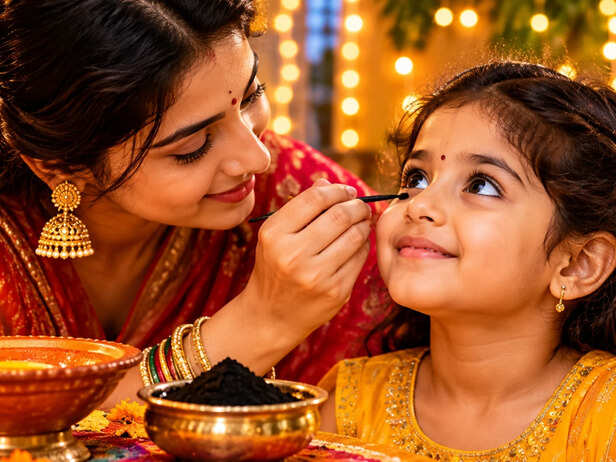
Diwali is celebrated on Amavasya, the new-moon night of the Hindu month of Kartik. While most people associate the festival with worshipping Goddess Lakshmi, lighting lamps and welcoming prosperity, certain households also observe an unusual custom involving kajal.
In this tradition, women collect the black soot deposited by an oil or ghee lamp and use it to prepare kajal. The kajal is sometimes applied to the eyes of family members, including children.
Why Do People Apply Kajal Made From Diwali Diyas?
The practice is known in some accounts as Amawas ka Kajal, which roughly translates to the lampblack of the new-moon night.Unlike ordinary kajal used as eye makeup, this particular preparation was traditionally associated with protection. People believed that applying it could help protect family members from nazar, or the evil eye.However, this is a traditional belief rather than a scientifically established fact.
What Is the Old Belief Behind Amawas Ka Kajal?
The interesting part of this custom is its connection with the new-moon night.According to historical descriptions of North Indian customs, the soot collected from an oil lamp on Diwali's Amavasya was believed to have special protective qualities.An old account in the book Hindu Fasts and Feasts describes women preparing Amawas ka Kajal on Diwali. The lampblack was believed to protect people against problems associated with the evil eye.
Another historical account, Folklore of Northern India, also mentions the custom of preparing new-moon lampblack and keeping it as a protective charm against the evil eye throughout the following year.This explains why the tradition was considered different from everyday kajal application. The timing of its preparation was believed to give it special significance.
For families following this custom, it was not simply about enhancing beauty. It was about seeking protection and well-being for loved ones.
Why Was Diwali's New-Moon Night Considered Special?
Diwali falls on Amavasya, when the moon is not visible in the night sky. In Hindu traditions, this night holds special religious significance and is associated with several rituals.People light rows of diyas to brighten their homes and welcome Goddess Lakshmi. The lamps also symbolise the victory of light over darkness and good over evil.
The tradition of preparing Amawas ka Kajal was connected to this same night.The belief was that the lampblack collected on this particular occasion could serve as a protective charm. Some families preserved it and used it beyond Diwali.It is important to understand that this custom is not a compulsory part of Lakshmi Puja or a ritual followed uniformly across India. Its practice and meaning differ from one family and region to another.
How Was Kajal Traditionally Made From Diya Soot?
The traditional method involved collecting the black deposit produced by an oil lamp.A small metal plate or another suitable surface was held above the flame so that the soot could settle on it. Once enough black residue accumulated, it was collected.
In some household traditions, this lampblack was mixed with ghee to prepare a paste-like kajal.The preparation was associated with Diwali night, particularly the Amavasya period.However, the ingredients and methods were not identical everywhere. Some families followed their own inherited practices, while others may have heard about the custom without continuing it.Today, the tradition is less commonly seen in many households, although some families still remember it through stories passed down by older generations.
Is Diya Kajal Really Protective Against the Evil Eye?
The belief that Diwali kajal protects against the evil eye comes from traditional customs and folklore.In many Indian households, kajal has historically been associated with beauty and protection. Applying a small black mark or kajal to children was also linked to the belief that it could prevent unwanted attention or negative influences.
Amawas ka Kajal carried a similar cultural meaning, with the additional belief that its preparation on Diwali night made it special.However, there is no scientific evidence that lamp soot or homemade kajal can prevent the evil eye, remove negative energy or protect someone from illness.It is best understood as a cultural practice rooted in traditional beliefs rather than a proven protective treatment.
Should You Apply Kajal Made From Diya Soot to Your Eyes?
Although this tradition has an interesting cultural history, it is important to consider eye safety.Soot collected from a burning lamp is not manufactured or tested as an eye cosmetic. It may contain impurities and combustion residues, and its safety for use around the eyes cannot be guaranteed.
There is also a difference between soot-based homemade kajal and traditional commercial kohl or surma. Some traditional eye cosmetics have been found to contain high levels of lead and other heavy metals.The US Food and Drug Administration has warned about the risk of lead exposure from certain products sold as kohl, kajal and surma.Therefore, people should avoid putting homemade diya soot directly into their eyes, particularly when it has not been tested for cosmetic safety. Children should not be exposed to untested eye products either.You can still appreciate the cultural significance of Amawas ka Kajal without necessarily following the practice.
A Forgotten Diwali Custom That Carries an Old Belief
Diwali is filled with traditions that go beyond lighting lamps and performing puja. Some customs are connected with prosperity, others with family relationships, and a few are rooted in centuries-old beliefs about protection.Amawas ka Kajal is one such lesser-known practice. The idea of collecting lampblack on Diwali's new-moon night and preserving it as a protective charm offers a glimpse into how earlier generations connected everyday household objects with religious and cultural beliefs.While its protective powers have no scientific backing, the tradition remains an interesting part of India's diverse Diwali folklore.
Unlock insightful tips and inspiration on personal growth, productivity, and well-being. Stay motivated and updated with the latest at My Life XP.