
What Krishna Knew About Anger That We Often Forget
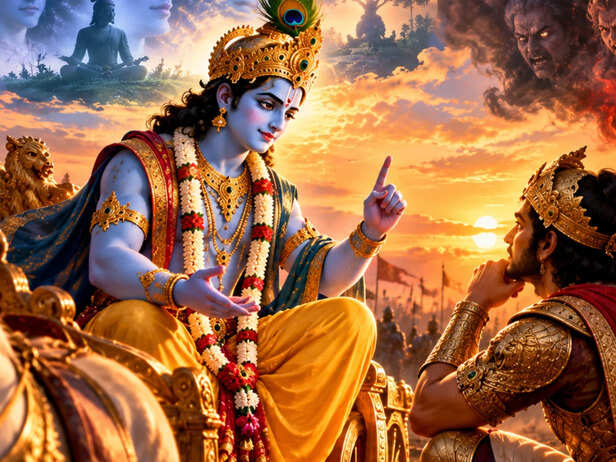
What if real strength is not about never getting angry, but knowing when anger deserves your attention? In Hindu tradition, Krishna is often remembered for his wisdom, calmness and ability to remain composed even during intense conflict. He faced powerful enemies, difficult situations and repeated insults, yet he did not react to every provocation. His story offers a powerful idea for modern life: anger itself may not be the greatest problem. Losing control because of anger can be. Sometimes, staying calm is not weakness. It is a way of protecting your judgment, your dignity and your power to choose your next action.
Krishna Understood the Power of Reaction
In everyday life, someone’s words can change our mood within seconds. A rude comment, personal insult or angry message can make us respond before we have even thought about the consequences. Krishna’s traditional portrayal offers a different approach. Instead of allowing every provocation to control his response, he remained composed and observed the situation. The important point is not that anger never appeared, but that anger did not automatically decide his actions. This distinction is powerful. When another person can instantly control your emotions through their words, they gain influence over your attention. Staying calm creates the space to choose your response instead of simply reacting.
Shishupala Tested His Patience
The story of Shishupala is one of the clearest examples of this idea. During a royal assembly, Shishupala repeatedly insulted Krishna. Instead of immediately responding with anger, Krishna remained patient. According to the Mahabharata tradition, Krishna had promised Shishupala’s mother that he would forgive a certain number of his offences. The often-cited account places the limit at 100 offences. This detail makes the story more than a simple tale of anger. It shows deliberate restraint. Krishna did not treat every insult as a reason for immediate punishment. He allowed patience to have its place while remaining aware that patience also has a boundary.
Calm Does Not Mean Weak
There is a common misunderstanding that calm people are unable to fight back. Krishna’s story challenges that idea. Remaining quiet does not necessarily mean accepting everything. Sometimes it means refusing to give another person control over your emotions. Krishna could remain patient because his actions were not driven by every passing emotion. This is an important distinction in modern life. You can disagree without shouting. You can set a boundary without insulting someone. You can walk away without feeling defeated. True emotional strength is not measured by how loudly you react. It can also be seen in the ability to remain steady when someone deliberately tries to provoke you.
The Limit Was Eventually Reached
Krishna’s patience did not mean unlimited tolerance. According to the traditional Mahabharata account, Shishupala eventually crossed the agreed limit of offences. At that point, Krishna acted decisively and used the Sudarshana Chakra, bringing the confrontation to an end. The important lesson is the difference between uncontrolled anger and deliberate action. Krishna did not react to the first insult or every provocation that followed. He waited until the boundary was crossed and then acted. In modern situations, this can translate into knowing when a conversation has become harmful, when a boundary has been repeatedly ignored or when a firm response is genuinely necessary.
Anger Can Become Your Master
Think about how quickly anger spreads today. One message leads to another, a disagreement becomes an argument, and suddenly people say things they later regret. The problem is often not the emotion itself but the loss of control that follows it. Anger can narrow our thinking and push us toward immediate reactions. Krishna’s traditional example suggests a different approach: notice the emotion without allowing it to make every decision. Before responding, ask whether the reaction will solve the problem or simply create another one. That small pause can protect relationships, reputation and peace of mind while giving you greater control over your actions.
Choose Your Battles Carefully
Not every insult deserves an answer. Not every disagreement needs to become a battle. This does not mean ignoring genuine injustice or allowing others to repeatedly cross important boundaries. It means learning to distinguish between situations that require action and situations that are simply designed to provoke you. A practical habit is to pause before responding, especially when emotions are intense. Take a breath, identify what actually happened and decide what outcome you want. If a response is necessary, keep it focused on the issue rather than the person. This simple discipline can turn anger from an impulsive reaction into a more thoughtful and controlled response.
The Real Lesson Is Self-Mastery
The most powerful lesson in Krishna’s story may be that strength is not the absence of emotion. It is the ability to remain the decision-maker even when emotions become intense. Anger can signal that something matters, but it does not have to dictate what happens next. The story of Shishupala reminds us that patience and boundaries can exist together. You can remain calm without becoming passive. You can forgive without accepting endless disrespect. And you can respond firmly without surrendering control to anger. In a world where reactions are often instant, the ability to pause, think and choose your response may be one of the strongest forms of self-mastery.
Unlock insightful tips and inspiration on personal growth, productivity, and well-being. Stay motivated and updated with the latest at My Life XP.