
What Makes Chhath Puja One of India's Most Unique Festivals?
उगऽ, हे सूरज देव, भेल भिनसरवा
अरघ के रे बेरवा, पूजन के रे बेरवा, हो
बड़की पुकारे, देव, दुनु कर जोरवा
अरघ के रे बेरवा, पूजन के रे बेरवा, हो
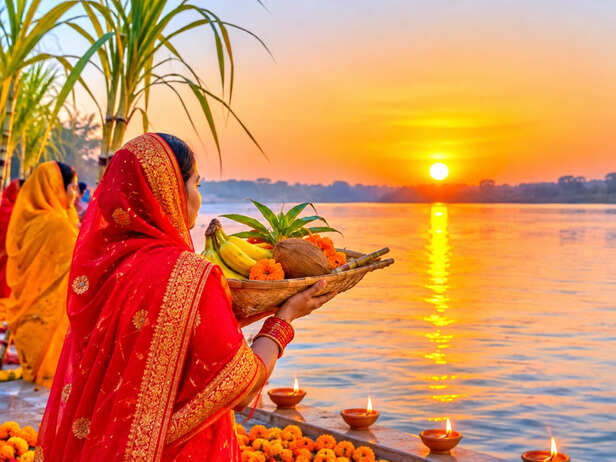
Imagine standing in a river with water reaching your waist, the earth beneath your feet and the endless sky above you. In front of you is the setting Sun, and in your hands is a bamboo basket filled with fruits and homemade offerings. There is no idol to worship, no temple to enter and no priest standing between you and your prayers. This is the beautiful simplicity of Chhath Puja. Every ritual of this festival carries a deeper connection with nature, faith and gratitude. Perhaps that is why it is called Chhath Mahaparv
A Festival That Needs No Idol or Temple
One of the most striking things about Chhath Puja is that its worship does not depend on an idol, a temple or elaborate arrangements. Devotees stand in rivers, ponds or other water bodies and offer prayers directly to the Sun God. Their faith becomes the centre of worship. There is no need for a grand structure or elaborate decoration to connect with the divine. The devotee, the rising or setting Sun and a sincere prayer are at the heart of this ancient tradition.
The Five Elements Come Together in One Prayer
Look closely at a Chhath ritual and you will find a beautiful representation of the five elements, known as Panchamahabhuta. The devotee stands with feet on the earth, surrounded by water, beneath the vast sky and open air, while the Sun represents fire and light. These five elements are traditionally understood as the foundations of the natural world and human existence. During Chhath, the devotee offers prayers while standing among these very elements, making nature an inseparable part of worship.
The Setting Sun Is Worshipped Too
Most people associate prayers to the Sun with sunrise, but Chhath Puja gives equal importance to the setting Sun. On the third day, devotees offer Sandhya Arghya as the Sun moves towards the horizon. The following morning, they return to offer Usha Arghya to the rising Sun. This tradition carries a meaningful message: even the setting Sun deserves the same respect as the rising Sun. It reminds devotees to remain grateful not only for new beginnings but also for the journey that has brought them this far.
Nature Gives the Offerings, Nature Receives Them
The offerings made during Chhath Puja have a close connection with nature. Devotees carry fruits, sugarcane, coconuts, Thekua and other traditional prasad in bamboo baskets or soops. Most offerings are prepared at home with great care and cleanliness. These are not merely items placed before a deity; they represent gratitude for everything nature provides. The devotee uses things received from the natural world to express devotion to the divine, with the river, earth and Sun serving as witnesses to the prayer.
The Divine Connection With Chhathi Maiya
Along with the Sun God, Chhathi Maiya holds a special place in this festival. In Hindu traditions, she is associated with the protection of children, family well-being and the blessings of motherhood. Some traditional accounts describe Goddess Shashthi as the sixth part or manifestation of primordial nature, known as Prakriti. This belief gives the festival another layer of meaning. Devotees seek her blessings for their families while expressing gratitude to the natural forces that sustain life.
Every Ritual Carries a Prayer of Gratitude
Chhath Puja is not only about asking for blessings; it is also about acknowledging what one has already received. Devotees observe a strict fast, prepare offerings, maintain cleanliness and stand in water for the Arghya rituals. Each act requires patience, discipline and dedication. Their prayers are often directed towards the well-being of children, family members and loved ones. The festival brings together devotion and gratitude, reminding people that human life depends on the natural world around them.
A Festival That Teaches Us to Be Grateful
Perhaps the greatness of Chhath Puja does not need grand words to explain it. Its meaning is visible in every ritual. A devotee stands between the earth and sky, surrounded by water and air, facing the Sun with offerings made from nature itself. There is a prayer, a devotee, nature and an overwhelming sense of gratitude. The setting Sun is respected, the rising Sun is welcomed and Chhathi Maiya is remembered with devotion. This is what makes Chhath Mahaparv so special. It teaches us that before asking nature for more, we should learn to be thankful for everything it has already given us.
Unlock insightful tips and inspiration on personal growth, productivity, and well-being. Stay motivated and updated with the latest at My Life XP.