
What the Mahabharata Reveals About the Pandavas' Birth May Surprise You
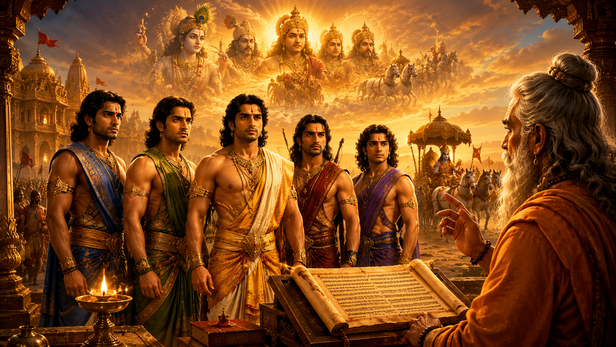
The Mahabharata is filled with stories that go far beyond battles and kingdoms. Many of its most fascinating lessons lie in the traditions, customs, and values of ancient India. One question that often surprises readers is this: If the Pandavas were born through divine blessings from different gods, why were they still called the sons of King Pandu? The answer lies in an ancient practice that was accepted during that era. Understanding this tradition not only explains the birth of the Pandavas but also reveals how family, duty, and lineage were viewed in Vedic society
The Mystery Behind the Pandavas' Birth
Many people know that Yudhishthira, Bhima, Arjuna, Nakula, and Sahadeva were blessed by different deities. This often creates confusion about why they are collectively called the sons of King Pandu. The Mahabharata explains that although their births involved divine intervention, they were legally, socially, and spiritually accepted as Pandu's children. Their identity was determined not only by birth but also by the accepted customs of that period.
An Ancient Tradition Called Niyoga
In ancient India, there existed a practice known as Niyoga. When a king or husband was unable to father children, he could permit his wife to have a child through a worthy sage or by divine blessing for the purpose of continuing the family lineage. The children born through this tradition were considered the lawful heirs of the husband, not of the biological father. This custom was accepted under strict religious and social guidelines during that era.
How the Kuru Dynasty Continued
After King Vichitravirya died without children, the Kuru dynasty faced the risk of ending. Following the guidance of Queen Satyavati, Sage Vyasa fathered children through Queens Ambika and Ambalika under the tradition of Niyoga. As a result, Dhritarashtra and Pandu were born, while Vidura was born through a maidservant. Although Sage Vyasa was their biological father, the children were recognized as members of the Kuru royal family and rightful heirs to the throne.
Why Pandu Could Not Have Children
King Pandu's life changed after he accidentally killed Sage Kindama while the sage was in the form of a deer. The dying sage cursed Pandu that he would lose his life if he approached his wives with the intention of having children. This curse made it impossible for Pandu to produce heirs. To preserve the royal lineage, another path had to be found, leading to one of the most remarkable events in the Mahabharata.
The Divine Birth of the Pandavas
Before her marriage, Kunti had received a powerful mantra from Sage Durvasa that allowed her to invoke any deity for blessings. With Pandu's permission, she called upon Dharma to give birth to Yudhishthira, Vayu for Bhima, and Indra for Arjuna. She later shared the mantra with Madri, who invoked the Ashwini Kumaras and gave birth to Nakula and Sahadeva. Although each child received divine blessings, all five were accepted as Pandu's sons according to the traditions of that time.
Why They Were Always Called Pandavas
The word Pandava simply means "descendants of Pandu." Ancient Hindu law recognized children born through approved traditions like Niyoga or divine invocation as the legitimate children of the husband. Pandu accepted all five sons with love and responsibility. They inherited his royal lineage, responsibilities, and place within the Kuru dynasty. Their identity was based on family, duty, and accepted tradition rather than biological parentage alone.
A Story That Explains Ancient Values
The birth of the Pandavas teaches that the Mahabharata is more than a story of war. It reflects the social customs, legal traditions, and moral values of ancient India. Practices such as Niyoga were accepted during that period to preserve family lineage and fulfill royal responsibilities. Today, these traditions are understood within their historical and cultural context. The story reminds readers that the meaning of family has always been shaped not only by birth but also by responsibility, acceptance, and dharma.
Unlock insightful tips and inspiration on personal growth, productivity, and well-being. Stay motivated and updated with the latest at My Life XP.