
Which God Should You Worship in Kali Yuga? The Answer
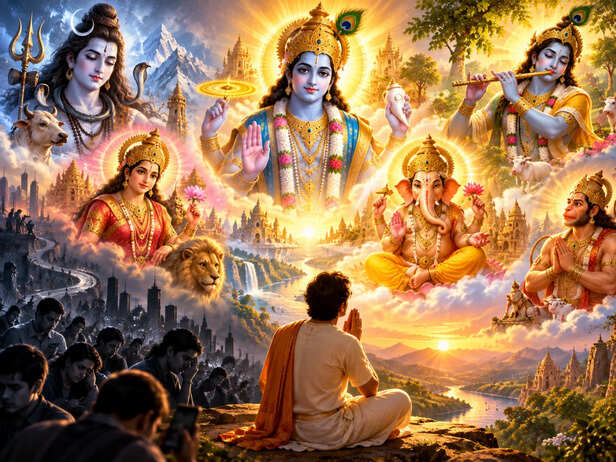
What if the spiritual practice considered most powerful in Kali Yuga is not complicated at all? The Garuda Purana describes this age as one filled with confusion, distractions and declining spiritual values. But within that warning comes a striking message. The text highlights Lord Krishna’s sankirtan, or the devotional chanting of His names and glories, as a special path for Kali Yuga.
The Age of Spiritual Confusion
The Garuda Purana presents Kali Yuga as an age in which spiritual confusion can increase and people may move away from genuine devotion. This idea feels relatable even today, when busy lives, distractions and endless information can make spiritual practice difficult. Yet the text does not leave the reader only with a warning. It points toward a spiritual practice that is simple enough to follow even in a troubled age: devotional chanting. This contrast between a difficult age and an accessible spiritual path is one of the most interesting teachings associated with Kali Yuga worship.
Why Krishna’s Name Becomes Important
The Garuda Purana gives special importance to Lord Krishna sankirtan in Kali Yuga. Sankirtan means devotional singing or chanting of the Lord’s names, qualities and divine deeds. According to this traditional teaching, the spiritual benefit that earlier ages associated with meditation, chanting or dedicated worship can be attained in Kali Yuga through Krishna naam sankirtan. This does not mean other forms of devotion suddenly become meaningless. Instead, the text highlights Krishna devotion as an especially accessible spiritual practice for an age when people may struggle to maintain lengthy or demanding religious disciplines.
The Same Goal Through a Simpler Path
The teaching becomes even more striking when the four Yugas are compared. In Satya Yuga, the text describes spiritual attainment through meditation on Lord Vishnu. In Treta Yuga, it refers to chanting or disciplined spiritual practice. In Dvapara Yuga, devoted service and worship receive emphasis. For Kali Yuga, the focus shifts to the chanting of God’s name, qualities and divine pastimes. The underlying idea is simple: as the age becomes spiritually difficult, devotion is presented through a practice that ordinary people can participate in without elaborate arrangements.
Sankirtan Is More Than Just Repetition
It is easy to think of Krishna sankirtan as simply repeating a name, but the traditional concept is broader. Sankirtan involves remembering and expressing devotion through the Lord’s name, qualities and divine pastimes. The purpose is not merely the sound of a repeated word but the feeling of remembrance and devotion behind it. This is why Krishna naam holds such importance in this teaching. Whether performed individually or collectively, devotional chanting can become a way of turning attention inward, remembering the divine and creating a regular spiritual moment amid the distractions of everyday life.
What the Four Yugas Teach Us
The comparison of the four Yugas carries a deeper message. The spiritual goal remains connected with the Divine, but the traditional texts describe different ways of approaching that goal in different ages. The Garuda Purana Kali Yuga teaching therefore places emphasis on accessibility. A person does not necessarily need an elaborate ritual setting to begin a devotional practice. Remembering Lord Krishna, chanting His name and reflecting on His qualities can become part of ordinary life. For modern readers, this makes the teaching especially easy to understand and practice without turning devotion into something complicated.
How to Practise This Today
The simplest way to apply this teaching is to create a small, regular practice. Set aside a few quiet minutes and chant Krishna’s name with attention rather than treating it as a mechanical routine. You can also listen to devotional kirtan, read about Krishna’s qualities and pastimes, or participate in a Krishna sankirtan gathering. The important point is consistency and sincere remembrance. Traditional Hindu devotion places value not only on the outward act but also on the feeling behind it. Even a short daily practice can become a meaningful spiritual pause in a busy routine.
The Kali Yuga Lesson Is Surprisingly Simple
The most memorable message of this Kali Yuga worship teaching is perhaps its simplicity. The Garuda Purana describes a difficult age, but alongside that warning it presents a path centred on remembrance, devotion and Krishna naam sankirtan. For a believer, the teaching offers a reminder that spirituality does not always have to begin with something complicated. Sometimes it begins with remembering the Divine sincerely. Whether someone follows this as a religious practice or studies it as part of Hindu spiritual tradition, the message carries emotional weight: even in an age filled with distractions, the path of devotion is presented as something anyone can begin.
Unlock insightful tips and inspiration on personal growth, productivity, and well-being. Stay motivated and updated with the latest at My Life