
Which Goddess Is Believed to Destroy Every Evil Force?
What if the warrior believed to be almost impossible to defeat still had a weakness? In the Ramayana, Meghnad, also known as Indrajit, was a formidable fighter who had defeated Indra and challenged Rama’s army with extraordinary weapons and strategic skill. Stories about fierce goddesses, powerful rituals and his eventual defeat have inspired generations of devotees.
One fascinating tradition connects Maa Pratyangira with fierce divine protection. But the most thought-provoking question is this: if divine power is so mighty, why did Meghnad still die? The answer is not simply about who had greater strength. It invites us to look at the relationship between devotion, duty and the larger story of the Ramayana.
Who Is Maa Pratyangira?
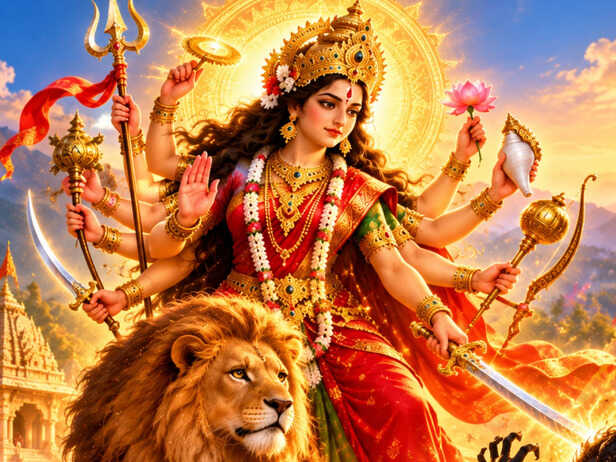
Maa Pratyangira is a fierce Goddess worshipped in several Hindu traditions, particularly within certain Tantric practices. She is often depicted with a lion-like face, a powerful expression and multiple arms holding divine objects. Her imagery can include a trident, a skull cup, a noose or other ritual symbols, although depictions vary. Devotees associate her with protection, courage and the overcoming of harmful influences. Claims that her worship makes someone completely immune to black magic are matters of religious belief, not scientifically established facts.
Why Is Her Appearance So Powerful?
The lion-faced form of Maa Pratyangira sets her apart from many other depictions of the Divine Mother. Her fierce expression communicates strength, while the objects in her hands carry different symbolic meanings across traditions. Devotees may turn to her worship during periods of fear, uncertainty or spiritual difficulty. Her appearance is not merely intended to frighten evil forces; it also represents the courage to face challenges without surrendering to fear. This symbolism helps explain why her worship holds a special place among devotees drawn to fierce forms of the Goddess.
The Connection Between Meghnad and the Goddess
Meghnad earned the name Indrajit after defeating Indra in battle, according to the Ramayana tradition. He became one of Ravana’s strongest warriors and used powerful weapons and strategies against Rama’s forces. Some later religious narratives and popular retellings associate him with intense rituals and fierce forms of divine worship. However, the claim that Maa Pratyangira was specifically his chosen Goddess should be checked against the particular text or tradition being cited. Different versions of the Ramayana do not always describe these details in the same way.
How Did Lakshman Defeat Meghnad?
Meghnad was not defeated easily. In the Ramayana, his military skill and powerful weapons made him a serious threat to Rama’s army. Lakshman eventually confronted and killed him with the support of Vibhishana, who helped reveal crucial information about Meghnad’s plans and rituals. Some popular retellings also connect Lakshman’s victory with a condition involving prolonged wakefulness and fasting. Such details vary by version and should not be presented as a universal account of the original epic. The central point remains that Meghnad’s strength did not make him invincible.
Could Divine Worship Prevent His Death?
The question of why Maa Pratyangira did not save Meghnad assumes that every act of worship must prevent defeat or death. Hindu philosophy offers a more complex understanding of devotion, duty and the consequences of actions. Divine worship is not necessarily presented as a guarantee that a person will escape every hardship. In the Ramayana, Meghnad’s eventual defeat forms part of the larger conflict between Rama’s forces and Ravana’s kingdom. The story can therefore invite reflection on the limits of worldly power rather than serve as proof that one deity failed to protect a devotee.
The Deeper Meaning of the Goddess
For devotees, Maa Pratyangira’s fierce appearance can represent the strength needed to confront fear, anger and destructive impulses. Her worship may provide spiritual comfort and a sense of courage during difficult times. The deeper lesson is not that every problem can be solved through supernatural protection, but that faith can help people approach challenges with greater steadiness. Alongside prayer, practical judgment, responsible decisions and support from trusted people remain important. This interpretation allows the Goddess’s symbolism to connect with everyday life without making frightening or unverifiable promises.
When the Entire Story Becomes Divine
In devotional interpretations, the Divine Mother may be understood as present throughout creation, including its struggles, victories and losses. From this perspective, Meghnad’s defeat does not have to be read as a failure of divine power. Instead, it can become an invitation to reflect on how the sacred is understood beyond individual success or defeat. The Ramayana contains many layers of meaning, and different spiritual traditions interpret its events in different ways. Reading these stories with patience helps separate the epic’s central narrative from later interpretations and popular claims.
The Lesson Beyond Meghnad’s Defeat
Maa Pratyangira’s fierce form represents protection and courage for many devotees, while Meghnad’s defeat remains a dramatic turning point in the Ramayana. The popular question of why the Goddess did not save him becomes more meaningful when we look beyond the idea that devotion guarantees victory.
The story reminds us that even extraordinary strength has limits and that spiritual faith is not simply a promise of worldly success. For devotees, the Goddess can represent the courage to face uncertainty, the wisdom to act responsibly and the strength to accept that every story may hold deeper meanings.
Sometimes, the greatest lesson is not why a powerful warrior lost, but what his defeat teaches us about power, duty and faith.
Unlock insightful tips and inspiration on personal growth, productivity, and well-being. Stay motivated and updated with the latest at My Life XP.