
Who Are the Dakini Behind Maa Kali? The Hidden Truth
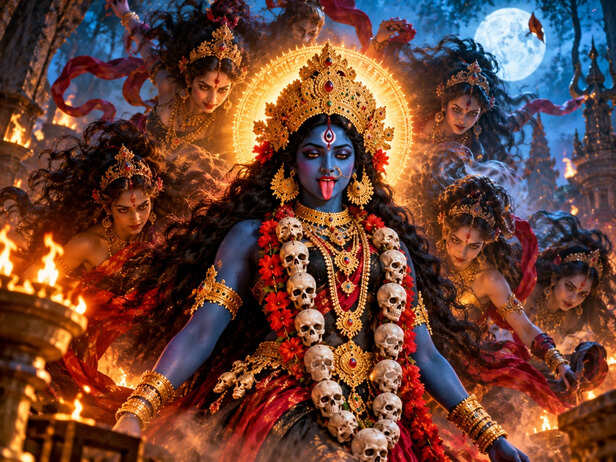
Have you ever looked at a picture of Maa Kali and wondered who the fierce, sword-carrying female figures standing behind her were? Their appearance can seem mysterious, even frightening, especially when you first encounter such an image as a child. These figures are often identified as Dakinis or Yoginis in popular explanations, but their meanings are more complex than they might appear. To understand them, we need to look beyond their dramatic appearance and explore the different traditions, stories and symbolism associated with them.
Who Are the Dakinis?
Dakinis are mysterious female figures found in certain Hindu and Buddhist religious traditions, particularly in Tantric literature. Their roles differ across texts: some portray them as fierce supernatural beings, while others associate them with spiritual wisdom, transformation and sacred power. They are sometimes connected with Shiva, Bhairava and fierce forms of the Goddess. However, Dakinis do not have one fixed identity across every tradition. Understanding their background helps explain why they appear in some religious images as powerful, unusual and sometimes frightening figures.
Why Do They Look So Fierce?
The first thing people notice about these figures is often their unusual appearance. Some Tantric depictions show female figures with weapons, wild hair, ornaments made from bones or skulls, and minimal clothing. Such imagery can seem frightening when viewed without its religious context. In these traditions, however, fierce appearances can represent power, freedom from ordinary social boundaries and the destruction of ignorance. Not every Dakini is depicted in the same way, and their appearance depends on the particular text, deity and artistic tradition.
Why Are Dakinis Linked to Cremation Grounds?
Cremation grounds appear frequently in stories and imagery associated with Maa Kali, Bhairava and certain Tantric traditions. These places represent the reality of death and the temporary nature of worldly life. Some depictions also place Dakinis and Yoginis in these settings, strengthening their association with the mysterious and unconventional aspects of spiritual practice. Their presence should not be taken as proof that such beings physically inhabit cremation grounds. Instead, the setting carries religious and symbolic meanings that vary across different traditions.
Are Dakinis and Yoginis the Same?
Dakinis and Yoginis are closely related in some religious traditions, but the terms are not always interchangeable. In certain Hindu Tantric texts, Yoginis appear as powerful female divine beings associated with Bhairava and the Goddess. In Vajrayana Buddhism, Dakinis can represent sacred feminine power and spiritual insight. Scholars have traced connections between Hindu and Buddhist Tantric traditions, while also noting differences in how these figures are understood. So, describing every Dakini as a demon or every Yogini as an attendant of Maa Kali would overlook a much richer religious history.
What Is Their Connection to Maa Kali?
Some Hindu texts describe Dakinis among the fierce attendants associated with Shiva, Bhairava or the Goddess. Their presence fits the larger imagery of divine forces that confront threats and restore order. One famous story involving Maa Kali is the battle against the demon Raktabija, whose blood could produce new demons whenever it touched the ground. In a widely known version, Kali prevents this multiplication by drinking his blood before it can fall. The story's central role belongs to Maa Kali, although related retellings may describe other divine female forces participating in the battle.
Can Dakinis Protect or Harm People?
Folklore sometimes describes Dakinis as dangerous beings, while other traditions give them protective or spiritually significant roles. These accounts are part of religious belief and storytelling, not verified evidence that Dakinis can make people lose their minds or cause physical harm. Their meaning also differs between Hindu and Buddhist settings. In some Buddhist Tantric traditions, Dakinis are associated with wisdom and the guidance of practitioners. This contrast shows why their identity cannot be reduced to a single frightening image or one story about supernatural power.
The Hidden Meaning Behind Their Images
The next time you see Maa Kali surrounded by fierce female figures, look beyond their weapons and unusual appearance. Their imagery belongs to religious traditions that explore power, death, transformation and the struggle against destructive forces. The exact meaning depends on the particular image and tradition, so it is worth checking the source rather than assuming every figure is a Dakini. What once seemed frightening in a childhood photograph can become an opportunity to learn about the rich and complex world of Hindu iconography and Tantric history.
Unlock insightful tips and inspiration on personal growth, productivity, and well-being. Stay motivated and updated with the latest at My Life XP.