
Who Is More Powerful: Kuldevi or Mool Devi?
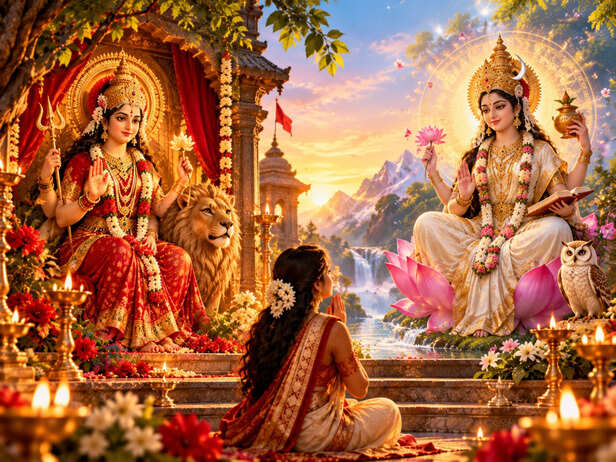
Can a powerful warrior lose his advantage by misunderstanding the very power he worships? In the Ramayana, Indrajit, Ravana’s mighty son, depended on a special ritual to prepare for battle. His family deity, Nikumbhila Devi, was central to this tradition. But when Indrajit created the illusion that Sita had been killed, the story took a dramatic turn. Was one goddess more powerful than another, or was the real lesson about recognising the many forms of Shakti? This episode from the Yuddha Kanda invites us to look beyond the question of power and understand the deeper meaning of divine feminine energy.
The Goddess Behind Ravana's Clan
In the Ramayana's Lanka war, Indrajit, the son of Ravana, was known for his extraordinary abilities and mastery of illusion. His connection with Nikumbhila is central to the story of his final battle. Vibhishana revealed that Indrajit was performing a special fire ritual at Nikumbhila before returning to battle. According to the account in the Yuddha Kanda, completing this ritual would make him extremely difficult to defeat. This episode introduces the idea of a Kuldevi, a deity worshipped by a family or lineage, and sets the stage for a deeper question about divine power.
Indrajit's Illusion About Mata Sita
Indrajit knew that weakening the opposing army's morale could give him an advantage. He therefore created an illusory image of Mata Sita and made it appear that he had killed her in front of Hanuman and the Vanara army. The sight left Rama's followers devastated, and Rama himself was overcome with grief when he heard the news. But the apparent tragedy was a trick, not the death of the real Sita. This moment is crucial to the Ramayana war story because it shows how Indrajit used illusion to distract his opponents while preparing for his ritual at Nikumbhila.
Vibhishana Reveals the Hidden Plan
Vibhishana understood that the Sita seen on the battlefield was an illusion. He explained that Indrajit had gone to Nikumbhila to complete a fire ritual that would strengthen his position in battle. Vibhishana urged Rama to send Lakshmana with Hanuman and the Vanara warriors before the ritual was finished. The episode highlights an important lesson: knowledge can reveal what appearances conceal. Rather than accepting the apparent defeat, Vibhishana examined the situation and identified the real challenge. His understanding of Indrajit's plan changed the direction of the battle and gave Lakshmana an opportunity to confront Ravana's powerful son.
Why Lakshmana Went to Nikumbhila
Following Vibhishana's advice, Lakshmana set out with Hanuman, Vibhishana and the Vanara forces. Their aim was to reach Nikumbhila before Indrajit completed the ritual. The encounter that followed became one of the decisive moments of the Lanka war. Indrajit was forced to face Lakshmana, and the two fought fiercely. Lakshmana eventually defeated him, ending the threat posed by Ravana's most formidable warrior son. In the Valmiki Ramayana, the key explanation is the ritual's role in Indrajit's battle strength. The text does not explicitly describe the goddess abandoning him because he insulted another form of Shakti.
Kuldevi and Mool Devi: Two Different Ideas?
A Kuldevi is generally understood as the goddess worshipped by a family or lineage. The phrase Mool Devi can be used in different devotional contexts for a principal or foundational form of the Goddess, so its exact meaning depends on the tradition. These terms do not establish a universal ranking in which one goddess must be stronger than another. The story of Indrajit invites a symbolic interpretation: divine forms should not be treated as rivals simply because they have different names or roles. However, the idea that Nikumbhila Devi withdrew her blessings because Indrajit dishonoured Mata Sita is an interpretation of the story, rather than an explicit statement in the cited Valmiki Ramayana passage.
The Deeper Lesson of Shakti
So, which is more powerful: the Kuldevi or the Mool Devi? The story does not require us to choose one over the other. Instead, it offers an opportunity to reflect on how the Divine Feminine is honoured through different names, forms and traditions. Indrajit's defeat in the Ramayana is directly connected to Lakshmana interrupting his ritual and defeating him in battle. The broader spiritual lesson is that devotion should not become a contest between forms of the divine. Whether a family worships its Kuldevi or follows another form of Shakti, faith can be approached with humility, respect and an understanding of the tradition behind it.
Unlock insightful tips and inspiration on personal growth, productivity, and well-being. Stay motivated and updated with the latest at My Life XP