
Who Led the Pandava Army for All 18 Days of War?
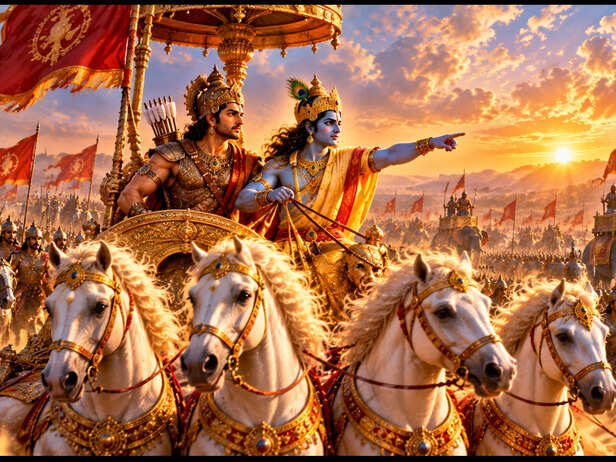
The Kurukshetra war lasted for 18 terrifying days, and the Kaurava army saw four different commanders during the battle. But on the Pandava side, one warrior held the position of chief commander throughout the entire war. His identity is often overlooked despite his crucial role in one of the greatest battles described in the Mahabharata. He was Dhrishtadyumna, the son of King Drupada and the brother of Draupadi. He was chosen to lead the Pandava army before the war began and later played a major role in the fall of Dronacharya.
The Pandavas Chose Dhrishtadyumna
Before the Kurukshetra war began, Yudhishthira consulted Krishna and the other Pandava brothers about choosing a chief commander. Their decision fell on Dhrishtadyumna, the son of King Drupada. He was not simply a royal warrior; his birth itself was connected to Drupada’s desire to obtain a son who could defeat Drona. With the support of the Pandavas and their allies, Dhrishtadyumna became the supreme commander of the Pandava army. His appointment gave the seven-akshauhini force a central military leader as the great battle prepared to begin.
Seven Akshauhinis Under Him
The Pandava army consisted of seven akshauhinis, an enormous military force described in the Mahabharata tradition. Dhrishtadyumna stood at the top of this command structure, while several important warriors led different sections of the army. These included Drupada, Virata, Satyaki, Shikhandi, Dhrishtaketu, Chekitana and Bhima. Each warrior had his own importance on the battlefield, but Dhrishtadyumna remained the chief commander. This structure allowed the Pandavas to coordinate their forces during the 18-day Mahabharata war, while Krishna guided Arjuna and the other warriors through some of the battle’s most critical moments.
His Biggest Role Was Against Drona
One of Dhrishtadyumna’s most important moments came on the 15th day of the Mahabharata war. By then, Dronacharya had become the commander of the Kaurava army and was causing severe losses to the Pandava forces. Dhrishtadyumna had a personal connection to Drona because traditional accounts link his birth to Drupada’s desire for revenge against the great teacher. During the battle, Drona eventually laid down his weapons after hearing that Ashwatthama had supposedly died. Dhrishtadyumna then killed the unarmed Drona, fulfilling the purpose traditionally associated with his extraordinary birth.
The Kauravas Changed Four Commanders
The contrast between the two armies becomes especially striking when their command structures are compared. During the 18-day Kurukshetra war, the Kaurava army had four principal commanders: Bhishma, Drona, Karna and Shalya. Each took command at a different stage as the war moved toward its final days. The Pandava side, however, retained Dhrishtadyumna as its chief commander throughout the battle. This does not mean he fought every major duel himself. Instead, his role was to lead the overall Pandava army while warriors such as Arjuna, Bhima, Satyaki and others carried out crucial attacks.
The War Ended, But His Story Did Not
The defeat of Duryodhana marked the end of the main fighting on the 18th day, but the violence did not completely stop. Ashwatthama, devastated by the destruction of the Kaurava side, entered the Pandava camp during the night along with Kripa and Kritavarma. According to the Mahabharata tradition, the sleeping warriors were attacked without warning. Dhrishtadyumna, the chief commander of the Pandava army, was among those killed. His death came after he had survived the entire 18-day Kurukshetra war, making the final night one of the most tragic turns in his story.
Ashwatthama’s Revenge Changed Everything
The killing of Dhrishtadyumna was part of Ashwatthama’s night attack that shocked the surviving Pandavas. The traditional account describes him entering the camp while many warriors were asleep and attacking them in the darkness. Dhrishtadyumna, who had commanded the Pandava army from the beginning of the war, could not escape the attack. The episode also led to the deaths of Draupadi’s sons, known as the Upapandavas. This final massacre showed that although the main Mahabharata war had ended, its consequences continued to destroy both families.
The Commander History Often Overlooks
Dhrishtadyumna’s story is one of the most unusual military stories in the Mahabharata. He was born with a purpose, appointed commander of the seven-akshauhini Pandava army, played a decisive role in Drona’s death and survived the main 18 days of the war. Yet his own life ended during the violent night attack that followed the battle. His journey shows that the Kurukshetra war was not simply about winning or losing. Even those who survived the battlefield could not escape its consequences. That is what makes Dhrishtadyumna’s forgotten role such a powerful chapter of the epic.
Unlock insightful tips and inspiration on personal growth, productivity, and well-being. Stay motivated and updated with the latest at My Life XP.