
Who Really Wrote Sukhkarta Dukhharta? The Truth
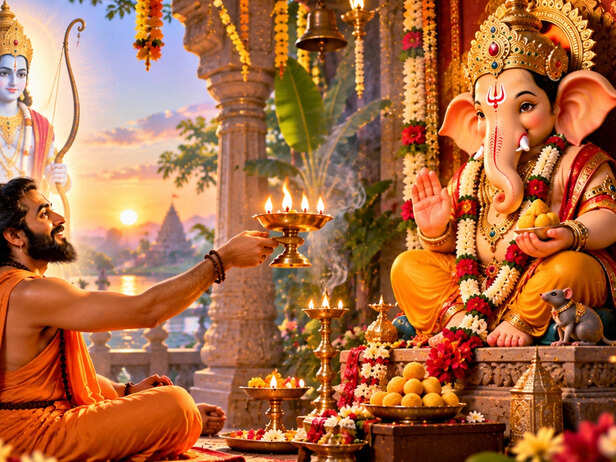
You may have heard Ganpati’s famous “Sukhkarta Dukhharta” aarti countless times, especially during Ganesh Chaturthi. But have you ever wondered who wrote these beautiful words and what inspired them? The aarti is traditionally attributed to Sant Samarth Ramdas, the 17th-century saint and poet known for his devotion to Shri Ram. What makes the story even more fascinating is that Ramdas was a devoted follower of Ram, yet he beautifully described Lord Ganesha in this prayer. The story behind it reveals something deeper about devotion itself.
The Aarti We All Know
“Sukhkarta Dukhharta” is one of the most familiar Marathi Ganpati aartis, heard in homes, temples and public celebrations. Its simple yet powerful words praise Lord Ganesha as the remover of suffering and the giver of happiness. For many families, the aarti is not just a prayer but a childhood memory repeated during every Ganesh festival. Yet behind those familiar lines is a story many devotees may not know. The traditional attribution connects the aarti with Sant Samarth Ramdas, adding another fascinating layer to a prayer that has remained alive for generations.
Ramdas Was A Ram Devotee
Sant Samarth Ramdas was a prominent saint and poet of 17th-century Maharashtra and is strongly associated with devotion to Shri Ram and Hanuman. That makes the traditional association of his name with a Ganpati aarti especially interesting. Why would a saint known for Ram bhakti compose such a beautiful prayer for Ganesha? The answer lies in the broader idea of Hindu devotion, where different forms of the divine can be worshipped with the same sense of love and surrender. For Ramdas, devotion to one deity did not necessarily mean rejecting another.
Morgaon Changed The Story
According to the devotional tradition, a visit to Morgaon, an important centre of Ganpati worship in Maharashtra, became the inspiration for Ramdas. The temple is dedicated to Mayureshwar, a revered form of Lord Ganesha. After experiencing the divine form of Ganpati there, Ramdas is traditionally believed to have expressed that experience through his words. The story gives the aarti a personal beginning rather than making it feel like just another prayer. A moment of darshan became the starting point for verses that would eventually become part of countless Ganpati celebrations.
Every Word Describes Ganpati
The beauty of the aarti lies in the way it builds Ganpati’s image through simple descriptions. Words such as Lambodar, referring to his large belly, and Pitambar, referring to yellow garments, paint a vivid picture of the deity. The aarti also uses the name Trinayan, meaning three-eyed. These descriptions connect the prayer with the traditional iconography associated with the deity and the form worshipped in the devotional story. Rather than simply asking Ganesha for blessings, the verses first create an image of the Lord that devotees can visualise while singing.
The Ending Reveals Ramdas
The most intriguing part comes towards the end. After describing and praising Lord Ganesha, the poet identifies himself as Ramdas, a servant of Ram. This detail makes the traditional story even more meaningful. Here was a saint deeply devoted to Shri Ram, yet his words were being offered to Ganpati with equal affection. Instead of seeing devotion as a competition between different divine forms, the verse reflects a more inclusive spiritual idea. The devotee may call upon different names, but the emotion behind sincere prayer can remain the same.
One Prayer, Many Forms
This is perhaps the most beautiful thought hidden inside the story. Ramdas did not need to abandon his devotion to Ram to praise Ganesha. His worship could move naturally from one divine form to another. For devotees, this offers a simple lesson: spiritual love does not always need rigid boundaries. Different traditions may use different names, stories and forms, yet devotion can carry the same emotions of gratitude, surrender and faith. That is one reason the aarti continues to feel personal even after centuries. Every generation gives its own voice to the same timeless words.
Why The Aarti Still Feels Special
Centuries later, the aarti remains a familiar part of Ganpati worship for countless devotees. Most people may know the words by heart without knowing the traditional story associated with them. That is what makes the prayer even more special. Behind those familiar lines is the story of a saint whose devotion to Ram did not stop him from expressing deep reverence for Ganpati. Whether one approaches the aarti as a religious tradition, a cultural memory or a family ritual, its message remains powerful: devotion can take many forms, but genuine love for the divine can bring people together.
Unlock insightful tips and inspiration on personal growth, productivity, and well-being. Stay motivated and updated with the latest at My Life XP.