
Who Received the First Puja? Shiva-Parvati Wedding Mystery
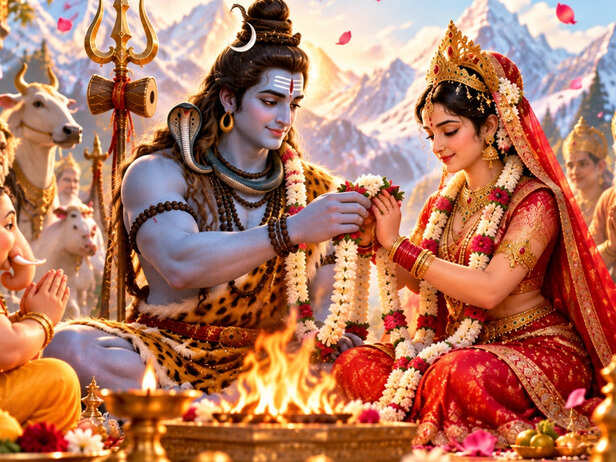
There is a fascinating question hidden inside the story of Shiva and Parvati's marriage. If Ganesha was born as their son later, how could Ganesha be worshipped before their marriage? Was someone else being worshipped, or is there a deeper meaning behind the names Ganapati and Ganesha? Hindu traditions offer an intriguing answer through the idea of an eternal divine principle and its later manifestations. According to one theological interpretation, Ganapati represents an ancient, cosmic form of divine power, while Ganesha is the familiar personal form worshipped as Shiva and Parvati's son. This distinction opens the door to a much deeper spiritual story.
The Question That Confuses Devotees
The confusion begins with a familiar belief: Ganesha is the son of Shiva and Parvati. Yet many Hindu wedding traditions begin with the worship of Ganesha. This naturally raises a question about chronology. How could a son be worshipped before his parents' marriage? The answer depends on how the tradition understands the deity being invoked. The personal form of Ganesha as Shiva and Parvati's son is one part of his religious identity. The name Ganapati, meanwhile, carries a much broader meaning and is associated with the lord or leader of the ganas. This is where the story becomes more interesting than it first appears.
Ganapati Means Lord of the Ganas
The word Ganapati is formed from gana, meaning a group, host or collection, and pati, meaning lord or master. In Hindu religious traditions, the term therefore carries the sense of Lord of the Ganas. The term appears in ancient Sanskrit texts, including the Rigveda, although its early context and later identification with the familiar elephant-headed Ganesha are subjects of scholarly discussion. Over time, Ganapati became one of the widely used names of Ganesha. This makes the distinction between the words important: Ganapati is a title or name with an ancient textual history, while Ganesha is the name by which the deity is widely known today.
One Divine Principle, Many Forms
In many Hindu philosophical traditions, the divine can be understood through both formless principles and personal forms. This allows devotees to understand one divine reality through different manifestations, names and stories. From this perspective, the Ganesha worshipped as Shiva and Parvati's son can be understood as a personal, accessible form of a divine principle associated with Ganapati. However, Hindu scriptures and traditions are diverse, so this should not be presented as a single universally accepted explanation. Different texts give different accounts of Ganesha's origins and manifestations. The broader spiritual idea remains that one divine reality can be approached through many forms.
Why Ganesha Became Shiva's Son
The Puranic stories of Ganesha's birth developed in several forms. One well-known account describes Parvati creating Ganesha to guard her private space. When Shiva encounters the young guardian, a conflict follows, eventually leading to Ganesha receiving the elephant head and becoming widely revered. Other traditions preserve different versions of his origin. These stories give Ganesha a deeply personal identity as Shiva and Parvati's son, while his older titles, including Ganapati, connect him with a much broader divine role. That combination explains why Ganesha can be both the beloved child of Parvati and a powerful deity invoked at the beginning of important ceremonies.
Why Ganapati Is Worshipped First
The practice of worshipping Ganesha first is closely connected with his role as Vighnaharta, the remover of obstacles. Before beginning a wedding, puja, journey or new venture, devotees traditionally seek his blessings for an auspicious beginning. This practice is not simply about chronology. It reflects the belief that every important undertaking should begin by remembering the divine and clearing the obstacles within and around us. The familiar elephant-headed Ganesha therefore becomes the first deity many devotees remember. Whether one approaches the tradition through mythology, philosophy or personal faith, the message is simple: begin with humility, seek wisdom and move forward with faith.
The Deeper Meaning of Ganapati
The idea that Ganapati represents an eternal divine principle gives this story its deepest spiritual layer. Rather than focusing only on when Ganesha was born, the tradition invites devotees to think about what the deity represents. Ganapati can signify the divine lordship over the ganas, while Ganesha's personal form makes that vast idea easier to approach through prayer, stories and devotion. It is similar to how one deity may be known through many names and manifestations across Hindu traditions. The form may change, but the spiritual relationship remains. This is why the question of “Ganapati or Ganesha” cannot always be answered simply by treating them as two unrelated deities.
The Beautiful Answer Behind the Mystery
So, was Ganapati a completely different god from Ganesha? Not necessarily. In many Hindu traditions, Ganapati and Ganesha are names associated with the same widely worshipped deity, while some theological interpretations give “Ganapati” a broader cosmic significance. The important distinction is between the ancient meaning and textual history of the name and the later Puranic stories surrounding Ganesha's birth. That is what makes this mystery so fascinating. The Ganesha we lovingly worship as Shiva and Parvati's son can also be approached through the much older idea of Ganapati, the lord of the ganas. The story ultimately points toward one powerful thought: divinity can be understood through many names and forms.
Unlock insightful tips and inspiration on personal growth, productivity, and well-being. Stay motivated and updated with the latest at My Life XP