
Who Was Alakshmi, Goddess Lakshmi's Elder Sister?
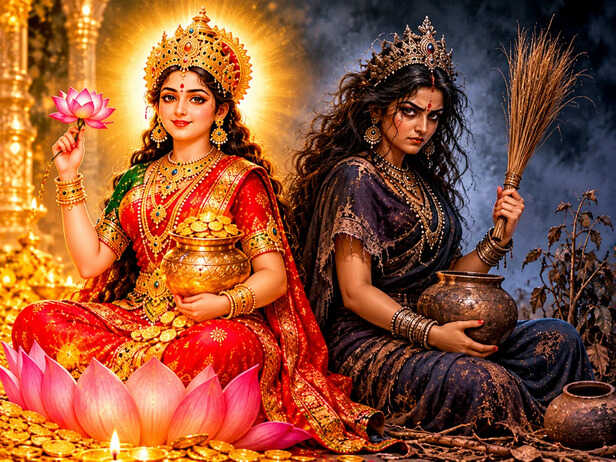
Most people know Goddess Lakshmi as the deity of wealth, abundance and happiness. During Diwali, families clean their homes, light diyas and perform Lakshmi Puja to seek her blessings.
However, fewer people know about Alakshmi, a figure associated with the opposite qualities. In some Hindu traditions, she is described as the elder sister of Goddess Lakshmi. Her name itself suggests an absence of auspiciousness or good fortune.
Who Was Alakshmi, the Lesser-Known Sister of Goddess Lakshmi?
While Lakshmi represents prosperity, harmony and abundance, Alakshmi is associated with poverty, jealousy, quarrels and unhappiness. Her story offers an interesting way to understand the traditional belief that wealth alone does not guarantee peace or happiness.It is important to note that Alakshmi's identity and origin differ across religious texts and regional traditions. She is not described in exactly the same way in every account.
Did Alakshmi Emerge Before Goddess Lakshmi During Samudra Manthan?
One popular account connects Alakshmi with Samudra Manthan, the legendary churning of the cosmic ocean.According to Hindu mythology, the gods and demons joined forces to churn the ocean of milk in search of Amrita, the nectar of immortality. They used Mount Mandara as the churning rod and Vasuki, the serpent king, as the rope.
During this extraordinary event, several divine objects and beings emerged from the ocean. Among them was Goddess Lakshmi, who appeared seated on a lotus and was welcomed as a symbol of prosperity and auspiciousness.Some traditional retellings also describe Alakshmi appearing before Lakshmi. Unlike her younger sister, she represented inauspiciousness and unwanted conditions.This contrast gave rise to the belief that prosperity and misfortune are two different possibilities in life. While Lakshmi is welcomed, Alakshmi is traditionally associated with conditions people wish to avoid.The exact sequence and details of Alakshmi's appearance vary between accounts, so this version should be understood as a traditional narrative rather than a universally accepted description of Samudra Manthan.
The Surprising Story of Lakshmi's Promise to Her Elder Sister
Another fascinating account appears in the Uttara Khanda of the Padma Purana. It describes a responsibility Goddess Lakshmi accepted before becoming Lord Vishnu's consort.According to this story, Lakshmi asked Vishnu to make sure her elder sister Alakshmi would also have a place to live and someone to look after her. Lakshmi did not want to leave her sister without care.
Vishnu agreed and entrusted Alakshmi to the sage Uddalaka. The sage took her towards his hermitage, hoping she would live peacefully there.However, Alakshmi did not feel comfortable in the surroundings. The atmosphere of prayer, spiritual discipline and calm did not suit her. In the traditional account, she eventually came to reside beneath a Peepal tree.This story adds an unexpected dimension to the relationship between the two sisters. Lakshmi does not simply reject Alakshmi. Instead, she makes sure that her elder sister is cared for, even though their natures are very different.
Why Is Alakshmi Associated With Poverty and Conflict?
Alakshmi is not merely described as the opposite of wealth. Her symbolism goes deeper.
In different traditions, she is associated with:
- Poverty and scarcity: The absence of material abundance and the struggle to meet basic needs.
- Arguments and family disputes: Constant disagreements, jealousy and resentment.
- Greed and selfishness: An environment where people focus only on personal gain.
- Unhappiness and disorder: A lack of peace, cooperation and harmony within a household.
Some accounts describe Alakshmi as being drawn towards places where people behave with arrogance, dishonesty and cruelty. By contrast, Goddess Lakshmi is welcomed in homes where people value cleanliness, generosity, respect and good conduct.This contrast carries a simple message: wealth may make life comfortable, but it cannot create happiness if people do not treat one another well.
Why Do Some People Try to Send Alakshmi Away on Diwali?
Here is where the story becomes particularly interesting.In certain traditional Diwali observances, people perform symbolic rituals to drive away Alakshmi before welcoming Goddess Lakshmi.A historical description of Diwali customs mentions women making noise by beating winnowing baskets and drums to symbolically drive Alakshmi out of their courtyards. The practice reflects an old belief that misfortune should be removed before prosperity is welcomed.
This custom is not followed by every Hindu household today. Rituals differ across regions, communities and family traditions.The underlying idea, however, is easy to understand. Diwali preparations are not only about decorating the home. Cleaning, lighting lamps and offering prayers also symbolise the wish to leave behind negativity and invite peace and prosperity.
What Is the Connection Between Alakshmi and Charity?
One of the most meaningful lessons associated with the two sisters is the importance of giving.A Hindu tradition discussed by Dr Asha Shipman at Yale University explains that Alakshmi is believed to remain close to Lakshmi, bringing discord alongside prosperity. The suggested way to keep this tension away is through dana, or charitable giving.
The idea is that wealth should not remain limited to personal comfort. It should also support family, community and people who need help.This gives Diwali a deeper meaning. While people worship Goddess Lakshmi for prosperity, they are also reminded that generosity and responsibility help make wealth meaningful.After all, a home may have money and expensive possessions, but without kindness and understanding, it may still lack peace.
What Does the Story of Lakshmi and Alakshmi Teach Us Today?
The story of the two sisters is more than a tale about good fortune and misfortune. It offers a way to think about the choices people make in everyday life.
Here are three lessons readers can take from it:
1. Wealth without peace has little value. A prosperous household also needs understanding, respect and healthy relationships.
2. Generosity matters. Sharing what we have and helping others can create a stronger sense of community.
3. Our behaviour shapes our surroundings. Jealousy, greed and constant arguments can damage relationships, while kindness and honesty help create a positive home.
A Forgotten Diwali Story With a Meaningful Message
Goddess Lakshmi is celebrated as the symbol of prosperity, but the lesser-known story of Alakshmi adds another layer to her worship. It reminds devotees that good fortune is not simply about having more money or possessions.
The contrast between the sisters encourages people to think about the atmosphere they create in their homes. Diwali may be a time to welcome Lakshmi, but it is also an opportunity to leave behind habits that bring unhappiness and conflict.Perhaps the most valuable lesson from this forgotten story is that true prosperity needs more than wealth. It also needs generosity, peace and a willingness to care for others.
Unlock insightful tips and inspiration on personal growth, productivity, and well-being. Stay motivated and updated with the latest at My Life XP.