
Who Was Alakshmi? The Truth Behind the Goddess
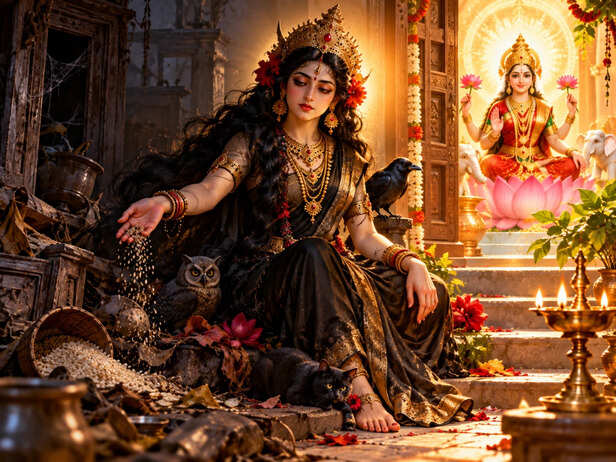
Everyone wants Goddess Lakshmi to bless their home with wealth, peace and prosperity. But Hindu traditions also speak of a lesser-known figure associated with the opposite: Alakshmi, the goddess linked with poverty, discord and misfortune. Her story raises a fascinating question: why would a tradition that celebrates prosperity also remember its opposite? Often described as Goddess Lakshmi’s elder sister, Alakshmi represents more than financial hardship. Her symbolism offers a deeper reflection on greed, conflict and the conditions that can disturb peace within a household.
Who Is Alakshmi?
Alakshmi is a figure in Hindu religious traditions associated with poverty, bad fortune and disharmony. She is sometimes identified as Jyeshtha, meaning the elder one, and described as the elder sister of Goddess Lakshmi. While Lakshmi represents abundance, auspiciousness and prosperity, Alakshmi symbolises their opposite. However, descriptions of Alakshmi vary across religious texts and regional traditions. She is less widely worshipped than Lakshmi, but her presence in Hindu mythology adds an important dimension to the idea of prosperity: wealth alone does not guarantee happiness, stability or harmony in life.
The Story of the Two Sisters
One explanation for the connection between the two sisters comes from Hindu stories about the Samudra Manthan, the churning of the cosmic ocean by the devas and asuras. Many retellings describe different divine beings and treasures emerging from the ocean, including Goddess Lakshmi. Some traditional accounts also connect Alakshmi with this larger narrative, though the details differ between sources. The contrast between the sisters became a way to express two opposing conditions: prosperity and adversity. Their story is not identical in every scripture, so it is best understood as part of a diverse body of Hindu mythology rather than one universally agreed account.
Why Is Alakshmi Linked to Misfortune?
Alakshmi is commonly associated with poverty, jealousy, arguments and a lack of harmony. These associations give her a symbolic role in stories about the conditions that can weaken a household. Financial struggles, for example, can become harder to manage when family members stop communicating or begin blaming one another. It is important, however, not to interpret these traditions as proof that poverty or personal difficulties are caused by a supernatural presence. Alakshmi’s symbolism can instead be read as a reminder to recognise destructive habits and work towards a more balanced, respectful and peaceful life.
What Does Alakshmi Represent at Home?
In some popular traditions, Alakshmi is associated with places marked by persistent conflict, disrespect or disorder. This idea is often contrasted with the welcoming, clean and harmonious environment associated with Goddess Lakshmi. The deeper lesson is not that a messy room or a family disagreement invites misfortune. Rather, a home becomes more supportive when its members care for their surroundings, speak respectfully and address problems honestly. A peaceful household is built through everyday actions, including sharing responsibilities, listening to one another and resolving disagreements without humiliation or blame.
Lakshmi and Alakshmi: The Real Difference
Goddess Lakshmi is widely revered as the embodiment of wealth, fortune, abundance and auspiciousness. Alakshmi, by contrast, is linked with deprivation, discord and misfortune in traditions that describe the two as opposites. This contrast offers a useful way to think about prosperity beyond money. A family may have financial resources yet struggle with mistrust, while another may have modest means but enjoy strong relationships and mutual respect. The stories do not suggest that hardship is a personal failure. Instead, they invite reflection on the difference between material success and the wider wellbeing that helps people feel secure and connected.
How Do Traditions Address Alakshmi?
Some regional customs and popular beliefs describe practices intended to keep Alakshmi away or to distinguish her symbolism from the worship of Goddess Lakshmi. These practices are not uniform across Hindu communities, and their meanings can differ by region and tradition. There is no need to approach them with fear or assume that a particular household problem signals divine displeasure. Anyone exploring such customs should consider their local context and religious source. For a practical takeaway, focus on the values commonly associated with an auspicious home: cleanliness, generosity, responsible choices, mutual care and respect for others.
The Deeper Lesson Behind Alakshmi
Alakshmi’s story carries a thought-provoking message when viewed symbolically: prosperity is not only about what we possess, but also about how we live. Greed, constant comparison, disrespect and unresolved conflict can damage relationships even when material comforts are available. On the other hand, honest communication, thoughtful spending, kindness and shared responsibility can help create a more stable home. These actions cannot guarantee freedom from hardship, but they can help people face difficulties together. Rather than fearing Alakshmi, readers can take her story as an invitation to recognise harmful patterns and consciously nurture the qualities that bring greater harmony into everyday life.
Unlock insightful tips and inspiration on personal growth, productivity, and well-being. Stay motivated and updated with the latest at My Life XP