
Why Ancient Hindu Stories Still Feel So Relevant Today
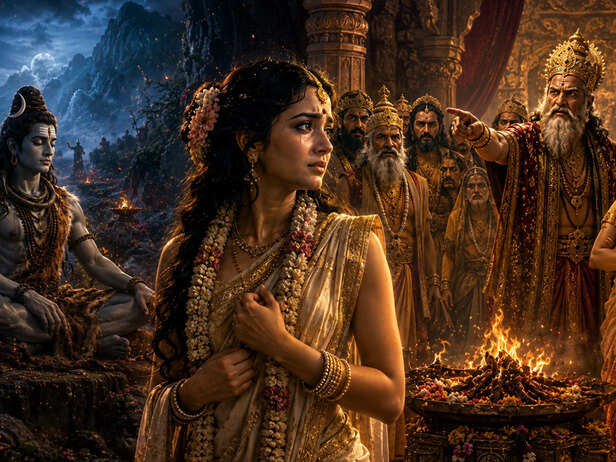
Some stories from Hindu tradition feel ancient, yet their emotional questions remain surprisingly familiar. The story of Sati and Daksha is one such tale. It is not only about a conflict between a father and his daughter or between Daksha and Shiva. At its heart, it raises a difficult question: Can a parent’s pride become more important than a child’s happiness? Sati was deeply devoted to Shiva, while Daksha struggled to accept the man his daughter had chosen. His objection was not simply about Shiva’s nature. It was also about status, social expectations, pride, and his own idea of honour.
Sati Chose Shiva Beyond Status
Sati was not an ordinary princess. In Hindu tradition, she is revered as an incarnation or manifestation of Adi Shakti, the Divine Mother. Yet her choice of Shiva challenged everything Daksha valued. Shiva lived as an ascetic, remained detached from worldly status, wore sacred ash, carried serpents, and was associated with cremation grounds and beings outside conventional social norms. Daksha saw these qualities as unsuitable for his daughter. Sati, however, saw something entirely different. She recognised Shiva’s spiritual greatness and chose him not for wealth, appearance, or social position, but for the qualities she believed made him worthy of her devotion.
Daksha Could Not Accept Shiva
Daksha’s objection to Shiva was rooted in his own understanding of dignity and status. He believed a daughter from his prestigious family should marry someone who reflected that social standing. Shiva appeared to represent the complete opposite. He rejected conventional wealth, lived simply, and remained detached from worldly recognition. For Daksha, these qualities looked like disrespect and disorder. His inability to see beyond appearances gradually became resentment. The deeper lesson is uncomfortable even today: people sometimes judge relationships according to family reputation, wealth, profession, appearance, or social standing instead of asking whether two people genuinely respect and support one another.
Sati Chose Devotion Over Luxury
According to traditional accounts, Sati performed severe penance to attain Shiva as her husband. She willingly turned away from the comfort and luxury of her father’s palace and dedicated herself to spiritual discipline. Her decision showed how firmly she had made her choice. Eventually, Shiva accepted Sati as his wife. Their union was celebrated as a divine marriage, yet Daksha’s heart did not completely change. He accepted the marriage with reluctance, influenced by the counsel of Brahma and other divine beings and by the belief that the union was destined. But outward acceptance did not remove his inner resentment.
A Marriage Did Not End the Conflict
The marriage between Shiva and Sati should have ended the disagreement, but Daksha continued to struggle with his feelings toward Shiva. This is where the story becomes more than a disagreement about marriage. Daksha had accepted the relationship publicly, yet he had not truly accepted Shiva in his heart. Suppressed resentment can become more dangerous when it is never resolved. Instead of understanding his son-in-law, Daksha continued to see Shiva through the lens of status and convention. His pride gradually became stronger than his willingness to accept his daughter’s happiness, setting the stage for a much greater confrontation.
Pride Turned Into Public Insult
The conflict reached a critical point when Daksha organised a great yajna and invited numerous gods, sages, and divine beings. Shiva and Sati, however, were not invited. The exclusion was not merely an accidental omission. In the traditional story, it reflected Daksha’s continuing hostility toward Shiva. This moment shows how personal resentment can become public humiliation. Instead of resolving his disagreement privately, Daksha allowed his anger to influence a sacred gathering. The yajna, which should have represented devotion and harmony, became the setting for a much deeper conflict. And Sati would soon face the consequences of her father’s decision.
Sati Stood Between Two Worlds
Sati’s position became deeply painful because the conflict involved both the man she loved and the father she respected. When she learned about the yajna, she faced a difficult emotional choice. She knew she and Shiva had not been invited, yet she still wished to go to her father’s gathering. The traditional story presents this as the beginning of the tragedy that follows. Sati’s pain was not simply about being excluded from a ceremony. It was the pain of seeing her father reject the person she had chosen and, by extension, reject a central part of her own life and identity.
The Question That Leads to the Next Tragedy
The story now reaches its most important turning point. Why did Daksha invite almost everyone but deliberately exclude his own daughter and Lord Shiva? Was his anger stronger than his responsibility as a father? And if Shiva knew where Daksha’s resentment had reached, why did he not simply prevent Sati from going to the yajna? These questions lead directly into one of the most dramatic episodes of Hindu mythology. Sati would soon confront the consequences of her father’s pride, while Shiva would face a loss that would shake the divine world itself. The story of the Daksha Yajna is only beginning.
When Pride Becomes Bigger Than Love
The story of Daksha and Sati continues to feel relevant because its central conflict is deeply human. Parents may have their own expectations about whom their children should marry, what kind of life they should choose, and how the family should appear to society. But when reputation becomes more important than understanding, relationships can suffer.
Daksha’s tragedy was not simply that he disliked Shiva. It was that his judgment became stronger than his ability to accept his daughter’s choice.
And that leaves us with a powerful question: When does a parent’s concern stop being protection and start becoming pride?
Unlock insightful tips and inspiration on personal growth, productivity, and well-being. Stay motivated and updated with the latest at My Life XP.