You may have heard of Ardhanarishvara, the divine form of Shiva and Parvati, or Harihara, the combined form of Lord Vishnu and Lord Shiva. But there is another lesser-known divine form that brings Lord Hanuman and Lord Ganesha together as one. Known as Advaita Prabhu, this unique form carries a deeper message about the relationship between beginnings and endings. Its symbolism goes beyond the appearance of two deities in one form and offers a beautiful way to understand the idea of oneness in Hindu spirituality.
A Rare Form Beyond Ardhanarishvara and Harihara
![Lord Rama Never Wanted Hanuman to Repay His Favours]()
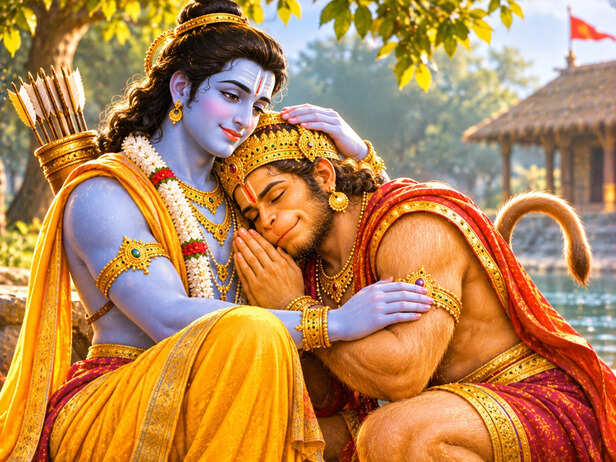
Lord Rama Never Wanted Hanuman to Repay His Favours
While Ardhanarishvara represents the union of Shiva and Shakti, and Harihara brings together Lord Vishnu and Lord Shiva, Advaita Prabhu offers another expression of divine unity. This unique form combines Anjaneya, another name for Lord Hanuman, with Gauri Nandan, Lord Ganesha. Rather than seeing them as separate divine identities, this concept presents both deities as one. It carries the spiritual message that the divine may appear in different forms, but its essence remains one.
Why Hanuman and Ganesha Become One
![Hanuman Chalisa Make Your Mind Feel So Calm]()
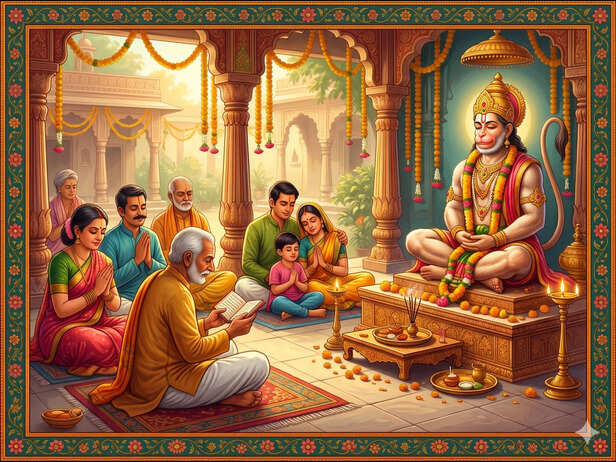
Hanuman Chalisa Make Your Mind Feel So Calm
Image credit : CHATGPTAI
The choice of these two deities carries a special meaning. Lord Ganesha is worshipped first before auspicious beginnings and is known as the remover of obstacles. Lord Hanuman, on the other hand, is regarded as a Chiranjeevi, an immortal being whose presence continues through the ages. His strength, devotion and dedication are central to his identity. Their combined form brings together two powerful ideas: the beginning represented by Ganesha and the timeless existence represented by Hanuman.
The Meaning Behind the Name Advaita Prabhu
The word 'Advaita' comes from Sanskrit and means 'not two' or 'non-dual'. It is associated with the philosophical understanding that the ultimate reality is one, beyond distinctions and separate identities. Advaita Prabhu expresses this idea through the combined presence of Hanuman and Ganesha. Their forms may represent different qualities, but the spiritual message points towards a single divine essence. It reminds devotees that different names, appearances and traditions need not mean different ultimate truths.
The Temple of Advaita Prabhu in Tamil Nadu
Located at Madhya Kailash in Chennai, Tamil Nadu, the Advaita Prabhu shrine is associated with this unusual combined form of Lord Hanuman and Lord Ganesha. The temple is known for its distinctive religious symbolism, which encourages devotees to think beyond separate identities of deities. Its representation of Advaita Prabhu offers a reminder of the unity that exists within different expressions of divinity. The shrine also draws attention to an interesting arrangement of eight bells placed before the deity.
Why Are There Eight Bells Before the Deity?
One of the most interesting features associated with the Advaita Prabhu shrine is the presence of eight bells before the deity. These bells are connected with the seven notes of Indian classical music: Sa, Re, Ga, Ma, Pa, Dha and Ni. The eighth bell represents Sa again, completing the musical cycle. This arrangement carries a symbolic message about continuity. Just as music returns to its starting note after completing a sequence, life too moves through cycles of beginnings and endings.
How Music Explains the Cycle of Life
The eight-bell symbolism offers a simple way to understand the relationship between endings and beginnings. A musical sequence does not simply stop after reaching Ni; it returns to Sa and begins another cycle. In the same way, an ending can also become the starting point of something new. This idea is reflected in the symbolism of Advaita Prabhu, where Lord Ganesha represents auspicious beginnings and Lord Hanuman represents an existence beyond ordinary limitations. Together, they express the continuity of life and the divine.
The Spiritual Message Behind Advaita Prabhu
Every living being experiences beginnings and endings. Birth leads to life, life eventually meets death, and the natural world continues through cycles of change. Even the universe, according to several Hindu cosmological traditions, passes through cycles of creation, preservation and dissolution. Advaita Prabhu offers a spiritual way of looking at this continuous process. The divine is understood as the reality behind these changes, existing beyond the divisions of beginning and end. This is the deeper idea of oneness that the combined form represents.
Unlock insightful tips and inspiration on personal growth, productivity, and well-being. Stay motivated and updated with the latest at
My Life XP.