
Why Did Balarama Kill a Scholar With a Blade of Grass?
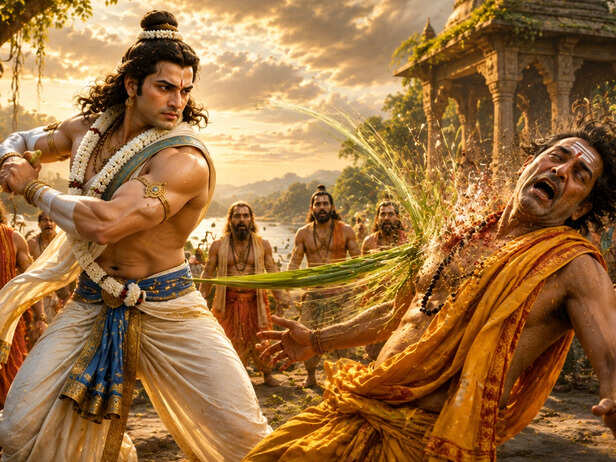
What if the most frightening weapon in a story was not a mace, sword or bow, but a simple blade of grass? In one remarkable episode from the ancient scriptures, Lord Balarama is said to have picked up a small blade of kusa grass at Naimisharanya and transformed it into a weapon powerful enough to kill Romaharshana Suta. But the real mystery is not how a blade of grass became so powerful. It is why Balarama chose to use it at all. The story reveals a deeper lesson about pride, respect, authority and why knowledge without humility can become dangerous.
The Journey That Led Balarama to Naimisharanya
During the Mahabharata period, Balarama chose not to participate directly in the Kurukshetra war. He did not want to witness the destruction of his own relatives and instead travelled on pilgrimage. His journey eventually brought him to Naimisharanya, a sacred place where numerous sages had gathered for an extended Vedic sacrifice. When Balarama arrived, the sages recognised his divine status and respectfully rose from their seats. Their reaction showed the importance traditionally given to welcoming a revered guest. But among the gathered scholars, one person remained seated. That small act would soon become the centre of a dramatic confrontation.
One Scholar Refused to Rise
Romaharshana Suta was not an ordinary scholar. He was a disciple of Vedavyasa and had been entrusted with the important position of sitting on the Vyasa seat and reciting sacred texts. His learning gave him an important role among the sages. Yet when Balarama entered, he did not stand, offer a greeting or acknowledge him in the expected manner. Balarama saw this as more than simple silence. In the traditional account, he interpreted the behaviour as pride and disrespect. The episode creates an uncomfortable question: Can great knowledge become meaningless when humility disappears? That question lies at the heart of the story.
The Grass Became a Weapon
The next moment is one of the most striking parts of the episode. Balarama did not reach for a traditional weapon. Instead, he picked up a blade of kusa grass and, through his divine power, made it as deadly as a powerful weapon. He touched Romaharshana with it, and Romaharshana died. The simplicity of the weapon makes the scene especially dramatic. A blade that normally appears completely harmless became powerful in Balarama's hands. The deeper message is not that ordinary grass is inherently dangerous. It highlights the extraordinary power attributed to Balarama and the seriousness with which the scripture presents the issue of disrespect.
The Sages Had a Serious Objection
After Romaharshana's death, the sages expressed their concern. They had previously granted him a blessing for longevity, and his death created a difficult situation. Balarama respected the sages' words and recognised that their blessing could not simply be dismissed. Instead of allowing the matter to end with punishment, he provided a solution. He established that Romaharshana's son, Suta Goswami, would take his father's place on the Vyasa seat. In the traditional account, the son was accepted as his father's representative, allowing the sages' blessing and their sacred responsibility to continue through the next generation.
Suta Goswami Continued the Tradition
The story takes an extraordinary turn after Romaharshana's death. His son, Suta Goswami, later became a central narrator of sacred traditions. At Naimisharanya, he is traditionally described as narrating the Srimad Bhagavatam to Shaunaka and the assembled sages. This means the episode did not simply end with punishment. A new person was placed in the position, and the transmission of sacred knowledge continued. The moment therefore became part of a much larger spiritual tradition. What appeared to be the end of one scholar's role eventually became the beginning of another chapter in the preservation and sharing of sacred teachings.
Knowledge Without Humility Can Mislead
The story carries a powerful lesson that reaches beyond the ancient setting. Being educated, respected or knowledgeable does not automatically make a person wise. Character matters too. A person may know countless scriptures and still struggle with humility. At the same time, respect should not become blind obedience. The deeper lesson is about the relationship between knowledge and conduct. What we know becomes meaningful when our behaviour reflects it. The story of Balarama and Romaharshana therefore continues to raise an important question: what is the value of knowledge if it does not make a person more grounded, respectful and responsible?
The Grass Was Never the Real Story
The most unforgettable part of this story may be the blade of grass, but the grass is not the real message. The deeper story is about pride, responsibility and the consequences of behaviour. Balarama did not need a sword or mace to demonstrate his power. Yet the episode also shows something equally important: after the punishment, the sages' concerns were addressed and the sacred tradition was allowed to continue. That makes the story more than a tale of supernatural power. It becomes a reminder that knowledge, position and influence carry responsibility. A person may earn a seat through learning, but humility is what gives that seat true dignity.
Unlock insightful tips and inspiration on personal growth, productivity, and well-being. Stay motivated and updated with the latest at My Life XP.