
Why Did Bhishma Dislike Karna Despite Knowing His Truth
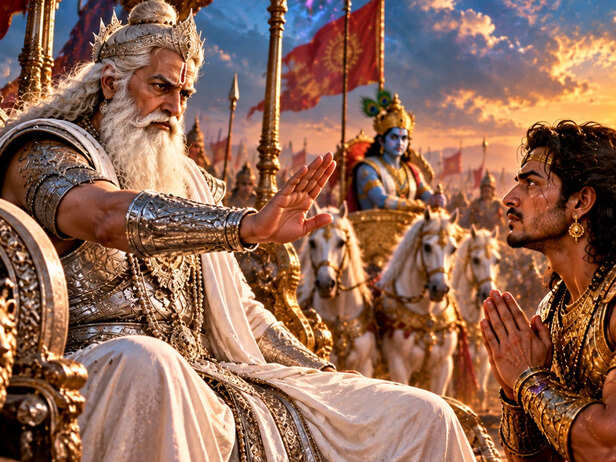
The relationship between Bhishma and Karna is one of the most misunderstood tensions in the Mahabharata.
At first glance, it seems contradictory. If Bhishma knew that Karna was actually Kunti’s firstborn son, why did he repeatedly speak against him?
The answer becomes clearer when we separate Karna’s identity from Karna’s choices.
Bhishma could recognise Karna’s greatness while still strongly disagreeing with the path he had chosen. Karna had become one of Duryodhana’s closest allies, and Bhishma saw Duryodhana’s actions as a serious threat to the Kuru family and the kingdom.
That is where their conflict truly begins.
Bhishma Saw Karna’s True Worth
Bhishma was not unaware of Karna’s abilities. Karna was a remarkable warrior, known for his generosity, courage and determination. But Bhishma judged people not only by their strength. He also looked at their conduct and loyalty to dharma as he understood it. Karna’s close association with Duryodhana became a major problem in Bhishma’s eyes. Duryodhana repeatedly acted against the Pandavas, and Karna often stood firmly beside him. So even if Bhishma knew something about Karna’s origins, that did not mean he would approve of every decision Karna made. Birth could explain a person’s identity, but choices revealed his allegiance.
Karna Chose Duryodhana
Karna’s relationship with Duryodhana was complicated by gratitude and loyalty. Duryodhana had publicly supported him when others questioned his social position and had made him the king of Anga. Karna never forgot that gesture. From then onward, he became deeply committed to Duryodhana. Bhishma, however, saw this loyalty differently. He believed Karna was strengthening a prince whose actions were pushing the Kuru family toward destruction. This created a painful divide. Karna believed loyalty required standing beside Duryodhana. Bhishma believed loyalty to the larger family and its moral duty required opposing a destructive course.
Their Real Clash Was Dharma
The conflict between Bhishma and Karna was not simply about personal dislike. It represented two competing ideas of duty. Bhishma had taken a lifelong vow to serve the Kuru throne and protect the dynasty. He placed duty above personal emotions, even when that duty became painfully complicated. Karna, meanwhile, placed enormous importance on repaying Duryodhana’s friendship. To Karna, abandoning the person who had stood beside him would feel like betrayal. This difference explains why the two men could recognise each other’s strength while remaining deeply opposed. Their tragedy was that both believed they were honouring a form of duty.
Bhishma Criticised Karna’s Conduct
One important distinction is often lost when the story is reduced to “Bhishma hated Karna.” Traditional accounts show a more complicated relationship. Bhishma criticised Karna’s conduct, his repeated support of Duryodhana and his involvement in the growing conflict with the Pandavas. The episode involving Draupadi’s humiliation also became central to how later readers judge Karna’s actions. Bhishma’s opposition therefore cannot simply be explained by jealousy. He could respect Karna’s martial ability while condemning choices he considered harmful. This is an uncomfortable but important lesson from the epic: admiring someone’s talent does not require approving their actions.
Why Didn’t Bhishma Reveal Everything?
Karna’s birth story carried enormous emotional consequences. Kunti had abandoned him as an infant, and his identity remained hidden for much of his life. Revealing the truth at the wrong moment could have dramatically changed relationships, loyalties and the political situation. Traditional interpretations therefore treat knowledge of Karna’s birth with great sensitivity. It is also important not to assume that every version of the Mahabharata presents every detail identically. The epic exists through ancient textual traditions and later retellings. What remains consistent is the tragedy of a man whose true identity was hidden for years and whose loyalties became deeply rooted before the truth emerged.
Karna Was More Than His Birth
The deeper tragedy is that Karna’s life cannot be understood through his birth alone. He was born to Kunti, but raised by Adhiratha and Radha. He grew up facing rejection and humiliation, which shaped his desire for recognition. Duryodhana gave him that recognition, and Karna responded with extraordinary loyalty. Bhishma saw the danger in that loyalty, while Karna saw it as honour. Neither man could completely step outside his own understanding of duty. That is why their relationship feels so emotionally powerful. Their disagreement was not simply between good and evil. It was between competing loyalties, wounds and ideas of honour.
The Tragedy Was Knowing Too Late
The most powerful lesson from Bhishma and Karna is that knowing someone’s hidden identity does not automatically change the choices they have already made. Karna’s birth connected him to the Pandavas, but his life experiences connected him to Duryodhana. Bhishma could recognise Karna’s greatness and still oppose the path he followed. That is what makes their conflict so human. Sometimes people are not divided because they fail to understand each other. They are divided because they understand the situation differently and choose different duties. The Mahabharata leaves us with a painful question: When loyalty and righteousness appear to point in different directions, which one should we choose?
Unlock insightful tips and inspiration on personal growth, productivity, and well-being. Stay motivated and updated with the latest at My Life XP.