
Why Did Brahma, Vishnu and Shiva Become Anusuya's Sons?
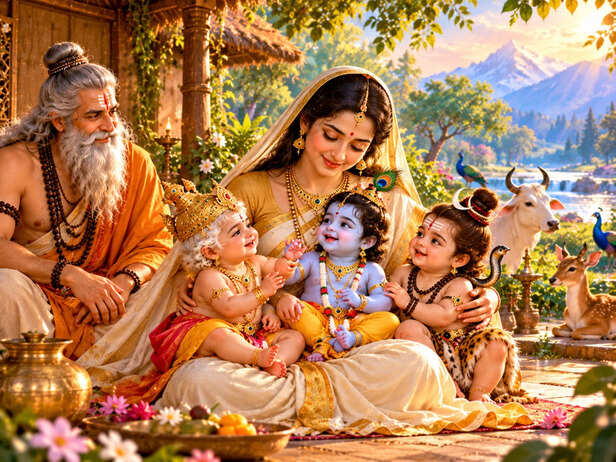
What if the greatest protection in the Ramayana came not from a weapon, but from the power of penance? When Lord Rama, Goddess Sita, and Lakshmana were living in exile, they visited the hermitage of Sage Atri and Sati Anusuya. There, Anusuya offered Sita divine gifts that carried a deeper meaning than their beauty alone. Her story also includes an extraordinary encounter with Brahma, Vishnu, and Shiva. Through her devotion, self-control, and generosity, Anusuya represents a form of Shakti that does not need to fight to prove its strength.
Who Was Sati Anusuya?
Sati Anusuya was the wife of Maharshi Atri, one of the Saptarishis, and is celebrated for her devotion, wisdom, and spiritual discipline. Her name is traditionally associated with freedom from envy. According to Hindu sacred stories, her penance was so powerful that even the divine trinity of Brahma, Vishnu, and Shiva came to test her. Her response became a famous example of spiritual strength. Anusuya's story teaches that true power does not always appear as physical force; it can also grow through self-control, compassion, and unwavering faith.
How She Faced the Three Gods
According to a popular Puranic story, the goddesses Lakshmi, Saraswati, and Parvati wanted to test Anusuya's virtue and spiritual strength. Brahma, Vishnu, and Shiva arrived at her hermitage in the form of ascetics and placed her in a difficult situation. Through her spiritual power, Anusuya transformed the three gods into infants and cared for them as a mother. The goddesses eventually approached her and requested their husbands' return to their original forms. Anusuya restored them, and the episode became a lasting symbol of her extraordinary devotion and composure.
The Blessing of Three Divine Sons
The encounter with the divine trinity is linked in various Hindu traditions to the birth of Anusuya's three sons: Dattatreya, Durvasa, and Chandra. Their associations differ across traditional accounts, but each carries a distinct place in Hindu belief. Dattatreya is revered as a spiritual teacher, Durvasa is known for his intense temperament and ascetic power, and Chandra is the lunar deity. This blessing adds another dimension to Anusuya's story. Her spiritual discipline is remembered not only through the test she passed but also through the divine legacy associated with her family.
Sita Meets Anusuya During Exile
During their forest exile, Lord Rama, Sita, and Lakshmana visited the hermitage of Sage Atri and Anusuya. The meeting appears in the Ramayana, where Anusuya warmly welcomes Sita and speaks with her about devotion, duty, and married life. Their conversation offers a quieter moment in an epic filled with danger and difficult choices. Anusuya recognises Sita's strength and sincerity, while Sita receives the older woman's guidance with respect. Their meeting shows how wisdom can pass between generations through a simple conversation, even in the middle of a challenging journey.
The Divine Gifts Given to Sita
Anusuya offered Sita divine garments, ornaments, and other gifts, according to the Ramayana tradition. These were more than beautiful objects; they expressed affection, respect, and a blessing for Sita during her years in the forest. Some later devotional retellings connect these gifts with Sita's dignity and protection during her ordeal in Lanka. However, the specific claim that the garments never tore during her abduction or protected her during the Agni Pariksha is not a detail consistently found across versions of the epic. The central message remains Anusuya's generosity and her wish to support Sita.
How Anusuya's Gifts Connect to Rama's Search
When Ravana abducted Sita, she dropped her ornaments while being carried away through the sky. These ornaments later became important clues in Rama's search. In the broader Ramayana story, the ornaments help connect Rama with the search for Sita, eventually leading to his alliance with Sugriva and his meeting with Hanuman. The epic does not establish that these were the same ornaments Anusuya had given Sita, so the two episodes should not be treated as a confirmed single chain of events. Both nevertheless carry a shared theme: small objects and acts of kindness can hold deep meaning during difficult times.
The Real Power of Tapasya
Anusuya's story offers a lesson that extends beyond the events of the Ramayana. Tapasya, or spiritual discipline, is not simply about enduring hardship; it also involves patience, control over one's impulses, and commitment to a meaningful purpose. Anusuya uses her strength to respond calmly to a difficult test and later offers Sita comfort and guidance. Her example reminds us that spiritual practice can shape how we treat others. The goddess Brahmacharini, worshipped as the second form of Durga during Navratri, also represents penance and devotion, although she is a distinct divine form from Sati Anusuya.
Unlock insightful tips and inspiration on personal growth, productivity, and well-being. Stay motivated and updated with the latest at My Life XP.