
Why Did Goddess Chandi Protect Ravana From Lord Ram?
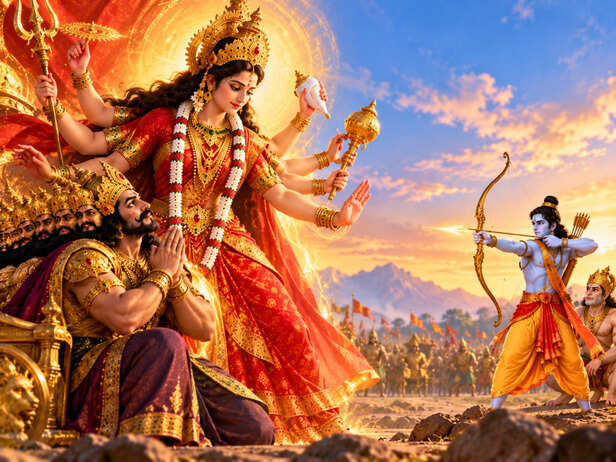
Imagine a moment when Lord Rama was ready to defeat Ravana, but Goddess Chandi appeared on Ravana’s side. Instead of moving forward, Rama put down his weapons. Why would the protector of dharma stop when victory seemed so close? This fascinating story from a traditional account of the Ramayana connects Ravana’s devotion, Goddess Chandi’s power, Hanuman’s cleverness and Lord Rama’s extraordinary offering of a lotus-like eye. It also reveals the story behind Akal Bodhan Puja, a ritual associated with the worship of Goddess Durga before Vijayadashami.
Ravana Sought Goddess Chandi’s Protection
According to this traditional retelling, Ravana asked Devguru Brihaspati to perform Chandi Puja so that he could receive the goddess’s protection during his battle with Lord Rama. The ritual began as the two armies prepared for a decisive confrontation. During the fight, Rama’s attack broke Ravana’s protective armour. Ravana recognised Rama’s divine nature and began praising him. Rama stopped fighting because Ravana had turned towards him in surrender. However, this unexpected pause threatened the course of the battle, setting the stage for another divine intervention.
Goddess Saraswati Changed Ravana’s Words
Seeing Rama stop the fight, the gods became concerned. In this account, Indra approached Goddess Saraswati for help. She appeared invisibly and influenced Ravana’s speech. Although Ravana had begun praising Rama, he suddenly started speaking harshly to him. Rama could no longer treat the moment as an act of surrender and prepared to continue the battle. The episode introduces an unusual idea: words can change the course of an entire situation. Ravana’s devotion and pride existed side by side, and the shift in his speech brought the conflict back to the battlefield.
Chandi Appeared Beside Ravana
Ravana then called upon Goddess Chandi, asking her to protect him because he had performed her worship with devotion. In this retelling, the goddess appeared on the battlefield and seated Ravana in her lap. Rama immediately stopped, unwilling to raise his weapons against the divine mother. The scene creates the central mystery of the story: why would Goddess Chandi protect someone standing against Lord Rama? The episode focuses on the power of worship and the complexity of divine intervention. It also explains why Rama needed the goddess’s blessings before the final stage of the battle.
Brahma Suggested Akal Bodhan Puja
After the goddess intervened, Lord Brahma and the other gods approached Rama and explained that he needed to worship the divine mother. This led to Akal Bodhan Puja, the untimely invocation of Goddess Durga outside her usual spring worship period. In the tradition associated with Bengal’s Durga Puja, Rama’s autumn worship became an important part of the story. The word akal refers to an unusual or untimely occasion, while bodhan means awakening or invocation. The episode links Ramayana mythology, Goddess Durga worship and the spiritual traditions observed during the autumn festival.
Rama Needed 108 Blue Lotus Flowers
Brahma advised Rama to offer 108 special blue lotuses to Goddess Chandi. Hanuman immediately went to find them and returned with the flowers. Rama began offering each lotus with devotion, but when he counted them, only 107 were available. One flower was missing, leaving the ritual incomplete. This moment turned the 108 blue lotus story into a test of Rama’s faith. Rather than abandoning the worship or waiting for another flower, Rama decided to make an offering that carried a deeply personal meaning.
Rama Offered His Lotus-Like Eye
Rama was also known as Rajiv Lochan, a name associated with his beautiful lotus-like eyes. When the final lotus could not be found, he decided to offer one of his own eyes in its place. His willingness to make this personal sacrifice expressed the depth of his devotion. Before Rama could complete the offering, Goddess Chandi appeared and stopped him. Pleased with his sincerity, she blessed him with victory. The heart of this Lord Rama and Goddess Chandi story is not the missing flower itself, but the devotion Rama showed when his worship was put to the test.
Hanuman Helped End Ravana’s Protection
In the concluding part of this traditional account, Hanuman went to the ritual being performed for Ravana’s protection. He entered in a subtle form and then revealed himself, disrupting Brihaspati’s concentration. As a result, the ritual was interrupted and its protective effect could no longer continue in the same way. Goddess Chandi withdrew her support from Ravana, clearing the path for Rama’s final battle. The episode gives Hanuman a role beyond physical strength: his intelligence and timing become essential to the story of Ravana’s Chandi Puja and Rama’s eventual victory.
Vijayadashami Became the Day of Victory
With Goddess Chandi’s blessings and Ravana’s ritual protection no longer in place, the story moves towards the final battle. Rama ultimately defeats Ravana, and the day is remembered as Vijayadashami, also known as Dussehra. In Hindu tradition, the festival celebrates the victory of dharma over adharma. The account of Akal Bodhan also helps explain the connection between Rama, autumnal Durga worship and the divine mother’s blessings. While versions of this story differ across regional and devotional traditions, its central theme remains clear: courage, devotion and the pursuit of righteousness work together.
What Does This Story Teach Us?
The story of Goddess Chandi and Lord Rama offers three lessons that remain relevant beyond the battlefield.
Devotion requires sincerity: Rama was prepared to offer something deeply personal rather than leave his worship incomplete.
Words carry responsibility: Ravana’s sudden change in speech shows how pride can undo a moment of humility.
Victory requires more than strength: The story places faith, patience, intelligence and righteous action alongside physical courage.
The deeper meaning of this traditional account is that devotion is not simply about performing a ritual. It is about the sincerity behind the offering and the willingness to stand by what is right. As Vijayadashami approaches, the story of Rama’s Akal Bodhan reminds devotees why Goddess Durga is worshipped during Navratri and why the festival celebrates the triumph of dharma.
Unlock insightful tips and inspiration on personal growth, productivity, and well-being. Stay motivated and updated with the latest at My Life XP.