
Why Did Karna Choose Duryodhana Despite Knowing the Truth?
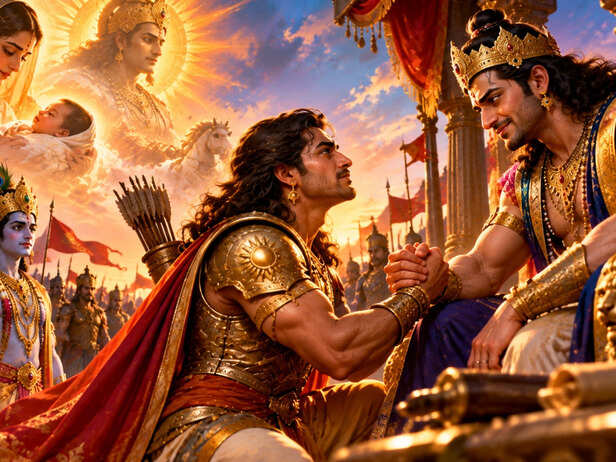
Karna is often remembered as one of the Mahabharata’s greatest symbols of loyalty. But there is a startling detail in his conversation with Lord Krishna that makes his story far more complicated. Karna knew that the coming war could destroy the Kaurava side. He even identified himself, Duryodhana, Dushasana and Shakuni as major causes of the coming destruction. He also declared that victory would stand where Dharma stood. So if Karna knew the truth, why did he still refuse to abandon Duryodhana?
Krishna Offered Karna a Different Future
Before the Kurukshetra War, Krishna approached Karna with a life-changing offer. He revealed that Karna was actually the eldest son of Kunti and therefore the elder brother of Yudhishthira, Bhima and Arjuna. Krishna presented him with the possibility of joining the Pandavas and becoming their leader. The offer was enormous because it could have completely changed the course of the war. Yet Karna did not simply reject Krishna because he was unaware of the consequences. His response showed that his bond with Duryodhana had become stronger than the promise of power.
Karna Was Not Chasing the Throne
This is where Karna’s character becomes difficult to judge in simple terms. Krishna offered him an opportunity connected with kingship and the Pandava side, but Karna chose to remain with Duryodhana. His decision suggests that personal ambition was not the only force guiding him. Duryodhana had stood beside Karna when many others rejected or looked down upon him. Karna remembered that support and considered his friendship a debt he could not simply abandon. His loyalty to Duryodhana therefore became one of the defining choices of his life, even when the consequences were becoming increasingly dangerous.
Karna Knew the Kauravas Were in Danger
The most surprising part comes from Karna himself. During his conversation with Krishna, he identified Shakuni, Duryodhana, Dushasana and himself as responsible for the destruction that was approaching. He also described signs pointing toward Yudhishthira’s victory and said that he knew victory belonged where righteousness was. This makes Karna’s decision even more complicated. He was not blindly convinced that Duryodhana would win. He understood the danger, yet continued to stand beside the Kaurava prince.
He Admitted His Own Mistakes
Karna’s conversation with Krishna also exposes his inner conflict. The Mahabharata presents him as aware of the role he had played in the growing hostility. His earlier words and actions against the Pandavas could not simply be erased. In another passage, Krishna directly reminds Karna that he, Duryodhana, Dushasana and Shakuni had participated in actions that harmed Draupadi and the Pandavas. This makes Karna more than a simple hero or villain. He was a powerful warrior who understood some of his mistakes but still remained tied to the side he had chosen.
So Why Did Karna Refuse to Leave?
Karna’s answer lies partly in his sense of gratitude. Duryodhana had given him recognition and status when Karna faced rejection because of his social identity. That relationship became central to Karna’s life. Leaving Duryodhana at the moment of crisis would have meant abandoning the person he believed had stood by him. But the story also raises an uncomfortable question: does loyalty remain virtuous when the person you support is doing wrong? The Mahabharata does not make this question easy. Karna’s loyalty can be admired as personal commitment while his participation in wrongdoing can still be criticised.
Karna Already Knew Where Dharma Stood
One of Karna’s most striking statements to Krishna was his recognition that victory would belong where Dharma stood. He also described Yudhishthira as the one who would ultimately rule the earth. This suggests that Karna understood the moral and political direction of the coming conflict. Yet knowing something and acting on it are not always the same. Karna had already made his choice, and his promise to Duryodhana carried enormous weight for him. His tragedy was not simply that he failed to understand the truth. It was that he understood much of it and still chose loyalty.
Karna’s Real Tragedy Was His Choice
Karna’s story becomes powerful because there is no simple answer. He was loyal, courageous and generous in many parts of the Mahabharata, but he also participated in actions that caused suffering to the Pandavas and Draupadi. His conversation with Krishna shows that he recognised the coming destruction and understood the importance of Dharma. Still, he refused to abandon Duryodhana. That is why Karna’s story continues to raise questions centuries later. Loyalty can explain a choice, but it does not automatically make every action of the person we support righteous.
Unlock insightful tips and inspiration on personal growth, productivity, and well-being. Stay motivated and updated with the latest at My Life XP