
Why Did Krishna Call Draupadi His Sakha, Not Sakhi?
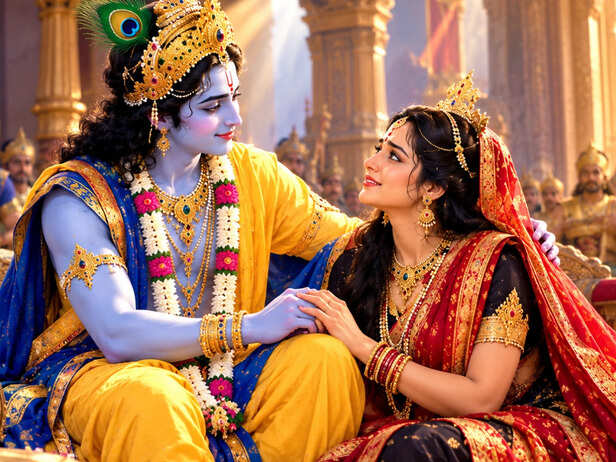
Why would Shri Krishna call Draupadi his sakha when the more familiar word for a female friend is sakhi? At first, the difference may look like a simple matter of language. But the idea behind sakha bhava goes much deeper. In the traditional understanding of their relationship, Krishna and Draupadi shared a bond built on trust, emotional closeness and mutual respect. Calling her sakha shifts attention away from gender and towards the intimacy of friendship. That is what makes this small word choice so interesting: it describes Draupadi not merely by who she was, but by the place she held in Krishna's relationship with her.
Why ‘Sakha’ Stands Out
The first thing to understand is that translating sakha simply as “male friend” can make its meaning seem narrower than the cultural and literary idea behind it. In Sanskrit and related Indian traditions, sakha refers to a friend or companion, while sakhi is commonly used for a female friend. In the Krishna-Draupadi relationship, however, the emphasis is often placed on the quality of their bond. Draupadi was not being defined only as a woman who was Krishna's friend. She was being remembered as someone with whom he shared trust, affection and emotional intimacy.
Friendship Beyond Gender
This is where the meaning becomes more interesting. If the relationship were reduced to the modern categories of “male friend” and “female friend,” something could be lost in translation. Sakha bhava focuses more on the emotional relationship than on gender. It suggests a person with whom one can speak openly, share feelings and feel understood. That is why the word can be read as a statement about closeness rather than a label based on gender. For readers exploring Krishna and Draupadi's relationship, this distinction helps explain why their friendship is remembered as a deeply personal bond.
The Bond Was Built on Trust
Think about the person you would call when everything around you feels uncertain. It is not necessarily the person with the same background or gender. It is the person you trust without hesitation. This idea helps explain the emotional meaning associated with Krishna and Draupadi's friendship. Draupadi repeatedly turned towards Krishna in moments of distress, and Krishna is remembered as someone she could approach with complete confidence. Their bond therefore goes beyond ordinary companionship. The word sakha captures the idea of a friend who occupies a deeply trusted place in one's emotional world.
Krishna Did Not Treat Her as Lesser
Another important idea connected with sakha bhava is equality. Krishna is worshipped as a divine figure, while Draupadi is one of the central women of the Mahabharata. Yet the traditional image of their friendship is not built around distance or formality. Draupadi could question, speak openly and seek Krishna's support. Krishna, in turn, treated her relationship with him as one of genuine closeness. This does not erase the devotional understanding of Krishna. Instead, it shows another dimension of the tradition: a divine figure can also be approached through the deeply human language of friendship and trust.
Why The Word Feels So Personal
There is a simple emotional reason why sakha feels more powerful in this context. A friend is someone with whom you can speak without constantly measuring every word. You can share fear, anger, happiness and confusion. That sense of emotional freedom is central to the idea of sakha. Calling Draupadi sakha can therefore be understood as highlighting the closeness of the relationship rather than her identity as a woman. It turns the focus towards the person herself: someone trusted, valued and emotionally close. That is very different from reducing the relationship to a simple gender-based category.
The Meaning Goes Beyond Translation
Modern translations often need to fit ancient words into familiar categories, but one word can carry more cultural meaning than its nearest English equivalent. Sakha is one such word. Translating it only as “male friend” misses the emotional and cultural context in which friendship is understood. The Krishna-Draupadi bond is remembered through trust, loyalty, openness and mutual regard. Whether one approaches the story through devotion, literature or cultural tradition, the idea of sakha bhava offers a meaningful way to understand their connection. The relationship becomes less about labels and more about the depth of friendship itself.
A Friendship Remembered for Its Trust
The beauty of the Krishna Draupadi friendship lies in what the word sakha represents. It is not simply about whether a friend is male or female. It is about the person who feels close enough to share your heart with, someone you can trust even when life becomes difficult. That is why the traditional idea of sakha bhava gives this relationship such a distinctive emotional quality. Krishna's bond with Draupadi is remembered not merely as a connection between two characters in the Mahabharata, but as an example of friendship where trust, dignity and emotional closeness matter more than labels.
Unlock insightful tips and inspiration on personal growth, productivity, and well-being. Stay motivated and updated with the latest at My Life XP