
Why Did Krishna Curse His Own Son Samba With Leprosy?
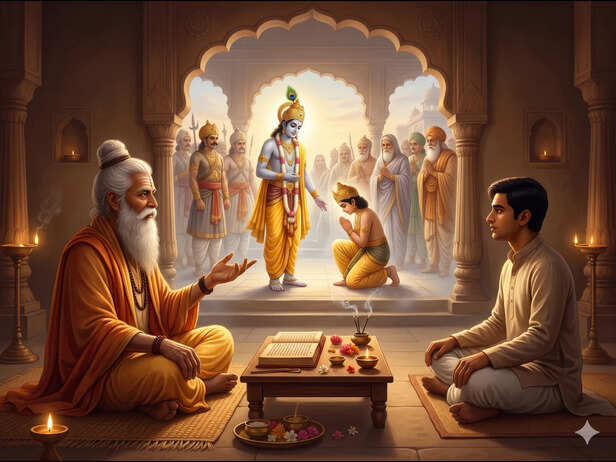
Samba was the son of Lord Krishna and Jambavati, known for his extraordinary beauty. Yet, according to a popular Hindu legend, that beauty became the reason behind a terrible curse. When Krishna mistakenly believed that his son had behaved inappropriately, he cursed him with leprosy. Even after discovering the truth, Krishna could not take the curse back. Instead, he showed Samba a path to healing through devotion to the Sun God. The story carries a fascinating connection with the Chandrabhaga River and the Sun Temple tradition of Odisha.
The Prince Whose Beauty Became a Curse
Samba was the son of Lord Krishna and Jambavati. According to a popular Puranic retelling, he was so handsome that people could not help noticing him. His appearance eventually became the centre of a troubling misunderstanding in Dwarka. Narada told Krishna that some of his queens were attracted to Samba's beauty. The statement created suspicion in Krishna's mind, setting the stage for a curse that would change his son's life.
Narada's Words Created Suspicion
In the version narrated in the Varaha Purana, Narada tells Krishna that his queens admire Samba and suggests that the young prince is also responsible for their attraction. Krishna becomes disturbed and decides to see the situation for himself. The story describes how Narada's words influence his judgement. However, this episode has different versions across Puranic accounts, and the details of Samba's alleged wrongdoing are not presented in exactly the same way in every tradition.
Krishna's Curse Takes Away Samba's Beauty
Angered by what he believes to be his son's conduct, Krishna curses Samba. In an instant, the prince's extraordinary beauty is replaced by the suffering of leprosy. Samba is devastated, especially because he knows that his father's anger has changed his life completely. When the truth becomes clear, Krishna regrets what has happened. But the curse cannot simply be withdrawn. He advises Samba to seek the blessings of Surya Dev, the Sun God, who is believed to have the power to cure him.
Samba Begins His Penance to Surya Dev
Following his father's advice, Samba travels to a sacred place associated with the Chandrabhaga River and begins worshipping Surya Dev. According to the traditional account, he spends twelve years performing penance and offering prayers to the Sun God. His devotion becomes his only hope after losing his health and appearance. Every day, he continues his worship with faith, asking Surya Dev to free him from the suffering caused by the curse.
The Sun God Frees Samba From His Suffering
The legend says that Surya Dev is pleased with Samba's devotion and grants him relief from his suffering. In one traditional account, Samba discovers an image of the Sun God in the waters of the Chandrabhaga River while bathing. His prayers are finally answered, and he is freed from the curse. The story is remembered as an example of unwavering devotion to Surya Dev. It also became closely associated with the growth of Sun worship in different parts of the Indian subcontinent.
The Legend Behind the Sun Temple Tradition
Samba's story is often connected with the sacred tradition of Sun worship at the Chandrabhaga River. However, the famous Konark Sun Temple should not be described as a temple historically built by Samba. Historical records place its construction in the 13th century under King Narasimhadeva I of the Eastern Ganga dynasty. The temple was designed as a magnificent stone chariot dedicated to Surya Dev. The Samba legend and the historical monument are connected through the wider religious tradition of Sun worship in Odisha.
The Connection With Chhath Puja
The story of Samba is also remembered alongside the tradition of worshipping Surya Dev. During Chhath Puja, devotees offer arghya to the setting Sun in the evening and to the rising Sun the following morning. Both moments are treated as sacred, with prayers expressing gratitude and seeking blessings for family well-being. While the Samba legend is one story associated with devotion to the Sun God, it should not be treated as the sole historical origin of Chhath Puja. The festival has its own rich traditions and regional stories.
Unlock insightful tips and inspiration on personal growth, productivity, and well-being. Stay motivated and updated with the latest at My Life XP.