
Why Did Lord Krishna Call Himself Margashirsha Among All Months?
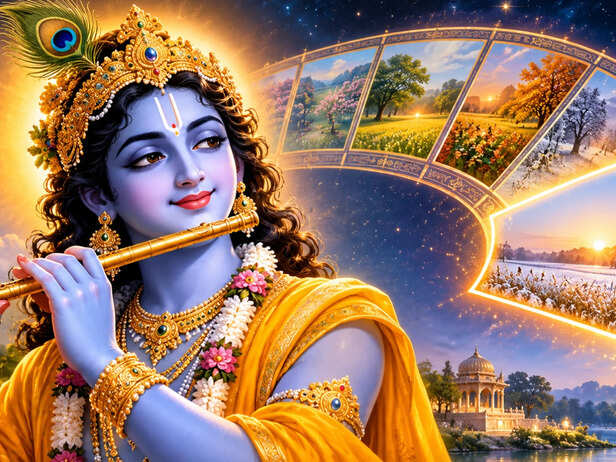
Hinduism gives spiritual importance to different months of the lunar calendar, but Margashirsha Maas holds a particularly special position. It is also known as Aghan Maas and generally falls between November and December in the Gregorian calendar.
Many devotees consider this month favourable for prayer, meditation, charity and religious activities. People also wake up early to take holy baths, worship Lord Vishnu and Krishna, chant sacred mantras and perform acts of kindness.
However, the importance of this month goes beyond traditional rituals. Its connection with Lord Krishna comes directly from one of the most important verses of the Bhagavad Gita.
Why Did Lord Krishna Say He Was Margashirsha?
The answer can be found in Chapter 10 of the Bhagavad Gita, known as Vibhuti Yoga or the Yoga of Divine Glories.During the conversation at Kurukshetra, Arjuna wanted to understand the different ways in which the Supreme Divine could be recognised in the world.In response, Lord Krishna explained that His divine presence could be seen through the most remarkable and powerful manifestations of creation.While describing these manifestations, He said:
"Masanaam Margashirshoham."
This Sanskrit phrase means, "Among the months, I am Margashirsha."
The verse appears in Chapter 10, Verse 35 of the Bhagavad Gita.
But why did Krishna select Margashirsha instead of another month?The deeper explanation lies in the qualities associated with this period. Krishna was not simply declaring one month more important than the others. He was explaining how divine excellence can be recognised through different aspects of creation.
1. Margashirsha Represents a Season of Natural Abundance
One traditional explanation connects Margashirsha with the agricultural cycle and the arrival of the harvest season in many parts of India.During this period, fields in several regions begin to show the results of months of agricultural effort. The weather also becomes relatively pleasant in many parts of the country after the monsoon.For an agricultural society, this period represents nourishment, prosperity and the rewards of patience.
Food has always held a sacred position in Hindu philosophy. It is associated with life, gratitude and divine blessings.Margashirsha therefore reminds devotees to appreciate nature's gifts and recognise the divine presence in the abundance that sustains life.
2. It Is a Month Associated With Devotion and Spiritual Discipline
Margashirsha is traditionally considered an auspicious period for spiritual practices. Many devotees use this month to strengthen their connection with Lord Vishnu and Lord Krishna.Early morning prayers, meditation, chanting and reading religious scriptures are common practices during this period.The significance of these activities is not limited to completing religious rituals. They encourage people to develop discipline, patience and devotion.Lord Krishna's declaration in the Bhagavad Gita can also be understood through this perspective. He reminds Arjuna that the divine is not separate from everyday life. It can be experienced through sincere devotion and spiritual awareness.
3. Margashirsha Is Connected With the Sacred Bhagavad Gita
Another important reason this month receives special attention is its association with the Bhagavad Gita.The Bhagavad Gita is a conversation between Lord Krishna and Arjuna on the battlefield of Kurukshetra. It explains important principles of life, including karma, dharma, devotion and self-realisation.The month is particularly associated with Gita Jayanti, which commemorates the day Lord Krishna delivered the teachings of the Bhagavad Gita to Arjuna.
Gita Jayanti is observed on Margashirsha Shukla Ekadashi, also known as Mokshada Ekadashi.Devotees mark this occasion by reading the Bhagavad Gita, organising religious gatherings and listening to its teachings.This connection makes Margashirsha especially meaningful for people who want to understand Krishna's message and apply it to their daily lives.
4. The Month Reminds People to Practise Gratitude
Margashirsha also carries an important message about gratitude.
In Hindu traditions, nature is respected as a source of nourishment. The sun, rivers, soil, rain and crops are considered essential gifts that support human existence.The arrival of this month reminds people to appreciate these natural resources rather than take them for granted.
This idea is closely connected with Lord Krishna's teachings about recognising the divine in different forms of creation.When Krishna says that He is Margashirsha among the months, He highlights the extraordinary qualities that make this period special.It encourages devotees to look beyond material celebrations and understand the spiritual meaning of the world around them.
5. Why Do Devotees Perform Special Rituals During Margashirsha Maas?
Margashirsha is associated with several religious practices that devotees follow to seek divine blessings.
Some of the commonly observed practices include:
- Early morning bathing: Many devotees take an early morning bath, with some choosing to visit sacred rivers.
- Worshipping Lord Vishnu: Special prayers and offerings are made to Lord Vishnu and His various forms.
- Reading the Bhagavad Gita: Devotees read or listen to the teachings of Krishna to understand the importance of dharma and karma.
- Tulsi worship: Offering prayers to the sacred Tulsi plant is an important Vaishnava practice.
- Charity and food donation: Donating food, clothes and other necessities is considered a meaningful act of kindness.
- Chanting mantras: Many devotees chant the names of Lord Krishna and Lord Vishnu as part of their daily spiritual routine.
These practices reflect the larger message of Margashirsha Maas: devotion should be accompanied by good actions and compassion towards others.
What Does Krishna's Message About Margashirsha Teach Us?
Lord Krishna's declaration in the Bhagavad Gita carries a meaning that extends beyond the religious calendar.
Through Vibhuti Yoga, Krishna explains that the divine can be recognised through the finest and most remarkable aspects of existence.His reference to Margashirsha teaches devotees to appreciate the beauty of nature, the importance of spiritual discipline and the value of gratitude.It also reminds people that devotion is not restricted to temples or special occasions. It can become a part of everyday life through honest actions, kindness and a sense of responsibility.Margashirsha Maas therefore offers an opportunity to pause, reflect and reconnect with one's spiritual values.
Unlock insightful tips and inspiration on personal growth, productivity, and well-being. Stay motivated and updated with the latest at My Life XP.