
Why Did Radha Rani’s Hair Look Like a Snake?
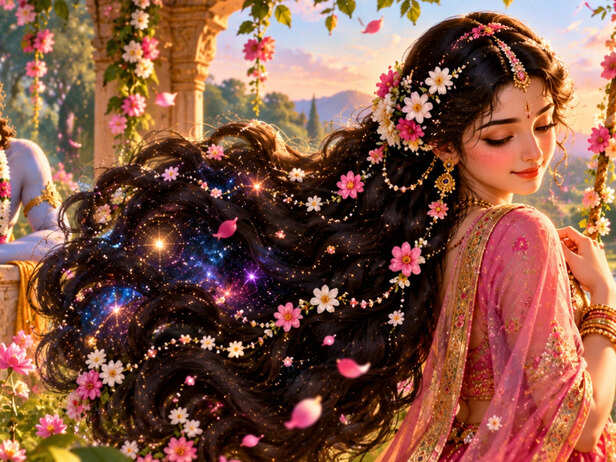
What if a simple description of Radha Rani suddenly became the reason for a divine realisation? A popular Vaishnava tradition tells a beautiful story involving Sanatan Goswami, Rupa Goswami and Radha Kund. Around five centuries ago, when the sacred places of Vrindavan were being rediscovered and developed through the work associated with Chaitanya Mahaprabhu and the Six Goswamis, Rupa Goswami was writing about Radha Rani. He described her dark, beautiful hair using an image that Sanatan Goswami initially questioned. What happened next became a memorable Radha Rani leela, where an ordinary-looking child is said to have revealed something extraordinary.
When Vrindavan Was Rediscovered
About five centuries ago, Vrindavan was very different from the pilgrimage centre people know today. In Gaudiya Vaishnava tradition, Chaitanya Mahaprabhu inspired the rediscovery and development of Krishna’s sacred places through his followers, especially the Six Goswamis of Vrindavan. Among them were Rupa Goswami and Sanatan Goswami, who played important roles in documenting devotional practices and sacred sites. Their work became closely connected with places such as Radha Kund. It was during this devotional period that the story of Radha Rani and Sanatan Goswami is traditionally placed.
Rupa Goswami’s Description
According to the traditional Radha Rani story, Rupa Goswami was once writing about her beauty and divine qualities in Vrindavan. While describing her hair, he used an image comparing its dark appearance to a serpent. When Sanatan Goswami heard about the description, he reportedly questioned whether such an analogy was appropriate. He felt that another comparison might be more suitable for describing Radha Rani’s hair. The discussion seemed simple, but the story was about to take an unexpected turn near Radha Kund.
The Mysterious Girl at Radha Kund
After this conversation, Sanatan Goswami went toward Radha Kund. While sitting there, he noticed some young girls playing nearby. Suddenly, one girl caught his attention. Her dark hair appeared strikingly similar to the image that Rupa Goswami had used in his writing about Radha Rani. According to the devotional story, Sanatan Goswami called out after noticing her hair. He then moved closer to see the girl more clearly. What he saw next made him rethink the criticism he had made about Rupa Goswami’s description.
The Moment of Realisation
As Sanatan Goswami came closer, the story says he realised that the dark shape he had noticed was actually the girl’s hair. She looked at him, smiled and then walked away. According to the Radha Rani leela, Sanatan Goswami understood that this was no ordinary child. He believed that Radha Rani herself had appeared before him. The moment gave him a new understanding of Rupa Goswami’s words. The comparison he had questioned suddenly seemed meaningful. For devotees, this is the emotional turning point of the Radha Kund story.
Why Rupa Goswami Was Right.
After the experience, Sanatan Goswami is said to have returned to Rupa Goswami and told him what had happened. He no longer wanted the description changed. Instead, he understood that the unusual comparison had captured something he had not personally perceived. This part of the Radha Rani story carries a deeper devotional message. In the tradition, Rupa Goswami’s words were not treated simply as poetic imagination. The Radha Rani leela was understood as a divine confirmation of his devotion and vision.
The Devotion Behind the Leela
The story is remembered not merely because of the mysterious appearance of a girl, but because of the devotion of the two Goswamis. Rupa Goswami and Sanatan Goswami are central figures in the Gaudiya Vaishnava tradition, and stories about them often focus on humility and complete dedication. The Radha Rani leela teaches devotees to approach sacred experiences with faith and humility. It also shows why Radha Kund holds such a special place in the devotional geography of Vrindavan. For believers, the story is less about proving an event and more about experiencing its spiritual meaning.
The Message of Radha Rani’s Leela
The deepest message of this Radha Rani story is about devotion that goes beyond ordinary understanding. Sanatan Goswami initially questioned a description, but the traditional Radha Rani leela gave him a different perspective. For devotees, the episode suggests that sincere devotion can change the way a person sees even familiar things. The story of Rupa Goswami, Sanatan Goswami and Radha Kund has therefore continued through generations of Vaishnava storytelling. It is remembered as a gentle reminder that divine love, according to the tradition, can reveal itself in the simplest and most unexpected moments.
Unlock insightful tips and inspiration on personal growth, productivity, and well-being. Stay motivated and updated with the latest at My Life XP