
Why Did Rama Hide Sita Before Ravana Took Her?
But the biggest twist came much later. The woman Ravana thought he had captured was said to be Chhaya Sita, while the real Sita remained protected by Agni.
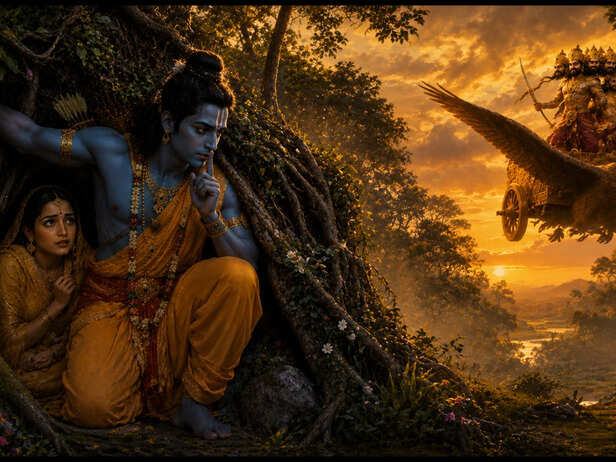
What if the Sita who was taken by Ravana was not the real Sita? This question lies at the heart of one of the most fascinating versions of the Ramayana. According to the Chhaya Sita tradition, Lord Rama already knew that Ravana would attempt to abduct Sita. Before the abduction, he entrusted the real Sita to Agni Dev, while a divine reflection or "shadow Sita" remained in the hermitage. Later, when Ravana abducted her, he believed he had taken Sita. But there is an important detail: this episode is not described in exactly the same way in every Ramayana tradition. The Chhaya Sita story is especially prominent in later devotional texts and retellings. So why was this divine plan needed? And how does it explain Sita's return from Agni?
Rama Knew Something Was Coming
According to this devotional tradition, Rama had already understood that Ravana would try to abduct Sita. But he did not simply tell her to leave the forest. Instead, he explained that she would need Agni Dev's protection until the danger had passed. Sita accepted Rama's instruction. The real Sita then entered the protection of Agni, while her divine reflection remained behind. This created the mysterious situation that would later confuse everyone. To the outside world, Sita was still present. But according to the Chhaya Sita tradition, the real Sita was already safe.
The Golden Deer Changed Everything
Then came the golden deer. The beautiful creature fascinated Sita, and she asked Rama to bring it to her. The deer was actually Maricha, a demon working with Ravana. Rama followed him into the forest. After Maricha was struck, he cried out in Rama's voice, creating fear and confusion at the hermitage. Sita urged Lakshmana to go after Rama. Lakshmana eventually left. That was the opening Ravana had been waiting for. He arrived disguised as a mendicant and approached Sita. But according to the Chhaya Sita tradition, the real Sita was already under Agni's protection.
Ravana Took Chhaya Sita
This is where the story takes its most surprising turn. Ravana believed he had successfully abducted Sita. But according to the Chhaya Sita account, he had actually taken a divine shadow or reflection of Sita. This figure is commonly called Chhaya Sita. The idea changes the emotional meaning of the abduction. Instead of Ravana gaining power over the real Sita, the divine plan ensured that she remained protected. However, this should not be presented as a detail found identically in every Ramayana. The Valmiki Ramayana narrates Sita's abduction directly, while the Chhaya Sita explanation appears prominently in later traditions and texts.
Why Was This Divine Deception Needed?
The purpose of the divine substitution was not simply to trick Ravana. It was also connected with the larger divine plan. Ravana's actions would eventually lead to the confrontation between Rama and the forces of Lanka. The war would result in Ravana's defeat and the restoration of dharma. In the Chhaya Sita tradition, Agni therefore becomes more than an element of the final ceremony. He becomes the guardian of the real Sita. The story gives a deeper meaning to the later Agni episode: Sita is not being purified because she is impure. Instead, she is being returned from Agni's protection.
The Agni Pariksha Holds the Biggest Twist
After Ravana's defeat, Sita faced the famous Agni Pariksha episode. This is where the Chhaya Sita tradition provides its most dramatic explanation. The real Sita, who had remained under Agni's protection, returned. At the same time, Chhaya Sita was said to disappear or be taken back by Agni. This means the fire is understood differently in this tradition. Rather than simply proving Sita's purity, the episode becomes a divine exchange and revelation. It explains how the real Sita could return to Rama after the period of her apparent captivity.
But Is Chhaya Sita in Every Ramayana?
This is the detail that deserves honesty. There is no single version of the Ramayana followed identically everywhere. The Valmiki Ramayana and later devotional texts sometimes present important episodes differently. The Chhaya Sita narrative is particularly associated with later traditions, including the Adhyatma Ramayana and other devotional retellings. Therefore, saying that "the original Ramayana definitely says Rama replaced Sita with her shadow" would be misleading. A better understanding is this: The Chhaya Sita story is a respected devotional interpretation that developed within the wider Ramayana tradition. That distinction makes the story even more fascinating.
The Deeper Meaning Behind Chhaya Sita
The most powerful lesson is not simply that Ravana was deceived. It is that the story presents divine protection working beyond what human beings can see. Ravana believed he had won. But according to this tradition, he never possessed the real Sita. The apparent tragedy was part of a much larger divine plan that ultimately led to Ravana's downfall. And the return through Agni completed that hidden circle. The story therefore transforms a painful episode into one about faith, protection, destiny and the victory of dharma.
Unlock insightful tips and inspiration on personal growth, productivity, and well-being. Stay motivated and updated with the latest at My Life XP.