
Why Did Ravana Take Shiva’s Golden Palace? The Truth
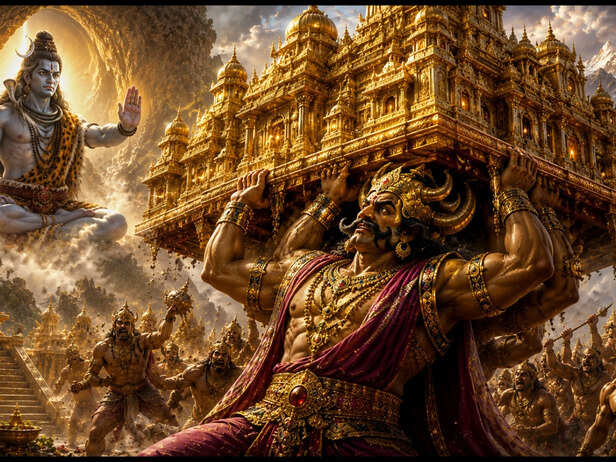
What if the magnificent golden palace associated with Ravana was once built for Maa Parvati? A fascinating tradition in Hindu storytelling connects Shiva, Parvati, Ravana and Hanuman through a tale of desire, destiny and divine irony. According to this popular narrative, Parvati wanted a grand home, so Shiva created a magnificent golden palace for her. But when Ravana was invited to perform the house-warming ritual, he became so captivated by the palace that he asked for it as his dakshina. What happened next carries a powerful message about attachment, destiny and the things we cannot possess simply because we want them.
The Palace Parvati Had Longed For
According to this popular traditional story, Parvati once wished for a magnificent home. She wanted a palace worthy of the divine couple, and Shiva eventually agreed. A splendid golden palace was created for her. Parvati was delighted, but Shiva is said to have known something she did not. The palace might be beautiful, but beauty alone could not determine its destiny. This becomes the first emotional turn in the story: sometimes, what we desperately want may enter our lives only briefly, because its purpose is connected to something much larger.
Why Was Ravana Invited?
For the griha pravesh ceremony, Ravana was invited to perform the sacred rituals. In the traditional account, Ravana was not merely a powerful ruler but also a learned scholar and devoted worshipper of Shiva. He completed the rituals and then looked closely at the magnificent palace. Instead of asking for ordinary wealth as his dakshina, Ravana made an extraordinary request. He wanted the golden palace itself. The request shocked Parvati, but Shiva reportedly remained calm. He gave Ravana what he had asked for, turning the entire episode into a lesson about destiny.
Shiva Had Already Seen What Was Coming
The most intriguing part of the story is Shiva’s response. Instead of fighting Ravana or refusing his demand, Shiva allowed him to take the palace. The message is subtle but powerful. Parvati wanted the palace, but Shiva understood that possession was not always the same as destiny. Ravana could take the palace physically, yet that did not mean it would remain his forever. The story therefore shifts from a tale about gold to a tale about attachment. Sometimes life removes something we desperately wanted because it was never meant to become a permanent part of our journey.
The Golden Palace Became Lanka
In popular Ramayana traditions, Ravana’s Lanka is famously described as a city of extraordinary splendour and wealth. Some later retellings connect its golden magnificence with the palace Ravana received from Shiva. This detail adds another layer to the story. Ravana possessed immense wealth, power and a city that appeared almost impossible to defeat. Yet none of these possessions could protect him from the consequences of his choices. His golden world ultimately became a symbol of how material greatness can exist alongside inner downfall.
Why Did Hanuman Burn Lanka?
The story later connects Parvati’s anger with Lanka Dahan, when Hanuman set Lanka ablaze. A popular belief in some retellings says that Parvati’s presence in Hanuman’s tail helped bring about the destruction of Ravana’s golden city. This connection is part of later devotional storytelling and should not be confused with the account in Valmiki’s Ramayana. Yet its symbolic meaning is striking. The golden palace that Ravana desired became part of a city that would eventually burn. The very possession he valued could not save him from the consequences of his actions.
The Real Lesson Is About Destiny
The deepest lesson of this story is not about a palace made of gold. It is about attachment and destiny. We often believe that getting something means we are meant to keep it. But life does not always work that way. A relationship, job, possession or opportunity may enter our lives and later disappear. That loss can feel unfair at first. The story encourages a different perspective: perhaps some things arrive to teach us, transform us or prepare us for something else. Holding on too tightly can sometimes create more pain than letting go.
What This Story Can Teach Us Today
The next time something you desperately wanted slips away, pause before asking, “Why did this happen to me?” Try asking, “What is this experience teaching me?” The traditional tale of Shiva, Parvati and Ravana reminds us that desire can make us believe that possession equals happiness. But even Ravana’s legendary wealth could not guarantee permanence. Sometimes surrender is not defeat. Sometimes it is wisdom. And sometimes the thing we lose is making space for a path we could not have seen while we were still holding on.
Unlock insightful tips and inspiration on personal growth, productivity, and well-being. Stay motivated and updated with the latest at My Life XP.