
Why Did Shiva Forgive the Woman Who Killed Her Own Nephew?
It comes later, when Ghrishma discovers the truth and Shiva offers her the chance to ask for anything.
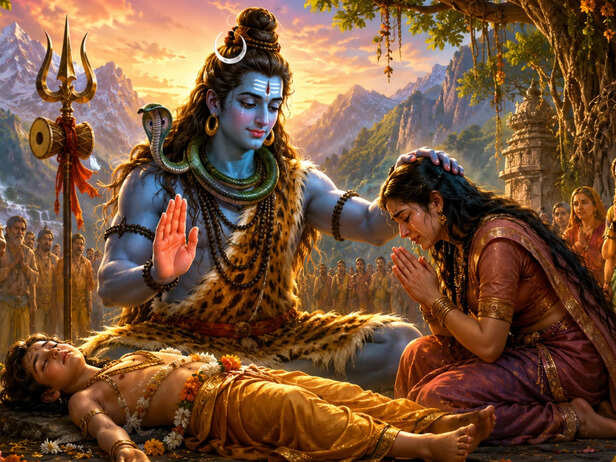
What would you ask Lord Shiva if the person who destroyed your family stood before you? Justice? Punishment? Revenge? According to the traditional story of Ghrishneshwar Jyotirlinga, Ghrishma faced an unimaginable tragedy. Her own son was murdered, and his body was thrown into a pond. Yet when Shiva finally appeared before her and revealed the truth, Ghrishma made a request that almost feels impossible to imagine. She asked Shiva to forgive the woman who had killed her son. That one decision transformed a story of jealousy and loss into a powerful lesson about devotion, forgiveness and the battle between the human mind and the human heart.
A Family Torn Apart by Jealousy
According to the traditional account, Sudha and her husband Sudharma had lived for years without a child. The pain of social pressure and loneliness eventually led Sudha to suggest that her husband marry her younger sister Ghrishma. Ghrishma later became deeply devoted to Lord Shiva and regularly worshipped Shiva Lingas as part of her spiritual practice. Her devotion was eventually followed by the birth of a son. But the happiness that entered the family also awakened something darker in Sudha. Instead of celebrating her sister’s joy, she began comparing her own life with it. Slowly, affection gave way to jealousy.
Jealousy Turns Into a Terrible Crime
As Ghrishma’s son grew older, Sudha’s resentment intensified. In the traditional story, she eventually murdered the boy while he was asleep and threw his remains into the nearby pond. The next morning, the family and villagers were devastated. Nobody understood what had happened. Ghrishma, however, did something remarkable. Despite the unbearable tragedy, she did not abandon her daily worship of Shiva. She went to the pond and continued her ritual. Her actions create the central contrast of the story: one person allows jealousy to consume her, while another holds onto devotion even when life gives her every reason to break.
The Pond Holds an Impossible Secret
While performing the ritual near the pond, Ghrishma noticed something impossible. Her son appeared alive on the other side of the water. She rushed toward him and embraced him. At that moment, the story describes a divine light emerging from the Shiva Lingas, filling the area with a sacred radiance. Lord Shiva appeared before his devotee. He was pleased by Ghrishma’s unwavering devotion during the darkest moment of her life. Shiva then revealed what had actually happened to her son. The mystery was finally solved, but the greatest test for Ghrishma had only just begun. She now had to decide what to ask Shiva for.
Shiva Offers Her a Divine Choice
Shiva revealed that Sudha had committed the terrible act. He was ready to respond to the crime and offered Ghrishma the opportunity to ask for what she wanted. This was the moment when revenge could have seemed completely justified. Ghrishma had lost her child and had been betrayed by someone close to her. Yet instead of asking Shiva to destroy Sudha, she asked Him to forgive her. Her response changes the emotional direction of the entire story. Ghrishma does not deny the wrong that happened. Instead, she chooses compassion over revenge, showing that forgiveness can sometimes require greater strength than punishment.
Ghrishma Asks for Something Greater
Ghrishma then makes another extraordinary request. She asks Shiva to remain at that very place for the welfare of people. Shiva accepts her wish and manifests there as a Jyotirlinga. The sacred shrine becomes associated with her devotion and is traditionally known as Ghrishneshwar or Ghushmeshwar. The temple is located near Verul, close to the Ellora Caves in Maharashtra’s Chhatrapati Sambhajinagar region. It is revered as one of the twelve Jyotirlingas of Lord Shiva. The story therefore moves from personal tragedy to a larger spiritual message: one devotee’s faith becomes connected with a sacred place remembered by generations.
The Real Battle Happens Inside Us
The story can also be understood as a reflection of the conflict within human beings. Jealousy can make someone compare their life with another person’s happiness. Resentment can turn pain into anger. But devotion, self-awareness and compassion can create another path. Ghrishma’s response does not mean that wrongdoing should simply be ignored. Rather, the story asks us to consider what happens when we refuse to let another person’s actions destroy our own inner peace. The image of Shiva’s light emerging at the moment of crisis becomes especially meaningful. It suggests that even in darkness, awareness can appear when the mind refuses to surrender completely to hatred.
What Ghrishma’s Story Teaches Today
The lesson can be brought into everyday life. When jealousy appears, notice it before it becomes resentment. When someone else succeeds, ask why their happiness makes you uncomfortable. When anger rises, pause before turning it into an irreversible action. And when life causes deep pain, give yourself time to heal rather than allowing that pain to become your identity. Ghrishma’s story does not teach that suffering is easy. It teaches that suffering does not have to decide who we become. Her devotion, forgiveness and strength are why the story continues to inspire devotees. The greatest victory is sometimes protecting the goodness within yourself.
The Light That Remained After the Darkness
The story of Ghrishneshwar is not simply about a woman losing her son and receiving him back.
It is about what jealousy can destroy and what devotion can preserve.
Sudha allowed comparison to become hatred.
Ghrishma faced unbearable loss but refused to abandon her faith.
And when Shiva finally appeared, she had the power to ask for revenge.
She chose forgiveness.
That choice became part of the sacred story of Ghrishneshwar Jyotirlinga.
Perhaps that is the deepest message hidden within this ancient tradition:
When darkness enters your life, you may not be able to control what others do. But you can still choose what their actions turn you into.
And sometimes, that choice becomes the beginning of your own inner light.
Har Har Mahadev.
Unlock insightful tips and inspiration on personal growth, productivity, and well-being. Stay motivated and updated with the latest at My Life XP.