
Why Did Shiva Stop Indra’s Vajra in Mid-Air?
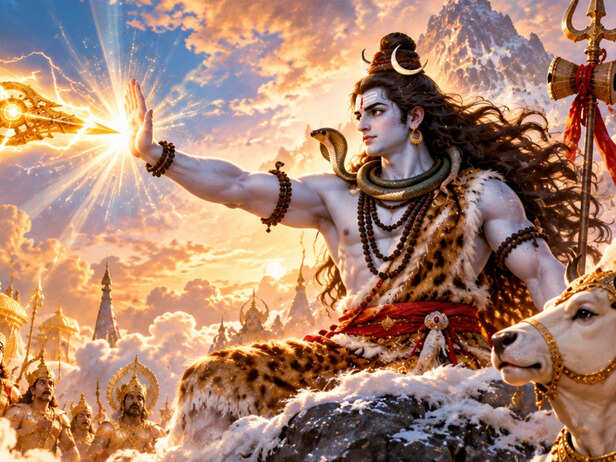
What happens when power becomes so important that a person forgets the source of that power? A fascinating Hindu mythology story about Lord Shiva and Indra explores exactly this question. According to the traditional account, Indra once encountered a mysterious ascetic on the way to Mount Kailash. Unable to recognize Shiva in disguise, his pride turned into anger, and his famous Vajra was raised against the unknown yogi. What happened next became a powerful lesson about ego, humility and the danger of forgetting the force behind our success.
Indra Meets a Mysterious Yogi
On his way to Mount Kailash, Indra travelled with his guru Brihaspati to meet Lord Shiva. Along the route, they encountered a strange ascetic with matted hair, a body covered in sacred ash and the appearance of a detached yogi. Indra asked whether Shiva was present on Kailash, but the ascetic remained completely silent. He asked again and again, expecting an answer because he was the king of the gods. Instead, the silence continued. What began as a simple question slowly became a test of Indra’s patience, humility and understanding of true spiritual power.
Anger Made Indra Forget Himself
Indra’s position had given him immense power, but in that moment, his pride became stronger than his wisdom. The silent response felt like an insult to the king of heaven. Instead of pausing to understand the situation, Indra allowed anger to take control. He demanded an answer once more and finally raised his Vajra against the mysterious yogi. This moment carries the central lesson of the Shiva story: power without humility can quickly turn into arrogance. Indra was not defeated because he lacked strength. He was stopped because he failed to recognize what stood before him.
Shiva Stopped the Vajra
The moment Indra attacked, something extraordinary happened. According to the traditional account, the Vajra stopped in the air, leaving Indra stunned and helpless. Brihaspati then understood the truth. The mysterious ascetic was none other than Lord Shiva himself. This was not an ordinary confrontation but a test of Indra’s ego. Shiva, known in Hindu mythology as a powerful symbol of detachment and spiritual wisdom, had appeared in a form Indra never expected. The weapon that represented Indra’s authority suddenly became useless, showing how quickly worldly power can disappear when faced with divine power.
Brihaspati Recognised the Truth
While Indra remained stunned, Brihaspati recognized the ascetic and immediately understood the seriousness of the situation. He bowed before Shiva and sought forgiveness for Indra. In the traditional story, Shiva’s anger had already awakened, and a destructive fire was associated with his divine wrath. Brihaspati’s wisdom and recognition helped prevent the situation from becoming even more severe. The contrast between the two is striking. Indra had allowed ego to control his actions, while his guru used awareness and humility to recognize the truth. The story therefore presents wisdom as the force that can bring pride back under control.
Shiva Forgave Indra’s Mistake
After the danger passed, Indra understood the seriousness of his mistake and sought Shiva’s forgiveness. The story reminds us that asking for forgiveness becomes meaningful when it follows genuine realization. Indra had approached Kailash with the desire to meet Shiva, yet he failed to recognize the divine presence standing directly before him. That irony makes the story especially powerful. Sometimes the search for greatness makes a person overlook what is right in front of them. The traditional account uses Indra’s experience to highlight an important spiritual lesson: humility is not weakness. It is the ability to recognize that power does not make anyone greater than its source.
Shiva’s Anger Took Another Form
The story then takes an unexpected turn. The divine fire associated with Shiva’s anger did not simply disappear. According to the traditional narrative, Shiva cast it into the distant ocean, where it took form as Jalandhara. He would later become a powerful figure in Hindu mythology. This connection gives the story another layer: the energy created by divine wrath eventually became part of a new challenge. Jalandhara’s story is itself associated with immense power, conflict and pride. The narrative therefore moves from one person’s ego to another chapter where the question of power and its source becomes important once again.
The Real Lesson Behind Indra’s Ego
The deeper message of the Avadhuteshwar Shiva story is not simply that Indra was punished for anger. It is about what happens when success makes someone forget where their strength comes from. Indra was powerful, respected and the king of the gods, yet a single moment of arrogance made him unable to recognize Shiva. The story encourages readers to pause when pride takes over, question their own reactions and remember the people, circumstances and forces that helped them rise. True strength is not only the ability to command or fight. It is also the humility to recognize when someone greater stands before us.
Unlock insightful tips and inspiration on personal growth, productivity, and well-being. Stay motivated and updated with the latest at My Life XP.