
Why Did They Call Arjuna’s Hands Impure After Bhishma’s Death?
So, when Arjuna asks for Ganga’s blessing, they make a shocking declaration. They will do everything possible to stop him.
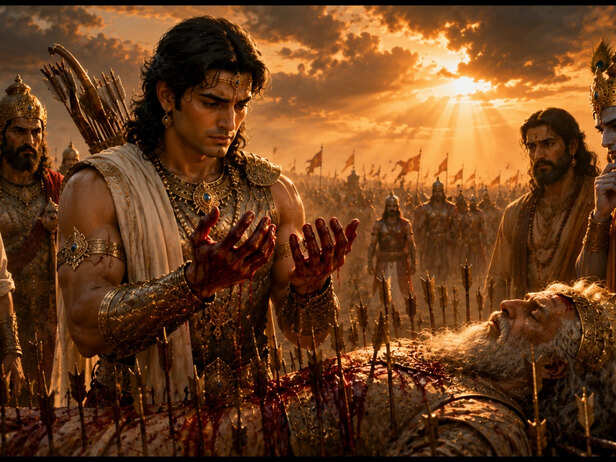
We do not want your service. Leave this place.” Arjuna had barely arrived when the words stopped him. The sacred waters of Ganga were flowing peacefully, but the atmosphere suddenly turned hostile. The men standing before him were not ordinary strangers. They were connected to the same divine mother who had given birth to the seven sons of Ganga and to Devavrata, the warrior the world would remember as Bhishma.But now, they accused Arjuna of carrying something that could never be washed away. Blood. They believed his hands had been stained by Bhishma’s death. Arjuna, however, refused to accept their accusation. And what followed became a confrontation between grief, duty, honour and the meaning of Dharma.
The Sacred River Becomes a Court of Judgment
Arjuna arrives expecting the blessing of Ganga, but instead finds rejection. The men before him remind him of their connection with the divine river and accuse him of making the sacred water impure through Bhishma’s blood. Their words are harsh because their grief is still alive. For them, Bhishma was not simply a warrior who died in battle. He was Devavrata, the beloved son of Ganga. Arjuna understands the pain but refuses to accept the accusation. The scene becomes more than an argument. It becomes a powerful question about whether grief can change the way people judge an action performed during war.
They Saw Bhishma’s Death Differently
The accusation becomes personal when Bhishma’s final moments are brought into the conversation. They remember Arjuna attacking Bhishma while Shikhandi stood before him. To them, this looks like an unfair act against an elderly warrior who had already shown extraordinary courage. Arjuna gives another perspective. Bhishma knew the nature of the battlefield and understood the circumstances surrounding his fall. In the dramatic retelling, Arjuna argues that Bhishma was not helpless and that the war had reached a point where difficult decisions could not be avoided. The same event, therefore, carries two completely different meanings depending on where one stands.
Arjuna Refuses to Hide Behind Silence
Arjuna could have remained silent and simply walked away. Instead, he explains why he acted as he did. He points toward Shikhandi’s personal history and the larger circumstances of the war. In the story, Arjuna says he did not want a warrior as great as Bhishma to be remembered as someone defeated merely through another person’s revenge. His argument is complicated because the Mahabharata itself repeatedly shows that Dharma is rarely presented as a simple choice between right and wrong. Arjuna’s defence is therefore not an attempt to erase Bhishma’s greatness. It is an attempt to explain the circumstances surrounding his fall.
Grief Makes Their Judgment Even Harsher
The men refuse to change their position. For them, no explanation can erase what happened on the battlefield. They accuse Arjuna of hiding behind arguments while Bhishma lies fallen. This is where the emotional power of the scene becomes strongest. Arjuna is speaking from the perspective of a warrior who believes he fulfilled his duty. They are speaking from the perspective of people who have lost someone they loved. Neither side is emotionally prepared to surrender. The confrontation shows something deeply human: when grief is fresh, even truth can become difficult to hear. Sometimes people are not searching for an explanation. They are searching for someone to blame.
Arjuna Makes One Thing Absolutely Clear
Even after being rejected, Arjuna refuses to abandon his purpose. He declares that he will not leave without receiving Ganga’s blessing. The response is immediate. They tell him that the doors of that blessing are closed to him. Yet Arjuna remains confident. He argues that no one can prevent him from seeking the blessing of Ganga herself. This moment reveals another side of his character. He is not demanding forgiveness from the people standing before him. He is seeking something greater than their approval. His determination suggests that faith and duty can sometimes require a person to continue even when others refuse to understand their intentions.
The Real Conflict Is About Dharma
At first glance, this appears to be a dispute about Bhishma. But underneath it lies a much larger Mahabharata question: What happens when duty demands an action that causes immense pain? The Mahabharata repeatedly explores this tension. A warrior can perform his duty and still carry emotional consequences. A decision can serve a larger purpose and still leave wounds behind. Arjuna’s encounter with Ganga’s sons captures that conflict dramatically. Their anger does not necessarily make them villains, just as Arjuna’s explanation does not automatically make every decision morally simple. The power of the story lies precisely in this uncomfortable grey area.
The Blessing Arjuna Would Not Give Up
The encounter ends without easy reconciliation. Arjuna knows that the men before him are unwilling to accept his explanation, yet he also refuses to let their anger define his actions. He has listened, defended himself and remained firm about his purpose. That makes the episode emotionally powerful. Sometimes the hardest part of doing what you believe is right is accepting that everyone will not understand you. The story also reminds us that victory does not erase grief. Even after a war ends, its consequences continue through memories, relationships and unanswered questions. Arjuna leaves, but the conflict leaves behind a deeper question about duty and forgiveness.
The Question That Still Echoes
The most powerful part of this story is not whether Arjuna could convince Ganga’s sons.
He could not.
It is the fact that both sides believed they were protecting something sacred.
They wanted to protect Bhishma’s honour.
Arjuna wanted to defend the duty he believed he had fulfilled.
And between them stood the sacred waters of Ganga, carrying memories of a warrior who had sacrificed almost everything for his family and kingdom.
The story reminds us that Dharma is not always comfortable.
Sometimes doing your duty does not prevent others from misunderstanding you.
And sometimes, the hardest battle begins after the battlefield has already fallen silent.
Unlock insightful tips and inspiration on personal growth, productivity, and well-being. Stay motivated and updated with the latest at My Life XP.