
Why Did Urvashi Leave? The Mystery of the Two Sheep
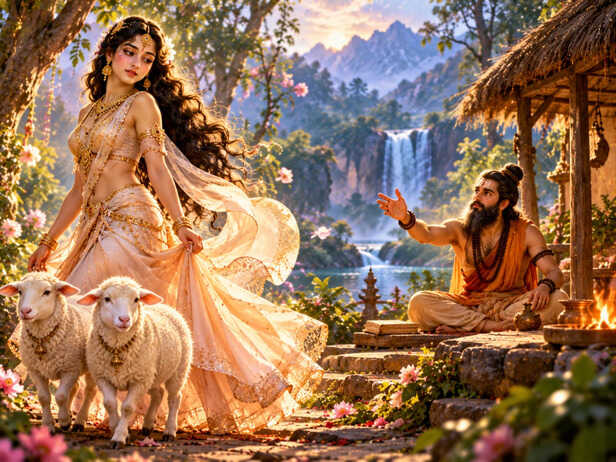
Why is Urvashi so often portrayed as the woman who breaks a king’s heart, when the story also raises questions about his own choices? In the tale of King Pururava and the celestial apsara Urvashi, three conditions shape their relationship, but one unexpected incident changes everything. When Urvashi leaves, Pururava spends years searching for her. Yet their reunion brings a lesson he may have needed more than love itself: what happens when a person forgets their responsibilities while chasing what they cannot bear to lose?
The Love Story of Urvashi and Pururava
In Hindu tradition, Urvashi is a celestial apsara admired for her beauty, while Pururava is a powerful king. Their story appears in ancient Indian literature, including the Rigveda and later retellings. When Urvashi agrees to live with Pururava, their relationship comes with specific conditions. The arrangement seems to promise happiness, but it also places limits on what the king can do. Their story is not simply about a woman leaving a man. It explores how love can become fragile when expectations, personal boundaries and emotional attachment are not understood.
The Three Conditions
In a widely told version of the story, Urvashi places three conditions on their relationship. She says Pururava must never see her unclothed, he must protect the two sheep dear to her, and he must never force her to eat anything other than what she chooses. The details and wording can vary across retellings. Pururava accepts these conditions because he wants Urvashi to remain with him. But an agreement is only meaningful when its boundaries are respected. The king does not realise how quickly one unexpected event could put his promise and their relationship to the test.
The Night the Sheep Disappeared
According to a popular version, Indra sends Gandharvas to bring Urvashi back to the celestial world. In the middle of the night, they steal the two sheep. Hearing their cries, Pururava rushes outside to rescue them. The Gandharvas create a flash of light, revealing the king without clothes to Urvashi. This breaks one of the conditions she had set. The incident is not simply an accident involving two animals. It becomes the moment when the agreement between the couple falls apart, showing how one sudden choice can have consequences that cannot easily be undone.
Why Urvashi Walked Away
After seeing Pururava in the forbidden situation, Urvashi leaves him. The king is devastated, but her departure follows the conditions that shaped their relationship. It is tempting to blame Urvashi for breaking his heart, yet the story also asks readers to consider the promises she had clearly stated. Different versions describe the circumstances in different ways, so her decision should be understood within the particular retelling being followed. Rather than presenting her as a simple villain, the episode invites us to think about boundaries, choices and the consequences of agreements made in a relationship.
Pururava’s Search for Urvashi
Unable to accept the separation, Pururava searches for Urvashi across the earth. In the story, his longing becomes so powerful that he struggles to return his attention to ordinary life. Eventually, he encounters her at Kurukshetra in a traditional account of their reunion. His grief is understandable, but the story also reveals the danger of allowing one loss to consume every other part of life. Love can be deeply meaningful, yet it cannot remove every responsibility. Pururava’s journey becomes a reminder that pain deserves to be acknowledged without allowing it to erase a person’s entire purpose.
Urvashi’s Hard-Hitting Question
When Pururava meets Urvashi again, he pleads with her to return, even threatening to give up his life if she refuses. In the version shared in this retelling, Urvashi challenges his thinking: where has his wisdom gone, and why has he abandoned his responsibilities for the sake of his longing? Her words shift the focus from heartbreak to self-awareness. Instead of simply offering comfort, she makes him confront the choices he has made. The encounter presents Urvashi as more than a romantic figure; she becomes the voice that reminds the king of the life and duties he must reclaim.
The Lesson Behind Their Story
After this encounter, the traditional narrative describes Pururava returning to his responsibilities and pursuing his larger role in life. The story does not suggest that love is wrong or that grief should be ignored. Instead, it warns against losing oneself completely in attachment. Relationships matter, but so do commitments, purpose and the people who depend on us. Urvashi’s story also reminds readers not to label a woman a villain simply because she chooses to leave a relationship. Sometimes, the more revealing question is whether we are willing to respect another person’s boundaries and face our own choices.
Unlock insightful tips and inspiration on personal growth, productivity, and well-being. Stay motivated and updated with the latest at My Life XP.