
Why Did Ved Vyasa Fear What Society Would Say About His Son?
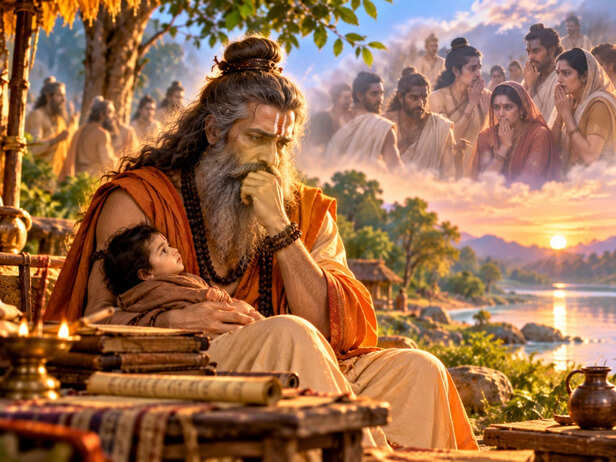
What could make a great sage like Ved Vyasa hesitate when the desire to have a son arose in his heart? It was not a lack of knowledge or divine blessings. According to the story narrated in the Devi Bhagavatam, Ved Vyasa worried about how society might judge his actions. He wanted a son who could carry his spiritual work forward, but he also feared that people might misunderstand his intentions. The story takes an unexpected turn when the celestial apsara Ghritachi appears, leading to the birth of Shukadeva, a sage whose wisdom would later illuminate the path of spiritual liberation.
Ved Vyasa’s Desire for a Son
Ved Vyasa had devoted his life to sacred knowledge and the preservation of spiritual wisdom. According to the account in the Devi Bhagavatam, a desire arose in his heart for a son who could carry his work forward and share divine knowledge with the world. He wanted his spiritual legacy to continue through a worthy successor. Yet this wish brought an unexpected conflict. Even a respected sage could struggle with questions about how others might interpret his choices, especially when personal desires and spiritual responsibilities appeared to meet.
The Fear of Society’s Judgment
As Ved Vyasa considered becoming a father, a troubling question entered his mind: what would society say? He worried that people might interpret his actions as ordinary desire rather than understand his wish for a son who could continue his spiritual mission. His concern was not simply about having a child; it was also about protecting the meaning of his lifelong discipline. This moment gives the story a human side. Even someone admired for wisdom can become troubled by the possibility of being misunderstood by others.
Ghritachi Appears Before the Sage
At this moment, the celestial apsara Ghritachi appears before Ved Vyasa. Her presence deepens his dilemma because it brings his wish for a son into the realm of an immediate decision. He must confront the difference between what he desires, what he believes is right, and what others might think. Rather than treating the encounter as a simple tale of attraction, the narrative places it within a larger spiritual question: how should a person understand desire when it meets duty, discipline, and the wish to leave behind a meaningful legacy?
Narada’s Stories Change His Thinking
While struggling with his thoughts, Ved Vyasa remembers stories that Narada had previously shared with him. These accounts help him reconsider his fear of public opinion and the deeper purpose behind his wish. Instead of allowing the possibility of criticism to decide everything, he begins to see his situation through the lens of spiritual understanding. The narrative then moves towards the birth of Shukadeva. The stories associated with Narada also lead into a wider discussion of the Chandravansha, or Lunar Dynasty, whose origins form another part of the larger account.
The Birth of Shukadeva
The story leads to the birth of Shukadeva, who becomes one of the most revered sages in Hindu tradition. He is especially associated with the narration of the Bhagavata Purana to King Parikshit, who seeks spiritual understanding as his life approaches its end. Through this sacred account, Shukadeva explains devotion, the nature of existence, and the path towards liberation. His place in the tradition extends far beyond his birth story. He is remembered for his detachment, wisdom, and ability to guide listeners towards a deeper understanding of the divine.
Ghritachi and the Divine Connection
The narration also presents a spiritual interpretation of Ghritachi’s role, connecting her with the power of divine knowledge and, in the account provided, with Goddess Saraswati. Saraswati is revered as the goddess of learning, wisdom, and the arts. This connection adds another layer to the story: the birth of a sage who would share sacred knowledge is placed within a divine framework. Interpretations of Ghritachi’s identity and the details of Shukadeva’s birth can differ across Hindu texts and retellings, so the specific version matters when exploring this connection.
The Spiritual Legacy of Shukadeva
Shukadeva’s story reaches its deeper meaning through his narration to King Parikshit. The king listens to the Bhagavata Purana to understand life, death, devotion, and liberation. Through this exchange, spiritual wisdom passes from one generation to another, fulfilling the larger idea of preserving sacred knowledge. Ved Vyasa’s wish for a son is therefore linked to a legacy that reaches far beyond family lineage. Shukadeva becomes a teacher whose words guide others towards spiritual understanding, making his story an important part of the devotional tradition.
Unlock insightful tips and inspiration on personal growth, productivity, and well-being. Stay motivated and updated with the latest at My Life XP