
Why Didn't Vishnu Send Narasimha to Destroy Ravana?
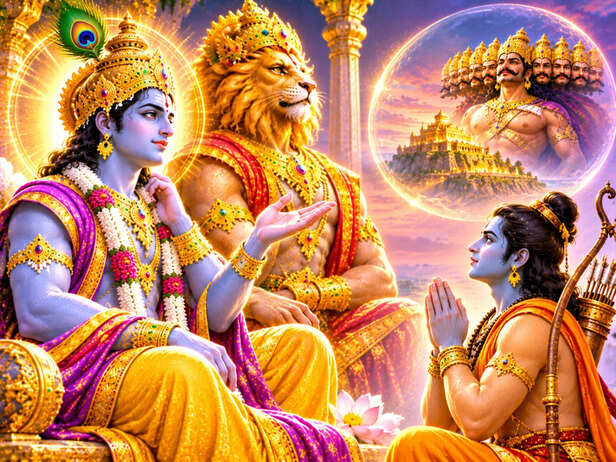
Imagine Ravana standing before Lord Vishnu's fiercest avatar, Narasimha, instead of Lord Ram. The mighty king of Lanka had defeated powerful warriors, challenged celestial beings and gained extraordinary boons through years of penance. But would any of that have protected him from the half-man, half-lion form that destroyed Hiranyakashipu? This fascinating mythological question also raises a deeper point: if Narasimha possessed such immense power, why did Lord Vishnu choose to defeat Ravana through the human form of Ram? The answer lies in the different purposes of these two avatars.
Narasimha Was Vishnu's Fiercest Avatar
Among Lord Vishnu's avatars, Narasimha is remembered for his extraordinary strength and fierce appearance. According to the Bhagavata Purana, he emerged from a pillar to protect his devotee Prahlada and kill Hiranyakashipu. Even after defeating the demon, Narasimha's anger did not immediately subside. The devas were hesitant to approach him, and Prahlada's devotion played an important role in calming him. This form represents divine protection when injustice crosses its limits.
Ravana Was No Ordinary Opponent
Ravana was far more than a powerful ruler. He was known for his knowledge of the Vedas, musical skills, devotion to Lord Shiva and intense penance. His boons from Brahma made him difficult to defeat, giving him protection against several classes of celestial beings. Yet his knowledge could not control his growing pride. His decision to abduct Sita became the turning point that led to his downfall. Ravana's story shows how great strength and intelligence can be destroyed by arrogance.
What If Narasimha Entered Lanka?
Imagine Narasimha appearing at the gates of Lanka instead of Lord Ram's army. Ravana's golden kingdom, powerful warriors and mighty fortifications would face an opponent unlike any ordinary enemy. The sight of Vishnu's half-man, half-lion form might have terrified the entire battlefield. In this imagined encounter, Narasimha could have confronted Ravana without the long campaign that took place in the Ramayana. However, no scripture describes this battle, so its outcome remains a matter of devotional imagination.
Could Ravana's Boons Protect Him?
Ravana had received powerful protections from Brahma after performing severe penance. However, his boon did not make him invincible against every possible being. He had dismissed humans and monkeys as insignificant when asking for protection. This detail became crucial in the Ramayana, where Lord Ram, in human form, defeated him with the help of the Vanara army. Narasimha's ability to overcome Hiranyakashipu's carefully worded boon makes this imagined confrontation even more intriguing, but the scriptures do not tell us how Ravana's protections would have worked against him.
Why Did Vishnu Choose Lord Ram?
This is the most meaningful question behind the imagined battle. Narasimha appeared to protect Prahlada and end Hiranyakashipu's tyranny. The Ramayana, however, had a wider purpose. Through Lord Ram's life, the world witnessed the values of duty, patience, compassion, ideal leadership and righteous conduct. Ram gave Ravana opportunities to correct his actions and return Sita. His victory was not only about defeating a powerful king; it also showed how dharma can be upheld even through difficult choices and long struggles.
How Would Ravana React to Narasimha?
Ravana had challenged powerful beings and rarely accepted anyone as superior to himself. But facing Narasimha would have been unlike facing another king or warrior. The roar, appearance and immense power of the avatar could have shaken even Lanka's mighty ruler. In this imagined scene, Ravana would have to confront a force that could not be controlled through wealth, strategy or intimidation. The contrast is striking: Ravana represents pride that refuses to bend, while Narasimha represents divine power beyond human control.
Two Avatars, Two Different Lessons
Narasimha and Ram reveal different aspects of Lord Vishnu's role in protecting dharma. Narasimha's appearance shows that divine protection can arrive in an unexpected and powerful form when a devotee is threatened. Ram's journey teaches that righteousness also demands patience, self-control, sacrifice and responsibility. If Narasimha had faced Ravana, the imagined battle might have been shorter, but the lessons of the Ramayana would have been very different. Both avatars remind devotees that arrogance cannot overcome dharma.
Unlock insightful tips and inspiration on personal growth, productivity, and well-being. Stay motivated and updated with the latest at My Life XP.