
Why Do Devotees Bathe Laddu Gopal Again After Janmashtami?
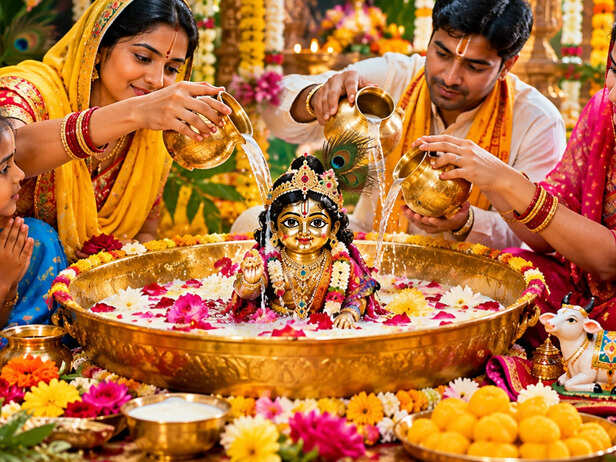
For many devotees, Laddu Gopal is not simply a deity kept in the home. He is lovingly treated like a member of the family. Devotees wake him, bathe him, dress him, offer him food and even put him to sleep.
That feeling of personal devotion becomes especially beautiful on Krishna Chhathi, traditionally observed six days after Janmashtami.
The day gives devotees another opportunity to celebrate the arrival of Bal Krishna with affection and devotion. The rituals are simple, but the atmosphere can be deeply emotional.
From giving Laddu Gopal a ceremonial bath to dressing him in new yellow clothes, each step becomes an expression of love for Krishna.
Begin With a Sacred Bath
The first important ritual is the Abhishek of Laddu Gopal. Devotees may gently apply a little ghee or oil before bathing the idol with Panchamrit. Traditionally, Panchamrit is prepared using milk, curd, ghee, honey and sugar. After this, the deity is bathed with clean water, with some devotees using Ganga water as part of their tradition. The ritual is performed with cleanliness and devotion. Rather than treating the bath as an ordinary ritual, devotees can see it as a loving way of welcoming and caring for Bal Krishna.
Dress Krishna in Yellow
After the Abhishek, Laddu Gopal is gently dried and dressed in new clothes. Yellow is traditionally associated with Lord Krishna, who is often depicted wearing yellow garments known as Pitambar. Devotees may choose a small yellow dhoti, kurta or other traditional outfit according to the size of the idol. The clothing is then complemented with tiny ornaments and other accessories. This moment often becomes one of the most joyful parts of the celebration because devotees get to lovingly prepare Bal Gopal in a beautiful new appearance after his ceremonial bath.
Complete His Shringar
Once the new clothes are in place, devotees complete Laddu Gopal's Shringar. Small jewellery pieces, a flute and a peacock feather crown can be used to create Krishna's familiar divine appearance. Devotees may also apply a sandalwood or turmeric tilak according to their family tradition. The purpose is not simply decoration. Shringar is an expression of affection and reverence toward the deity. Every small detail can be prepared with care. For many families, dressing Laddu Gopal becomes an intimate devotional moment that brings the entire household together.
Offer Makhan Mishri
Few foods are more closely connected with Krishna's childhood stories than Makhan Mishri, a combination of butter and sugar candy. Krishna is lovingly remembered in Hindu tradition as the playful child who adored butter. On Krishna Chhathi, devotees may offer Makhan Mishri as bhog after completing the deity's Shringar. The offering can be prepared simply at home and placed before Laddu Gopal with a prayer. The significance lies less in the quantity of food and more in the love with which it is offered. Devotees then receive the offering as Prasad.
Prepare Kadhi Chawal
Another food associated with Krishna Chhathi celebrations in some traditions is Kadhi Chawal. The comforting combination of yogurt-based kadhi and rice can become part of the special bhog prepared for Laddu Gopal. Devotees should follow their own family or temple tradition regarding the menu, as food customs can vary between regions. The important part is preparing the offering with cleanliness and devotion. After the bhog is offered, it can be distributed among family members as Prasad. A simple homemade meal can therefore become a meaningful part of the celebration.
Light Diyas and Sing Bhajans
Once the Shringar and bhog are complete, devotees can perform a simple Puja for Laddu Gopal. Light diyas and incense, offer flowers and apply a suitable tilak according to your tradition. The family can then sing Krishna bhajans, devotional songs or gentle lullabies. These moments can make the celebration especially peaceful. Children can also participate by offering flowers or singing along. The ritual does not need to be elaborate. A quiet prayer offered with genuine faith can create a more personal connection with Krishna and bring a sense of devotion into the home.
End With Love and Prasad
The final step is to offer the prepared bhog to Laddu Gopal and then share it as Prasad with family members. This simple act reflects one of the beautiful ideas of Hindu worship: food offered to the divine becomes something to be received with gratitude and shared with others. Families can sit together, remember Krishna's childhood stories and sing a final prayer. Krishna Chhathi is therefore not only about completing rituals. It is about bringing devotion into everyday family life. Even a small celebration can become memorable when it is performed with love, cleanliness and sincere faith.
The Deeper Meaning of Krishna Chhathi
Krishna Chhathi may appear to be a day filled with small rituals, but each one creates a moment of connection.
The bath represents purity.
The new clothes represent celebration.
The Shringar expresses love.
The bhog represents offering.
The Prasad represents sharing.
And perhaps that is what makes the occasion so special.
For devotees, celebrating Bal Gopal is not simply about following a ritual. It is about treating devotion as an expression of love, care and gratitude.
Unlock insightful tips and inspiration on personal growth, productivity, and well-being. Stay motivated and updated with the latest at My Life XP.