
Why Do Devotees Tie Aparajita After Durga Visarjan?
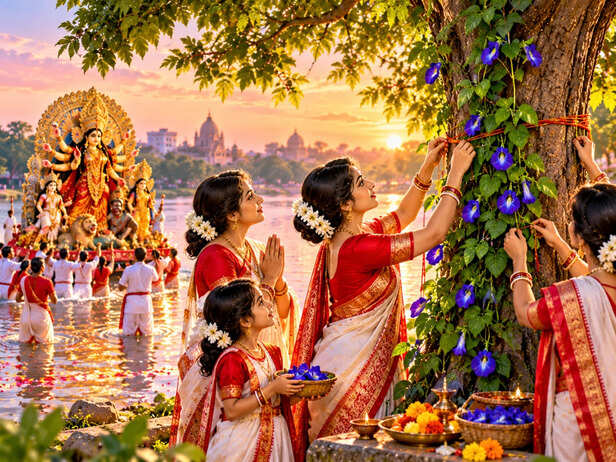
What if Durga Visarjan is not the final ritual of the festival? In some Hindu traditions, devotees perform Aparajita Puja after bidding farewell to Maa Durga. The ritual carries a beautiful idea: even when the goddess’s idol is immersed, devotees can continue to seek her blessings for courage, protection and victory. A flower, an eight-petalled lotus design and a sacred thread are associated with this observance. But what does Aparajita mean, and why is this ritual performed after the goddess leaves the mandap?
Why Aparajita Puja Follows Visarjan
Durga Visarjan marks the farewell to Maa Durga’s idol, but some traditions include another observance immediately afterwards. This is known as Aparajita Puja. The word Aparajita means “the unconquered” or “the one who cannot be defeated.” The ritual expresses the wish to carry the goddess’s blessings beyond the festival. Rather than treating the immersion as an end to devotion, devotees use this moment to pray for courage and success in the challenges ahead. Practices can differ by region, family tradition and religious text, so not every Durga Puja celebration includes the same observance.
The Meaning Behind the Aparajita Flower
The Aparajita flower, commonly known as the butterfly pea, is recognised by its striking blue or purple-blue petals. In the ritual described in some traditions, the flower serves as a focus for invoking the goddess’s victorious energy after the idol has been immersed. Its symbolism connects the natural world with prayer and devotion. However, the exact use of a blue flower is not universal across all Hindu traditions. The central idea is the same: devotees honour Aparajita as a symbol of unconquerable strength and seek blessings to face difficulties with confidence.
Why Is an Eight-Petalled Lotus Drawn?
According to the ritual practice described in this account, devotees draw an eight-petalled lotus on the floor using sandalwood paste and rice flour. The flower is placed at the centre of the design, creating a focal point for prayer. Lotus designs are widely used in Hindu worship and are often associated with purity, auspiciousness and spiritual awareness. The eight-petalled pattern gives the ritual a defined sacred space. The precise materials and arrangement may vary between traditions, so devotees generally follow the instructions of their family, priest or local religious custom.
How the Flower Becomes a Focus of Prayer
The most meaningful part of Aparajita Puja is the act of invocation. In the tradition described here, the Aparajita flower is placed in the centre of the lotus design, and prayers are offered to the goddess. The flower becomes the focus of devotion, representing the divine strength that devotees hope to carry into everyday life. This is a ritual expression of faith rather than a scientifically established transfer of energy. Its message is that the goddess’s qualities, including courage, resilience and determination, can continue to guide devotees even after the festival ends.
Why Is a Sacred Thread Tied on the Wrist?
The ritual described in this account concludes with devotees tying an Aparajita vine or sacred thread around the right wrist. This act symbolises carrying the goddess’s blessings beyond the mandap and into daily life. The thread can serve as a personal reminder to remain courageous, act with integrity and face difficult situations with a steady mind. Its exact form and method of tying may differ between communities. Devotees should follow their own tradition and use a clean, comfortable thread or plant material rather than treating the ritual as a guarantee that misfortune can never occur.
What Does Aparajita Mean for Everyday Life?
The idea of being unconquered does not mean that life will never bring setbacks. Instead, Aparajita can represent the strength to face difficult circumstances without giving up on what is right. For a student, that may mean continuing to study after a disappointing result. For someone starting a new job, it may mean handling uncertainty with patience. The ritual gives devotees a moment to reflect on these qualities while seeking Maa Durga’s blessings. Its deeper value lies in combining faith with action: prayer can offer comfort, while preparation and responsible choices help people move forward.
How to Observe Aparajita Puja Respectfully
If Aparajita Puja is part of your family’s practice, ask your priest or elders about the correct timing and method. Some versions describe drawing an eight-petalled lotus, placing an Aparajita flower at its centre, offering prayers and tying a sacred thread. Other traditions may follow a different procedure. Use flowers and plant material respectfully, avoid damaging living plants, and do not feel that a particular object is required to receive divine grace. Most importantly, approach the ritual with sincerity and understand its symbolism as a prayer for courage, protection and the strength to pursue righteous actions.
The Goddess’s Blessings Beyond Visarjan
Aparajita Puja offers a meaningful way for some devotees to conclude Durga Puja. While the idol is immersed, the qualities associated with Maa Durga, including courage, strength and the determination to overcome difficulties, remain central to the devotee’s faith. The Aparajita flower, lotus design and sacred thread express this hope in a tangible form. Although the ritual’s details vary, its message is easy to understand: a farewell to the goddess need not mean an end to devotion. Carry the spirit of Aparajita into everyday life, and let faith inspire you to meet challenges with courage and compassion.
Unlock insightful tips and inspiration on personal growth, productivity, and well-being. Stay motivated and updated with the latest at My Life XP