
Why Do Fathers Wait 27 Days to See Their Newborn Babies?
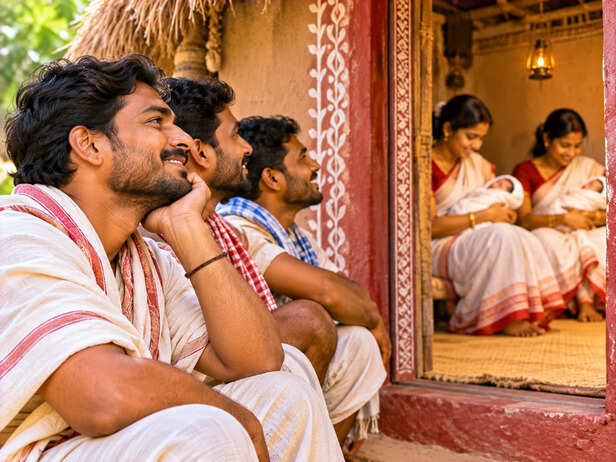
Imagine becoming a father, welcoming your newborn into the family, but not being allowed to see your own child for 27 days. It may sound unusual, but this is a traditional practice followed by some families in Bihar, Uttar Pradesh and Jharkhand. Known as Satteisa Puja, this ritual is associated with the birth of a child under certain Gandmool Nakshatras. What makes it even more fascinating is the ceremony performed on the 27th day, involving a special water pot, wood from 27 trees and an unusual ritual using ghee and mustard oil.
What Is Satteisa Puja?
In parts of Bihar, Uttar Pradesh and Jharkhand, Satteisa Puja is performed when a child is born under certain Gandmool Nakshatras. According to traditional astrological beliefs, the child's father does not see the newborn until the completion of 27 days. The family then performs a special ceremony on the 27th day. For these families, the ritual marks the end of a waiting period and the beginning of the father's first meeting with his child.
Why Are Six Nakshatras Considered Special?
The tradition is connected with six Nakshatras known as Gandmool: Ashwini, Ashlesha, Magha, Jyeshtha, Mula and Revati. In traditional Vedic astrology, these Nakshatras are associated with specific planetary and zodiac transitions. Some families believe that a child born under these Nakshatras requires a special ritual for peace and protection. However, these are traditional astrological beliefs, not scientifically established risks to a newborn or their parents.
Why Does the Father Wait 27 Days?
One of the most unusual parts of Satteisa Puja is the father's 27-day separation from the newborn. According to the custom followed by some families, the father avoids seeing the child from the day of birth until the ceremony. This practice is based on traditional beliefs surrounding Gandmool Nakshatras. The 27th day is considered the occasion to perform the prescribed rituals and formally introduce the father to the baby.
The Kalash Has 27 Holes
The puja involves a special Kalash with 27 holes, along with wood collected from 27 different trees. These materials are arranged as part of the traditional ceremony. The number 27 has a direct connection with the ritual's name and its association with the 27 Nakshatras in Vedic astrology. The exact preparation and use of these materials may differ between families and local traditions.
Why Do the Clothes Come From the Maternal Home?
Another interesting custom involves the clothes worn during the puja. The yellow clothes for the baby and parents are traditionally brought from the maternal uncle's home. In many North Indian family traditions, the maternal side has a special role in ceremonies connected with a child's birth. This custom also gives the mother's family an important place in Satteisa Puja, making it a family occasion rather than just an individual religious ritual.
The Unique Reflection Ritual
The most unusual moment of the ceremony comes when two bronze bowls are prepared, one containing ghee and the other mustard oil. The father holds the baby on his shoulder and the child's reflection is shown first in the oil and then in the ghee. This symbolic act is an important part of the custom described in the regional tradition. After the ritual, the father can finally see and hold his newborn child as part of the ceremony.
What Does Satteisa Puja Mean for Families?
For families who follow Satteisa Puja, the ceremony is more than a collection of unusual customs. It marks the completion of a period associated with traditional astrological beliefs and the father's first meeting with the baby. The involvement of maternal relatives, special clothing and symbolic offerings makes it a shared family occasion. However, customs vary across communities, and not every family in Bihar, Uttar Pradesh or Jharkhand follows this practice.
Unlock insightful tips and inspiration on personal growth, productivity, and well-being. Stay motivated and updated with the latest at My Life XP.