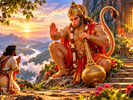
Why Do Hindus Feed Crows During Pitru Paksha?
Noopur Kumari | Oct 06, 2026, 15:00 IST
The secret begins with a great yajna, the arrival of Ravana, and frightened deities who disguise themselves as different creatures. When Yama takes the form of a crow, something unexpected happens. A blessing given afterward is believed to be the reason crows became connected with Pitru offerings. This ancient story is known as part of the tradition behind Kakabali.

Ancestral Offering by the Golden Ghat
Image credit : freepik
Have you ever wondered why a crow is often fed first when food is offered during Pitru rituals? At first, it may seem like a simple old tradition. But according to a traditional Hindu legend, the reason goes much deeper. The story connects crows with Yama, the deity associated with death and the ancestors, and explains why they came to be given a special role in ancestral offerings.
![Pitru Paksha 2026]()
Why is a crow given food when families remember their ancestors? For many Indian households, this practice is especially familiar during Pitru Paksha, Shraddha and other ancestral rituals. People may place cooked food outside and wait for a crow to eat it. The act is not simply about feeding a bird. In traditional belief, the crow has become a symbolic link between the living family and their Pitru, or ancestors. The story behind this belief takes us back to an ancient legend involving the gods, Yama and a dangerous moment connected with Ravana.
![Sacred Gaya Ji During Pitru Paksha]()
According to the traditional story, King Marutta was performing a great yajna when the gods learned that Ravana was approaching. Fearing him, the deities decided to hide by taking the forms of different creatures. Each deity chose a different animal or bird as a disguise. Yama, the deity traditionally associated with death and the ancestors, chose the form of a crow. This unusual transformation became important later because Yama managed to remain safe in that form. The story then turns toward the blessing that gave the crow its special place in ancestral rituals.
After Yama successfully escaped danger by taking the form of a crow, the traditional story says that he granted a special blessing connected with that form. The crow was given an important responsibility in the human world. According to the belief, when people offer food to their ancestors, crows can symbolically receive that offering and carry its essence to the Pitru. This is the traditional explanation for the connection between Yama, crows and ancestral offerings. What looks like an ordinary act of feeding a bird therefore carries a much deeper meaning in Hindu tradition.
This practice is traditionally known as Kakabali, with “kaka” referring to a crow. During certain Shraddha rituals, food may be offered to a crow before or along with other ritual observances. The crow's arrival is traditionally treated as a meaningful part of the ceremony. The belief is not that every crow literally carries food to a departed person, but that the bird represents a symbolic connection between the family and its ancestors. This makes Kakabali less about the bird itself and more about remembrance, gratitude and the continuing emotional bond between generations.
The deeper message of the crow and ancestor tradition is remembrance. In Hindu customs, ancestors are not simply remembered through words. Families express gratitude through food, prayers, charity and Pitru offerings. The crow became a powerful symbol within this tradition because of the ancient association with Yama. When a family prepares food for its ancestors and offers a portion to a crow, the action can represent respect for those who came before them. It also creates a moment for younger generations to remember their family history instead of allowing those memories to disappear.
The exact customs can differ between families and regions, but the intention remains similar. During Pitru Paksha or a Shraddha ceremony, families may prepare food, perform prayers and make offerings according to their tradition. A portion may then be placed for a crow as part of Kakabali. If a crow eats the offering, some families traditionally see it as an auspicious or emotionally meaningful moment. However, the ritual should not become a source of fear or anxiety. Its central purpose is remembrance, gratitude and respect for one's ancestors.
The story of Yama and the crow gives a fascinating traditional explanation for a practice followed by generations. But the emotional meaning of the ritual may be even more important than the legend itself. Feeding a crow during Pitru Paksha reminds families to pause and remember the people whose lives made theirs possible. Whether someone follows the ritual through faith, family tradition or cultural connection, the act carries a simple message: our relationship with those who came before us does not end with memory. Kakabali keeps that remembrance alive through a small but meaningful act.
Unlock insightful tips and inspiration on personal growth, productivity, and well-being. Stay motivated and updated with the latest at My Life XP.
The Question Behind the Crow Ritual
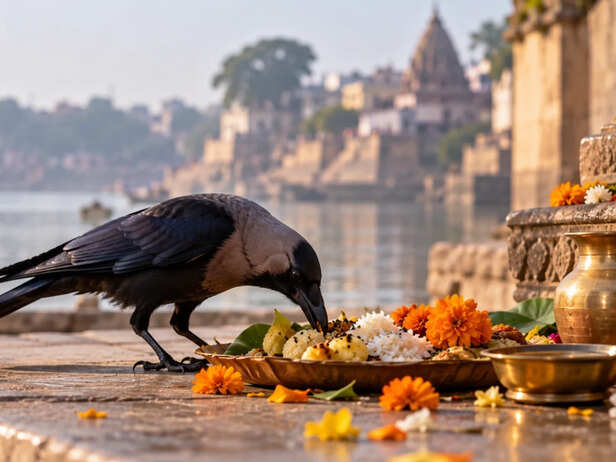
Pitru Paksha 2026
Image credit : chatgpt(ai)
Why is a crow given food when families remember their ancestors? For many Indian households, this practice is especially familiar during Pitru Paksha, Shraddha and other ancestral rituals. People may place cooked food outside and wait for a crow to eat it. The act is not simply about feeding a bird. In traditional belief, the crow has become a symbolic link between the living family and their Pitru, or ancestors. The story behind this belief takes us back to an ancient legend involving the gods, Yama and a dangerous moment connected with Ravana.
When The Gods Feared Ravana
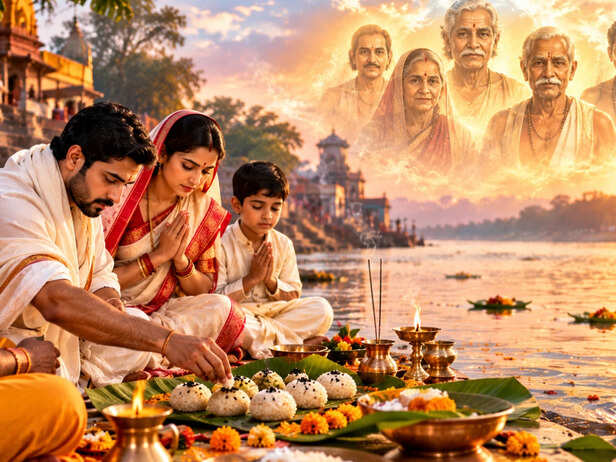
Sacred Gaya Ji During Pitru Paksha
Image credit : chatgpt(ai)
According to the traditional story, King Marutta was performing a great yajna when the gods learned that Ravana was approaching. Fearing him, the deities decided to hide by taking the forms of different creatures. Each deity chose a different animal or bird as a disguise. Yama, the deity traditionally associated with death and the ancestors, chose the form of a crow. This unusual transformation became important later because Yama managed to remain safe in that form. The story then turns toward the blessing that gave the crow its special place in ancestral rituals.
Yama’s Crow Form Changed Everything
Why The Ritual Is Called Kakabali
The Crow Became A Symbol Of Ancestors
What Families Traditionally Do
The Real Meaning Is Remembrance
Unlock insightful tips and inspiration on personal growth, productivity, and well-being. Stay motivated and updated with the latest at My Life XP.