
Why Do Hindus Light a Diya for Yama on Dhanteras?
Diwali is known for rows of glowing diyas, but one lamp has a special meaning that many people may not know. It is lit in honour of Yama, the Hindu god associated with death and justice.This ritual is called Yama Deepam or Yamadeep Daan. In many traditions, families light an oil lamp outside their homes, often near the main entrance, on the evening of Dhanteras. The lamp is traditionally associated with prayers for protection from untimely death and for the well-being of family members.The practice is especially observed in parts of North India, although the exact date, placement and ritual details can differ from one region to another.
The Story of the Prince Who Was Destined to Die Young
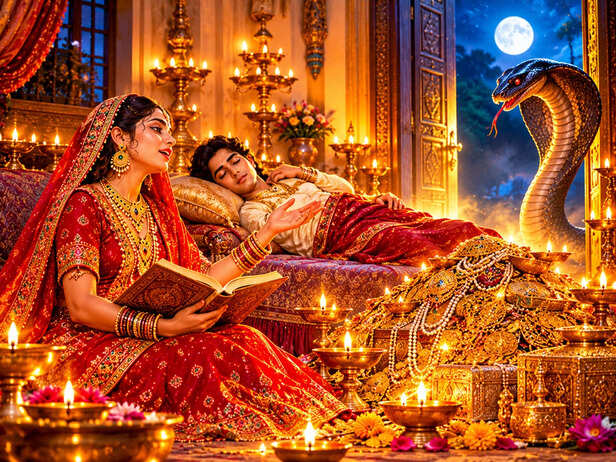
One popular legend associated with Yama Deepam tells the story of King Hima's son.According to the traditional account, astrologers predicted that the prince would die on the fourth day of his marriage because of a snakebite. When he grew up and married, his wife learned about the prediction.Determined to protect her husband, she decided not to sleep on the night when the danger was expected.
She gathered gold and silver ornaments, coins and other precious objects and placed them in a heap near the entrance of their room. She also lit numerous lamps to make the place bright. To keep herself awake, she sang songs and narrated stories throughout the night.When Yama arrived in the form of a serpent to take the prince's life, he found the entrance blocked by the dazzling light and the heap of ornaments. Unable to enter, he climbed onto the pile and listened to the princess's songs and stories.The night passed, and the predicted moment of death went by. At sunrise, Yama left without taking the prince's life.This is why the story is often remembered as a tale of a wife's devotion, alertness and determination to protect her husband.
Why Is the Lamp Placed Outside the House Facing South?
The direction of the lamp is another interesting part of Yama Deepam.In Hindu tradition, the south direction is associated with Lord Yama. He is also known as Dharmaraja, the deity who governs death and is believed to judge the deeds of souls.For this reason, many families place the Yama Deepam outside their main entrance, with the flame facing south. Traditionally, an earthen diya filled with sesame oil is used, although some households follow different customs.The practice is not identical everywhere. The type of lamp, oil, number of wicks and exact placement can vary according to regional and family traditions.
Is Yama Deepam Mentioned in Hindu Scriptures?
The ritual of offering a lamp to Yama has a reference in the Skanda Purana. A verse traditionally associated with Yama Deepam describes placing a lamp outside the home on the evening of Kartik Krishna Trayodashi.The verse is understood as a prayer seeking protection from untimely death.
However, there is an important distinction between the ritual and its popular origin story. The practice of offering a lamp to Yama is associated with the Skanda Purana, while the detailed story of King Hima's son and his wife is widely circulated as a traditional Dhanteras katha. It should not be presented as though every detail of the folk story comes from the same scriptural passage.
Why Is Yama Worshipped Instead of Lakshmi During This Ritual?
Dhanteras is commonly associated with Goddess Lakshmi, gold, silver and prosperity. But Yama Deepam has a different purpose.
- Goddess Lakshmi: Worshipped for prosperity, abundance and well-being.
- Lord Dhanvantari: Honoured as the divine physician and associated with health and Ayurveda.
- Lord Yama: Remembered through the special lamp offering, with prayers for protection from untimely death and a long life.
These observances can take place on the same festival day, but their meanings are different. The Yama Deepam is a reminder that good health and the preservation of life are also forms of wealth.
What Does Yama Deepam Teach Us?
Beyond its religious significance, the story of Yama Deepam carries an interesting message.Light represents hope: The lamps in the story symbolise hope and courage during a frightening moment.
Devotion comes with determination: The princess does not simply wait for fate to unfold. She stays alert and makes every effort to protect her husband.Life is precious: The ritual reminds devotees to value their health, family and time with loved ones.The story is not a promise that lighting a lamp can prevent death. Rather, it expresses a traditional prayer for protection and reflects the human desire to keep loved ones safe.
A Small Diya With a Powerful Meaning
Yama Deepam is one of the lesser-discussed traditions of the Diwali season. While most people associate Dhanteras with buying precious metals and worshipping Goddess Lakshmi, this special lamp draws attention to Lord Yama and the importance of life.The story of King Hima's son and his devoted wife adds another layer to the ritual. It reminds devotees that the festival is not only about welcoming wealth but also about praying for health, safety and the well-being of family members.That is why a small diya lit in Yama's name holds such a special place in the Dhanteras celebrations.
Unlock insightful tips and inspiration on personal growth, productivity, and well-being. Stay motivated and updated with the latest at My Life XP.