
Why Do Hindus Worship Cows? The Kamadhenu Connection
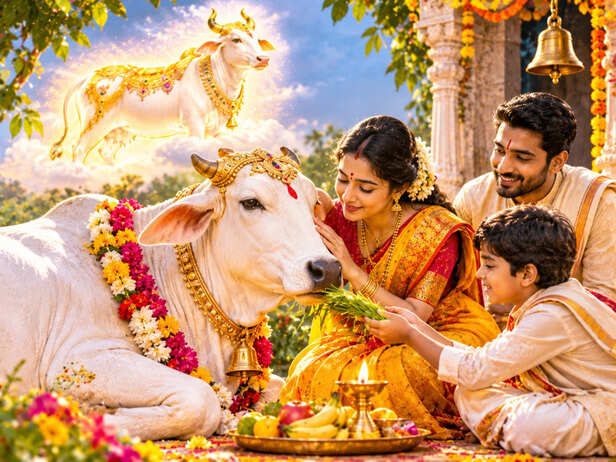
A cow and her calf are worshipped together on Vasu Baras, but the tradition carries a meaning that goes beyond a festival ritual. The cow is honoured as a symbol of motherhood, nourishment and abundance, while the calf represents new life. Devotees believe that serving Gau Mata with love and respect invites blessings for the family. In 2026, Vasu Baras also coincides with Rama Ekadashi, making the day especially meaningful for devotees observing both traditions.
When Is Vasu Baras in 2026?
Vasu Baras, also known as Govatsa Dwadashi or Vagh Baras, will be observed on Thursday, November 5, 2026. It marks the beginning of Diwali festivities in Maharashtra and Gujarat. The Dwadashi tithi begins at around 10:35 AM on November 5 and ends at around 10:30 AM on November 6, according to the New Delhi Panchang. Rama Ekadashi also falls on November 5 in the Indian calendar, as the Ekadashi tithi ends that morning.
Why Are Cows and Calves Worshipped?
The word Govatsa combines two Sanskrit words: Go, meaning cow, and Vatsa, meaning calf. Worshipping them together expresses respect for the bond between a mother and her young one. In Hindu tradition, the cow is associated with nourishment, generosity and motherhood. Many devotees also believe that 33 crore deities reside in Gau Mata. This belief gives the ritual a sacred place in Hindu households, where the cow is honoured with prayers, flowers and food.
The Story of Kamadhenu
According to Hindu Puranic traditions, Kamadhenu is a divine cow associated with the Samudra Manthan, or the churning of the cosmic ocean. She is described as a wish-fulfilling cow who could provide what was needed. Kamadhenu came to represent abundance, generosity and the ability to nourish others. The tradition of worshipping cows on Vasu Baras is connected with this sacred association. Devotees remember Kamadhenu while offering prayers to Gau Mata and her calf.
What Is the Significance of Feeding Gau Mata?
Feeding a cow is one of the traditional ways devotees express gratitude on Vasu Baras. In some households, people offer roti and jaggery, while regional customs may include other suitable foods. According to popular belief, serving Gau Mata with devotion brings blessings for prosperity, family happiness and children. Some devotees also pray for the well-being of their families and the arrival of good fortune. These are religious beliefs associated with the festival, not guaranteed outcomes.
How Is Vasu Baras Celebrated?
On Vasu Baras, devotees traditionally bathe and decorate the cow and calf, apply a tilak and offer flowers. They perform aarti and pray for the family's well-being. Food offerings are made according to local customs, and some women observe a fast for the health and happiness of their children. The puja is generally performed in the evening, when cows return home. Anyone offering food should make sure it is safe and suitable for the animal.
The Connection With Diwali
In Maharashtra and Gujarat, Vasu Baras is considered the beginning of the Diwali festival period. It is followed by Dhanteras, Kali Chaudas, Lakshmi Puja and other celebrations. The day gives the festivities a devotional beginning through the worship of Gau Mata. While Diwali is widely associated with lights, sweets and Lakshmi Puja, Vasu Baras reminds devotees to express gratitude towards animals that have traditionally supported human life and farming.
The Message Behind Vasu Baras
Vasu Baras is a reminder to treat animals with kindness and gratitude. The cow and calf are worshipped not only as sacred symbols but also as a representation of care and nourishment. The tradition encourages people to respect the living beings that support human communities. This year, as devotees celebrate Vasu Baras on November 5, they can honour its message through thoughtful care for animals and a prayer for peace and happiness in their homes.
Unlock insightful tips and inspiration on personal growth, productivity, and well-being. Stay motivated and updated with the latest at My Life XP.