
Why Do We Touch the Temple Floor Before Praying? The Meaning Behind It
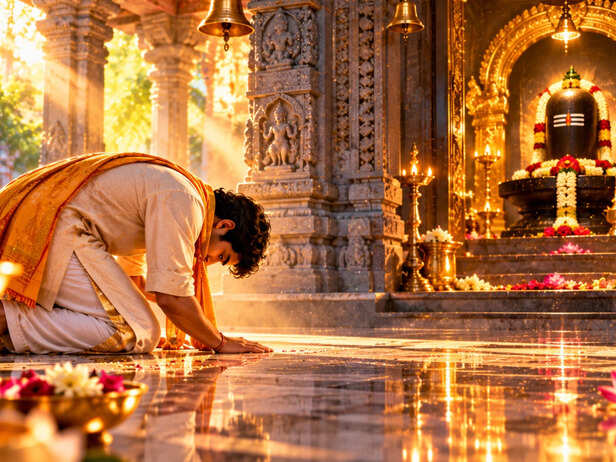
Have you ever noticed people entering a temple, touching the floor and then bringing their fingers to their forehead? Most of us have seen this ritual countless times, yet very few stop to ask why it is done. Is it simply a mark of respect, or does this small gesture carry a deeper meaning? The answer is more thoughtful than it first appears. In Hindu temple traditions, touching the temple floor can represent humility, gratitude and the willingness to leave the ego behind before standing before the divine.
The Gesture Begins With Humility
The moment we enter a temple, our attitude matters as much as the prayer itself. Touching the temple floor is traditionally seen as an expression of humility and respect. Instead of entering with pride or distraction, the gesture reminds a devotee that they are stepping into a sacred space. In many Indian temple rituals, bowing or touching the ground symbolises surrender before the divine. It does not mean that the floor itself is being worshipped. Rather, the gesture represents respect for the sacred environment and the spiritual tradition connected with it.
Why the Floor Matters
There is a reason this ritual focuses on the ground beneath our feet. The floor represents the earth that supports every person, regardless of wealth, status or position. When someone touches it before praying, the action can serve as a reminder that everyone ultimately stands on the same ground. This gives the temple floor a deeper symbolic meaning within Hindu prayer. The ritual encourages a person to become grounded before asking for anything. Instead of rushing straight toward a wish or request, the devotee first acknowledges gratitude and humility.
It Changes Your Mindset
Walking into a temple does not automatically make the mind peaceful. People often carry work pressure, family worries, anger and endless thoughts with them. This is where a simple physical ritual can become meaningful. Touching the temple floor creates a brief pause between ordinary life and prayer. That pause can help a person become more conscious of where they are and what they are about to do. The spiritual significance of the gesture lies partly in this change of mindset. It encourages the devotee to slow down, become present and approach prayer with greater awareness.
The Hidden Meaning Is Ego
One of the deeper ideas behind touching the ground is the reminder to keep the ego aside. In everyday life, we constantly think about our achievements, problems, status and opinions. But Hindu spiritual traditions often place humility at the heart of devotion. Touching the temple floor can symbolically say, “I am not above everything around me.” It creates a moment of surrender without requiring words. This is why the ritual can feel powerful even when performed quietly. The gesture is less about the physical floor and more about the attitude a person carries into prayer.
Why Fingers Touch the Forehead
Many people touch the temple floor and then bring their fingers to their forehead. This familiar action is often understood as a respectful gesture of receiving the sacredness of the place and remembering the divine. The forehead also has strong symbolic importance in Indian spiritual traditions because it is associated with awareness and inner attention. The gesture therefore creates a simple sequence: touch the ground, acknowledge humility and bring that awareness back to yourself. While customs can vary between families and temples, the practice remains a meaningful part of traditional temple etiquette for many devotees.
It Is More Than a Habit
For many families, this ritual begins in childhood. A child watches parents or grandparents touch the temple floor and naturally copies them. Over time, the action can become automatic. But traditions become more meaningful when we understand the thought behind them. The next time you follow this temple ritual, take a second to notice your own state of mind. Are you entering with impatience, distraction or pride? Or are you entering with gratitude and respect? That small pause can transform a familiar habit into a conscious act of devotion.
The Real Prayer Begins Within
Touching the temple floor is not a rule that makes a prayer more powerful by itself. Its value comes from the meaning we attach to the gesture. A person can touch the ground without thinking, while another can perform the same action with genuine gratitude and humility. That difference matters. The deeper lesson of this Hindu temple tradition is that prayer begins with the mind and heart, not simply with physical rituals. So the next time you touch the temple floor, pause for a moment. Leave your ego outside, become present and remember why you came to pray.
The Deeper Lesson
A small gesture can carry a surprisingly big message. Touching the temple floor before prayer reminds us to slow down, become humble and respect the sacred space we are entering. The ritual does not ask us to surrender our individuality. It simply reminds us that devotion becomes more meaningful when pride takes a back seat.
Perhaps that is why this simple temple tradition has survived across generations. Before asking the divine for something, we are quietly reminded to become grateful for what already supports us.
Unlock insightful tips and inspiration on personal growth, productivity, and well-being. Stay motivated and updated with the latest at My Life