
Why Do Women Keep Hartalika Teej? The Truth Revealed
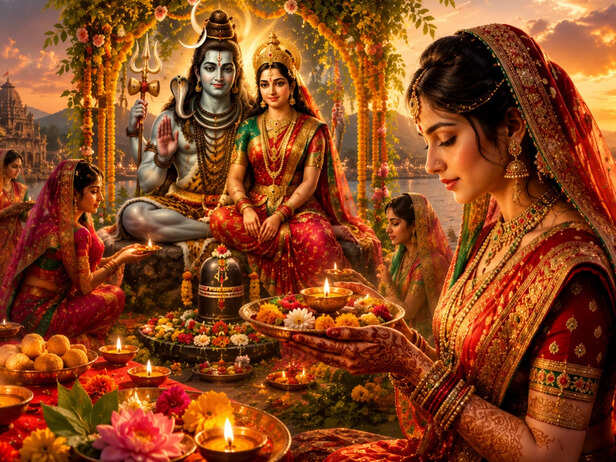
Why would Goddess Parvati leave the comfort of her home and enter a forest to perform a difficult fast? The answer is hidden inside one of the most emotional stories connected with Hartalika Teej. According to Hindu tradition, Parvati Ji had already chosen Lord Shiva in her heart, but her family wanted a different marriage for her. Faced with a choice that could change her entire life, Parvati Ji made a powerful decision. She followed her heart, took refuge in devotion and performed intense penance for Mahadev. Her story became the foundation of the Hartalika Teej Vrat followed by women even today.
The Wish Parvati Kept in Her Heart
The story of Hartalika Teej begins with Goddess Parvati, the daughter of King Himavan, the personification of the Himalayas in Hindu tradition. From a young age, Parvati Ji is said to have wanted Lord Shiva as her husband. Her wish was not based on wealth, power or comfort. She admired Shiva's spiritual nature and accepted him with complete devotion. However, her family had different plans for her future. When Parvati Ji learned that another marriage was being considered, she became deeply troubled. Her story shows how strongly she held on to her spiritual goal.
Her Friends Took Her Away
Parvati Ji's friends saw her sadness and decided to help her. According to the traditional story, they secretly took her to a forest so that she could escape the marriage arrangement and continue her spiritual practice. This part of the story is closely connected with the name Hartalika. It is traditionally explained through the idea of a friend taking Parvati Ji away. Instead of giving up her wish, Parvati Ji used the forest as a place for prayer and penance. Her friends stood beside her during a difficult moment, making their friendship an important part of the story.
The Difficult Penance Begins
In the forest, Parvati Ji began a strict spiritual practice. Traditional accounts describe her giving up food and water and spending her time in deep meditation on Lord Shiva. The purpose was not simply to receive a worldly reward. Her penance represented complete determination and devotion. She wanted to show that her heart was firmly dedicated to Mahadev. This is one reason Hartalika Teej Vrat became associated with faith, commitment and inner strength. The story also reminds devotees that Parvati Ji's journey was not easy. She faced difficulty but remained focused on her spiritual goal.
Shiva Finally Accepted Her
Parvati Ji's devotion eventually received the blessing she had hoped for. According to Hindu tradition, Lord Shiva was pleased with her determination and accepted her as his wife. Their union later became a powerful symbol of Shiva and Shakti, representing the connection between consciousness and divine energy. The story gives Hartalika Teej a deeper meaning. The vrat is not only connected with marriage. It also represents patience, faith and the strength to remain true to one's sincere intentions. Parvati Ji's journey shows that devotion, in the traditional understanding, requires both love and determination.
Why Women Observe Hartalika Teej
Today, Hartalika Teej Vrat is observed mainly by women in many parts of India. Married women traditionally keep the fast and pray to Shiva and Parvati for the well-being of their husbands and a happy married life. Unmarried women may also observe the vrat while praying for a suitable life partner. Customs can differ from region to region and family to family. Some women observe a strict fast, while others follow practices according to their health and family traditions. At the heart of the festival is devotion to Shiva and Parvati and the wish for a harmonious married life.
The Meaning Behind the Vrat
The deeper meaning of Hartalika Teej goes beyond fasting. Parvati Ji's story represents the courage to remain committed to what she sincerely believed was right for her. Her determination is remembered as an example of devotion and patience. The festival also celebrates the sacred relationship between Shiva and Parvati. For many devotees, worshipping them together is a way to seek harmony, love and strength within family life. The vrat therefore carries both a spiritual and emotional meaning. It is a day to pause, pray and remember the values of faith, commitment and respect.
The Blessing Women Seek Today
When women observe Hartalika Teej, they are continuing a tradition connected with the devotion of Parvati Ji. Married women pray for the long life and well-being of their husbands, while unmarried women may pray for a suitable partner. But the festival can also be understood more broadly. It celebrates hope, commitment and the strength to remain patient during difficult moments. Parvati Ji's story reminds devotees that sincere wishes require dedication. Her journey from a troubled daughter to Shiva's chosen companion is remembered as a story of faith. That is why Hartalika Teej remains deeply meaningful for devotees.
Unlock insightful tips and inspiration on personal growth, productivity, and well-being. Stay motivated and updated with the latest at My Life XP