
Why Does Bihar Worship Goddess Kali on Diwali Night?
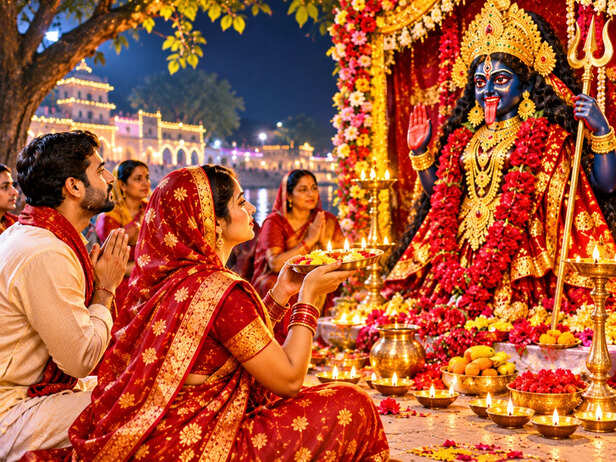
While homes across much of India glow with lamps and families worship Goddess Lakshmi on Diwali night, a different scene unfolds in the Mithila region of Bihar. Here, devotees gather to worship Goddess Kali, and the famous Shyama Mai Temple in Darbhanga becomes a centre of grand celebrations. But why does Mithila follow a different form of worship on the same Amavasya night? The answer goes beyond a regional festival. It is connected to ancient Shakta traditions, the meaning of darkness and the powerful symbolism hidden in Goddess Kali's form.
Mithila Celebrates Diwali With Goddess Kali
In Mithila, Diwali is not limited to lighting lamps and worshipping Goddess Lakshmi. The region also has a strong tradition of worshipping Goddess Kali on Kartik Amavasya. Devotees visit temples and participate in special night-time prayers dedicated to the goddess. Darbhanga's famous Shyama Mai Temple is one of the best-known centres of this tradition. However, this does not mean Lakshmi Puja is absent from Mithila. Both forms of worship are part of the region's Diwali celebrations, with Kali Puja receiving special attention.
Why Is Goddess Kali Worshipped on Amavasya?
There is a deeper religious connection between Goddess Kali and the night of Diwali. Kali is associated with the word Kaal, which can refer to time and death. In Shakta philosophy, she represents the divine power that exists beyond time and the cycle of creation and destruction. Kartik Amavasya is the darkest night of the lunar month, making it an important occasion for Kali worship. For devotees, praying to the goddess on this night is connected with seeking strength, protection and freedom from ignorance.
The Hidden Meaning Behind Kali's Appearance
Every element of Goddess Kali's appearance has a symbolic interpretation. The sword represents the power to cut through ignorance, while the severed head is often understood as a symbol of the destruction of ego. Her garland of severed heads is interpreted in some traditions as representing letters, knowledge and the cycle of creation. She is also depicted standing over Lord Shiva. This image is commonly understood as a reminder that divine energy and consciousness are connected. Her fierce appearance is therefore not simply a symbol of destruction but also of liberation and spiritual power.
Why Is Shyama Mai Temple So Special?
If you want to understand Mithila's connection with Goddess Kali, the Shyama Mai Temple in Darbhanga deserves special attention. The temple was built in 1933 by Maharaja Kameshwar Singh on the cremation site of his father, Maharaja Rameshwar Singh. The former king was known for his interest in Tantra and spiritual practices. The temple is particularly unusual because it stands on a royal cremation ground. Both Vedic and Tantric methods of worship are followed here, making it an important religious centre in the region.
The Ancient Shakta Tradition of Mithila
Mithila has a strong association with Shakta traditions, in which Goddess Shakti is worshipped as the supreme divine power. Kali is one of the fierce forms of this divine energy. The region's religious practices include both Vedic rituals and Tantric traditions, particularly at important temples such as Shyama Mai. This is why Kali Puja holds a special place in Mithila's Diwali celebrations. The festival is not just about the victory of light over darkness; for devotees, it is also a night to remember the power of the divine feminine.
The Diwali Tradition That Makes Mithila Different
Diwali in Mithila carries a beautiful combination of traditions. While lamps are lit and Goddess Lakshmi is worshipped, devotees also turn to Goddess Kali on the night of Kartik Amavasya. The story of Shyama Mai Temple adds another layer to this celebration, with its unusual location on a royal cremation site and its connection to Maharaja Rameshwar Singh. What makes this tradition fascinating is the way devotion, philosophy and regional culture come together on one night. So, the next time you think of Bihar's Diwali, remember that behind its glowing lamps lies a powerful tradition of Maa Kali's worship.
Unlock insightful tips and inspiration on personal growth, productivity, and well-being. Stay motivated and updated with the latest at My Life XP.