
Why Does Lord Vishnu Marry Tulsi Every Year?
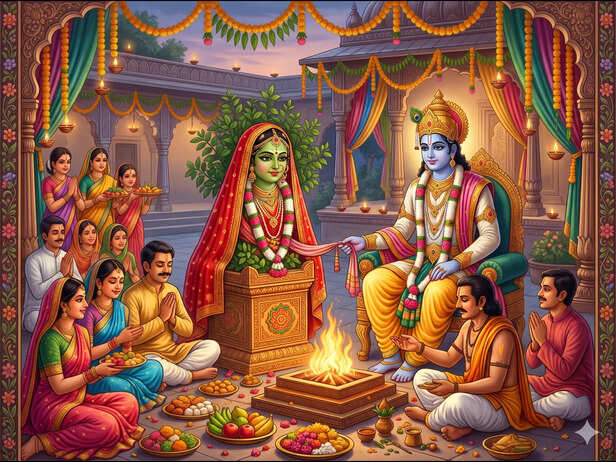
Why does Lord Vishnu marry Tulsi every year, and why is the Shaligram form chosen for this sacred wedding? Behind this beautiful ritual lies a story of devotion, a divine promise and a tradition that marks the beginning of the Hindu wedding season. Tulsi Vivah is not simply a symbolic marriage ceremony. For devotees, it is a reminder that sincere love and devotion hold a special place in the relationship between God and His devotees.
Why Does Vishnu Marry Tulsi?
According to Hindu tradition, Lord Vishnu marries Tulsi in the form of Shaligram on Kartik Shukla Ekadashi. The ritual is connected to the end of Chaturmas, the four-month period during which Vishnu is believed to rest. His awakening is celebrated as Dev Uthani Ekadashi, after which weddings and other auspicious ceremonies traditionally begin. Tulsi Vivah is performed to mark this transition and seek divine blessings for the year ahead.
The Promise Behind Tulsi's Devotion
According to a popular devotional belief, Tulsi was a deeply devoted soul associated with Goloka, the divine abode of Lord Krishna. Her love and devotion held a special place in the Lord's heart. It is believed that Vishnu had promised to marry her, and Tulsi Vivah fulfils that divine promise. This is why devotees see the ceremony as more than a yearly ritual. It represents a bond built on faith, devotion and a promise that is never forgotten.
Why Is the Wedding Performed With Shaligram?
One question often comes up: if Tulsi is so closely connected with Lord Vishnu, why is the wedding performed with Shaligram? In Hindu worship, the Shaligram is regarded as a sacred form of Lord Vishnu. This is why Tulsi Vivah traditionally takes place between the Tulsi plant and Shaligram, rather than using an ordinary image of the deity. Tulsi is also known as Vishnu Vallabha, meaning the beloved of Vishnu, because of her special place in Vaishnava devotion.
How Tulsi Is Dressed as a Bride
On Tulsi Vivah, devotees prepare the Tulsi plant as they would a bride. After bathing and cleaning the plant, they drape it with a red, yellow or green chunari. Haldi, flowers, ornaments and other traditional decorations complete the bridal look. Shaligram is placed nearby as the groom, and the ceremony is performed with prayers and traditional wedding rituals. The home becomes a place of celebration, devotion and festive warmth.
The Sacred Meaning of Kanyadaan
One of the most meaningful parts of Tulsi Vivah is Kanyadaan. During the ceremony, devotees symbolically offer Tulsi's hand in marriage to Lord Vishnu. According to religious belief, people who perform this ritual with faith receive the spiritual merit of Kanyadaan. It is especially meaningful for families who do not have a daughter, as they can participate in this sacred tradition and experience the joy of performing the symbolic wedding.
What Blessings Do Devotees Seek?
Devotees believe that performing Tulsi Vivah with sincerity brings happiness, prosperity, good fortune and the blessings of Goddess Lakshmi and Lord Vishnu into the home. Some families also pray for harmony in marriage and well-being among loved ones. These are traditional religious beliefs rather than guaranteed outcomes. For many households, the ceremony is also a way to bring family members together and pass devotional customs from one generation to the next.
Tulsi's Love Is the Heart of the Ritual
The deeper message of Tulsi Vivah lies in the devotion associated with Tulsi. The story reminds devotees that the relationship between God and a true follower is not measured by wealth, status or grand offerings. It is remembered through faith and love. The devotional sentiment is beautifully expressed in the words: "Vrinda Sakhi, your love is eternal. Without you, I am incomplete; you are my very life." This is why Tulsi Vivah remains a deeply cherished celebration for devotees.
Unlock insightful tips and inspiration on personal growth, productivity, and well-being. Stay motivated and updated with the latest at My Life XP.