
Why Does Maa Chandraghanta Have a Bell on Her Forehead?
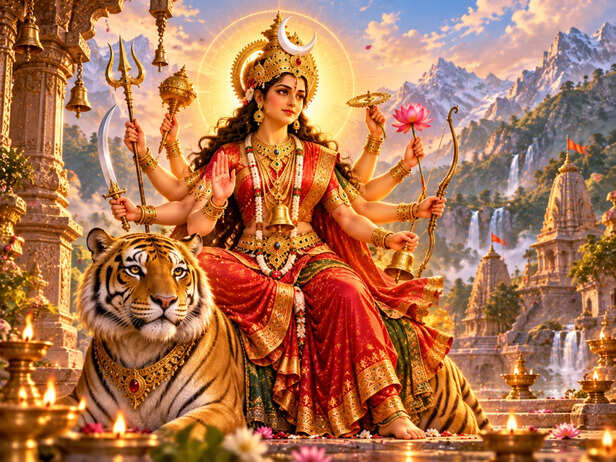
Have you ever looked closely at Maa Chandraghanta's forehead and wondered why the moon there looks like a bell? This small detail carries the meaning behind her name and offers a glimpse into her powerful form. Worshipped as the third form of Maa Durga during Navratri, Chandraghanta represents courage, alertness and protection. But there is an interesting detail many people miss: the symbol on her forehead is traditionally described as a crescent moon shaped like a bell, not simply a separate bell worn as an ornament. Its meaning becomes clearer when we understand the story and symbolism behind this form of the Divine Mother.
The Secret Behind Her Name
The name Chandraghanta comes from two Sanskrit words: Chandra, meaning moon, and Ghanta, meaning bell. In traditional images, the crescent moon on her forehead resembles the shape of a bell, giving the goddess her distinctive name. This is the first detail to understand when exploring Maa Chandraghanta's symbolism. Rather than being merely decorative, the moon identifies her divine form and connects her with the wider traditions surrounding Goddess Parvati and Lord Shiva. The name itself is a reminder that even a small feature in Hindu iconography can carry a deeper religious and cultural meaning.
Why the Moon Matters
The crescent moon is an important symbol in Hindu tradition, especially in images of Lord Shiva, who is often depicted wearing it on his head. Maa Chandraghanta is associated with Goddess Parvati in her married form, and traditional accounts connect her crescent moon with Shiva's divine imagery. The moon also invites reflection on calmness and the mind. Its presence alongside the goddess's powerful appearance creates an interesting contrast: she is ready to protect, yet her expression can remain peaceful. This combination of strength and serenity is central to understanding the spiritual symbolism of Chandraghanta Devi.
The Bell Symbolises Alertness
A temple bell is more than a familiar sound during puja. For many devotees, ringing a bell marks the beginning of worship and helps bring attention to the present moment. The bell-shaped moon in Maa Chandraghanta's name invites a similar reflection: spiritual life begins with awareness. When the mind is distracted by worries, anger or endless thoughts, even a brief moment of prayer can help a person pause and refocus. This is a symbolic interpretation rather than a single explanation shared by every tradition, but it offers a meaningful way to connect Chandraghanta's iconography with everyday spiritual practice.
A Goddess Who Represents Courage
Maa Chandraghanta is often depicted with ten hands carrying different objects and weapons, riding a tiger or lion. These features present her as a powerful protective form of the Divine Mother. Her appearance is not meant to suggest that strength must always look frightening. Instead, the goddess brings together courage, readiness and composure. During Navratri, devotees worship Chandraghanta on the third day and reflect on these qualities. Her image can remind us that courage is not the absence of fear; it is the ability to respond thoughtfully when a difficult situation demands strength.
Why Her Calm Face Is Important
Look at Maa Chandraghanta's traditional depictions and notice the contrast between her weapons and her composed face. She is prepared to protect, yet she does not always appear overwhelmed by anger. This balance carries a relatable lesson for modern life. During arguments, stressful workdays or difficult decisions, reacting immediately can make a problem harder to solve. Calmness allows us to recognise what is happening before choosing our next step. The goddess's form can therefore be understood as a reminder that real strength involves both action and self-control, not simply the ability to confront a challenge.
What Her Symbol Teaches Us Today
The symbolism of Maa Chandraghanta can be brought into daily life through simple practices. Before an important conversation or a stressful task, pause for a few moments and steady your breathing. If prayer is part of your routine, offer a sincere prayer to the goddess and reflect on the qualities you want to develop. Ask yourself whether the situation needs courage, patience or a calmer response. These steps are not guaranteed remedies for life's problems; they are practical ways to use spiritual reflection to build awareness. The deeper message is to face challenges with a clear mind and a steady heart.
The Deeper Meaning of Chandraghanta
The bell-shaped crescent is only one part of Maa Chandraghanta's powerful form, but it opens the door to a wider understanding of her symbolism. Her name connects the moon with the bell, while her warrior-like appearance expresses courage and protection. Together, these features present a goddess who is both composed and prepared to act. For devotees, this can be a reminder to remain aware, protect what matters and avoid letting fear control every decision. The value of the symbol lies not only in what it looks like, but also in the reflection it inspires.
Unlock insightful tips and inspiration on personal growth, productivity, and well-being. Stay motivated and updated with the latest at My Life XP