
Why Does Maa Durga Change From Kalaratri to Mahagauri?
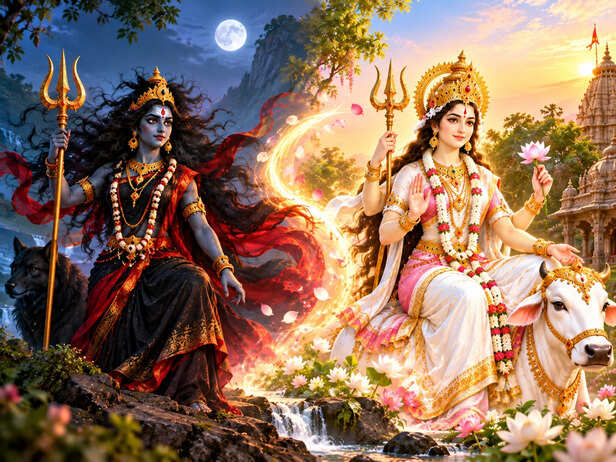
During Navratri, every day brings a different form of Maa Durga, each carrying its own meaning. But the transition from Maa Kalaratri on the seventh day to Maa Mahagauri on the eighth can feel especially striking. One form appears fierce and intense, while the other is calm, radiant and peaceful.
Is this sudden change simply a difference in appearance, or does it carry a deeper message? In Hindu tradition, the two forms represent different aspects of divine power. Together, they remind devotees that confronting darkness and finding peace are both important parts of spiritual growth.
Maa Kalaratri Represents Fierce Protection
Maa Kalaratri is worshipped on the seventh day of Navratri and is known for her fierce appearance. Her dark complexion, dishevelled hair and powerful presence distinguish her from the Goddess’s gentler forms. Despite her frightening appearance, devotees regard her as a protective mother who destroys evil and removes fear. Her form teaches an important lesson: divine power does not always appear gentle. Sometimes, it is represented through courage, strength and the determination to confront what threatens peace.
Why Is Her Appearance So Fierce?
The name Kalaratri is commonly understood through its association with darkness and the night. Her fierce form symbolises the power that confronts harmful forces rather than avoiding them. For devotees, she represents the courage to face difficult situations, inner fears and destructive tendencies. Her appearance is not meant to suggest that darkness is stronger than goodness. Instead, it conveys that even the most frightening challenges can be confronted through determination, faith and divine protection.
Maa Mahagauri Brings a Peaceful Contrast
On the eighth day of Navratri, devotees worship Maa Mahagauri, whose name is associated with great radiance and fairness. She is commonly depicted wearing white and riding a bull, with a calm and compassionate expression. Her appearance contrasts sharply with Maa Kalaratri’s fierce form. In devotional tradition, Mahagauri represents purity, peace and renewal. This contrast makes the sequence meaningful: after the forceful destruction of negativity comes the possibility of calmness, clarity and a fresh beginning.
The Change Has a Deeper Meaning
The transition from Kalaratri to Mahagauri is not generally understood as the Goddess literally changing overnight in a historical event. Rather, it is part of Navratri’s devotional sequence, in which different forms reveal different qualities of divine power. Kalaratri represents the strength to confront darkness, while Mahagauri represents purity and tranquillity. Together, they offer a symbolic journey from fear towards peace. The message is powerful: facing difficult truths can be an important step towards finding clarity and balance.
What Connects the Two Forms?
Maa Kalaratri and Maa Mahagauri are the seventh and eighth forms of Navadurga, the nine manifestations worshipped during Navratri. Their placement connects them within a larger spiritual sequence rather than treating them as unrelated goddesses. Each form highlights a particular quality, from courage and devotion to wisdom and compassion. Their contrasting appearances show that strength and gentleness are not opposites. Both can serve a purpose, depending on what a situation demands.
What Can Devotees Learn From This Change?
The transition from Maa Kalaratri to Maa Mahagauri can inspire a practical lesson in everyday life. When facing a difficult situation, people may first need courage to acknowledge the problem and take action. Once the challenge has been addressed, patience and calm thinking can help them rebuild. Devotees can reflect on these qualities during prayer, meditation or daily decisions. The lesson is not to fear every difficulty, but to meet challenges with strength and then make space for peace.
Why Navratri Celebrates Both Strength and Peace
Navratri honours the Goddess through nine forms, each carrying distinct devotional significance. The movement from Kalaratri to Mahagauri highlights a meaningful contrast between fierce protection and peaceful purity. For devotees, both forms deserve reverence because each represents a different expression of divine power. The change in worship from one day to the next is therefore not simply about a new appearance. It invites people to reflect on courage, transformation and the peace they hope to cultivate in their lives.
The Meaning Behind the Change
Maa Kalaratri and Maa Mahagauri may look dramatically different, but their spiritual symbolism connects them. One represents the courage to confront darkness, while the other embodies purity and peace. Their sequence during Navratri reminds devotees that strength and serenity can work together.
The deeper message is simple: sometimes, we must face what frightens us before we can move towards a calmer and clearer life. That is why the transition from Maa Kalaratri to Maa Mahagauri remains such a meaningful part of Navratri worship.
Unlock insightful tips and inspiration on personal growth, productivity, and well-being. Stay motivated and updated with the latest at My Life XP.