
Why Does Maa Durga Change Her Vahan Every Year?
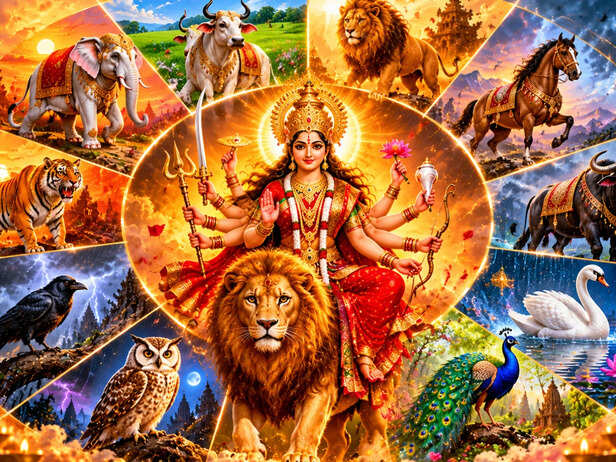
Maa Durga is traditionally shown riding a lion, but during Durga Puja, an interesting Bengali tradition speaks of a different journey. According to this belief, when the Goddess comes to Earth for the festival, her vahan, or vehicle, changes from year to year. Elephant, horse, boat and palanquin are traditionally associated with her arrival and departure, and each is believed to carry a symbolic message about the year ahead. In 2026, Maa Durga is traditionally said to arrive on an elephant and depart on a horse, making this year’s Durga Vahan especially interesting for devotees.
Maa Durga Has More Than One Vahan
The lion remains Maa Durga’s iconic companion, but the Durga Puja vahan tradition is different. In Bengali traditions, four vehicles are mainly associated with her festival journey: elephant, horse, boat and palanquin. The vehicle is linked to the weekday on which Saptami or Dashami falls. Each vahan is then given a symbolic interpretation for the year ahead. These beliefs are part of regional religious and cultural traditions rather than established predictions about real-world events. The fascinating part is that the same calculation is repeated every year, creating a different symbolic message for devotees during Durga Puja.
The Elephant Arrival Brings Hope
In 2026, Maa Durga is traditionally expected to arrive on an elephant. This is considered an auspicious vahan in the traditional interpretation. The elephant is associated with abundant rainfall, fertile land and a prosperous harvest. The belief comes from the traditional calculation that links the beginning of the festival with the Goddess’s vehicle. Since Shardiya Navratri begins on Sunday, October 11, 2026, the traditional system assigns the elephant as the arrival vehicle. This symbolism is often understood as a hopeful message of abundance and wellbeing, although it should be viewed as religious tradition rather than a literal forecast of weather or crops.
Why the Horse Has a Different Message
The horse carries a very different meaning in the Durga Vahan tradition. When the relevant festival day falls on a Tuesday or Saturday, Maa Durga is traditionally associated with the horse. Traditional texts and regional interpretations connect this vahan with movement, unrest and conflict. In some explanations, it represents changes in authority or instability. This does not mean that war or disaster will definitely happen. Instead, the horse is treated as a symbolic omen within the religious tradition. In 2026, Vijayadashami falls on Tuesday, October 20, which is why Maa Durga’s departure is traditionally associated with the horse.
The Boat Carries a Double Meaning
The boat is another important vehicle in the Durga Puja tradition. It is traditionally associated with Wednesday and carries a more complex interpretation than simply being good or bad. Traditional sources connect the boat with water, agricultural growth and prosperity. At the same time, abundant water can also be associated with concerns such as flooding. This makes the boat a fascinating symbol because it represents both nourishment and nature’s unpredictable power. Rather than treating this as a definite prediction, devotees can understand the symbolism as a reminder of how deeply traditional Indian festivals connect spirituality, agriculture, rainfall and human life.
Why the Palanquin Feels Ominous
The palanquin, or dola, is traditionally connected with Thursday and Friday. Among the four major Durga Puja vahan traditions, it is generally described as the least auspicious. Some traditional interpretations associate the palanquin with instability, illness and loss of life. These ideas come from religious texts and regional omen traditions rather than scientific evidence. That distinction matters because such beliefs are often shared as predictions on social media without explaining their cultural background. The deeper value of the tradition lies in understanding how earlier communities used symbolic stories and festival customs to express their hopes, fears and observations about the world around them.
What Maa Durga’s 2026 Journey Means
The 2026 Durga Vahan story becomes especially interesting when both journeys are viewed together. Maa Durga is traditionally expected to arrive on an elephant and depart on a horse. The elephant is associated with rainfall, abundance and prosperity, while the horse carries themes of movement, unrest and change. But these meanings should not be treated as guaranteed predictions about society, weather or world events. They are traditional interpretations attached to specific festival days. For devotees, the symbolism can instead become a way to reflect on abundance, responsibility, courage and the changes that life brings with every new year.
The Real Message Behind the Vahan
The mystery of Maa Durga’s vehicle is fascinating, but the deeper message of Navratri goes beyond predicting whether a year will be lucky or difficult. The elephant, horse, boat and palanquin are part of a cultural tradition that gives symbolic meaning to the Goddess’s annual journey. In 2026, the elephant arrival can be viewed as a traditional symbol of abundance, while the horse departure represents movement and change. Ultimately, Navratri is a time of devotion, inner strength and renewal. The vahan may change every year, but the central message remains constant: faith gives people the courage to face whatever comes next.
Unlock insightful tips and inspiration on personal growth, productivity, and well-being. Stay motivated and updated with the latest at My Life XP.