
Why Does Odisha’s Maa Manikeswari Have Such a Unique Form?
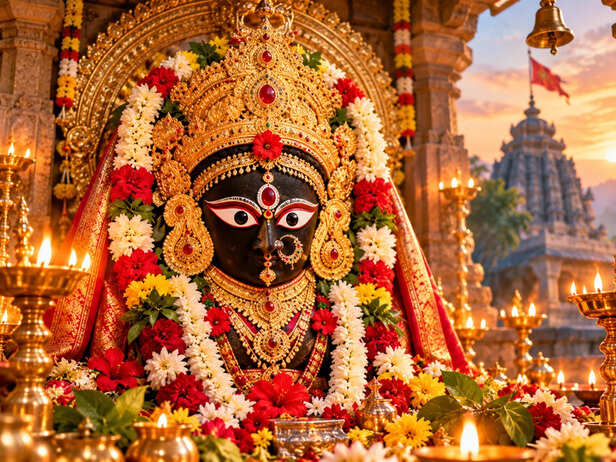
In Odisha’s Kalahandi district, there is a goddess whose sacred form looks very different from the familiar images of Hindu goddesses. At the Maa Manikeswari Temple in Bhawanipatna, the deity is represented in a distinctive form that has inspired devotion and curiosity for generations. But the mystery goes beyond her appearance. Local tradition connects the goddess to a royal family, a journey from Chota Nagpur and a remarkable annual procession known as Chhatar Yatra.
The Goddess Who Protects Kalahandi
In Bhawanipatna, the headquarters of Odisha’s Kalahandi district, Maa Manikeswari is worshipped as a powerful guardian goddess. She holds a special place in the region’s religious and cultural life, with devotees seeking her blessings during important festivals and family occasions. Her worship is closely connected with the history of the former Kalahandi royal family. Unlike the familiar images of goddesses seen in many temples, Manikeswari’s distinctive iconography and annual rituals make her worship particularly fascinating. For the people of Kalahandi, she is not simply a deity from an old story but a living symbol of faith and regional identity.
Did Her Story Begin With a Royal Family?
According to one traditional account, Maa Manikeswari’s connection with Kalahandi grew through the region’s ruling dynasty. Stories link the goddess to the Naga royal lineage and to King Ramachandra Deo, who is credited in regional accounts with establishing her worship at the royal seat. Some versions connect her arrival with a family relationship beyond Kalahandi, although accounts of her origins differ. These stories are part of the region’s historical memory, but the exact details of her journey should not be treated as settled history without further evidence. What remains clear is the goddess’s long-standing association with the royal house and the people it ruled.
Why Does the Goddess Look So Different?
One of the most intriguing aspects of Maa Manikeswari worship is the deity’s distinctive representation, which differs from the familiar full-bodied images of many Hindu goddesses. Descriptions of her iconography connect her with fierce Shakta traditions, while some accounts compare aspects of her form with Chhinnamasta. Her representation should be understood within the particular ritual and religious practices of the temple rather than judged by the standards of more familiar images. For devotees, the sacred form carries meaning through tradition, worship and the goddess’s protective role. Its uniqueness is one reason Manikeswari continues to attract curiosity beyond Odisha.
The Temple’s Royal Connection
Although the goddess’s worship has older roots, the present temple at Bhawanipatna has a more recent building history than the medieval legends might suggest. Regional accounts identify King Fatenarayan Deo with an earlier temple built in the nineteenth century, while the larger present structure is associated with King Brajamohan Deo in the twentieth century. The temple’s connection with the former royal establishment helped strengthen its importance as a major centre of worship. This distinction between the age of a religious tradition and the date of a particular temple building is important when exploring the history of ancient shrines.
Chhatar Yatra: The Festival That Draws Crowds
The most celebrated event associated with Maa Manikeswari is Chhatar Yatra, held during the Durga Puja period. The word chhatar refers to the sacred umbrella or emblem representing the goddess during the procession. The ceremonial journey, accompanied by traditional music and large gatherings of devotees, is a major expression of Kalahandi’s cultural identity. The ritual itinerary includes Jenakhal, a site outside Bhawanipatna, before the sacred emblem returns towards the temple. The festival brings together religious devotion, regional customs and community participation, making it much more than an ordinary temple procession.
The Rituals Behind the Mystery
Chhatar Yatra includes traditional ceremonies whose details are not always publicly shared, adding to the festival’s air of mystery. Ghumura music, devotional chants and the movement of the sacred umbrella are among its recognisable features. Historical accounts also document animal sacrifice as part of certain traditional observances. These practices should be described accurately and respectfully as part of the festival’s history, rather than presented as supernatural proof or sensational spectacle. The rituals reflect a distinctive blend of Shakta worship and local cultural traditions that have developed over generations in Kalahandi.
Why Maa Manikeswari Still Matters
For many devotees, Maa Manikeswari represents protection, faith and a lasting connection with their homeland. Her temple and annual festival preserve stories that link royal history with the living traditions of local communities. The goddess’s distinctive form may first draw visitors’ attention, but the deeper story lies in the people who continue to worship her and pass their customs to the next generation. Exploring Manikeswari’s history also offers a wider lesson: India’s sacred traditions are diverse, and their meanings often become clearer when we listen to the communities that have preserved them for centuries.
Unlock insightful tips and inspiration on personal growth, productivity, and well-being. Stay motivated and updated with the latest at My Life XP