As the celebrations of Navratri and Dussehra reach their grand conclusion, one message echoes across India:
no matter how powerful evil becomes, it cannot defeat righteousness forever.Known as Vijayadashami or Dussehra, this festival marks the victory of good over evil. The word
Vijayadashami combines
vijaya, meaning victory, and
dashami, referring to the tenth lunar day on which the festival is observed.
Why Does Vijayadashami Hold Such Deep Significance?
![Vijayadashami meaning]()
Vijayadashami meaning
Image credit : AI
However, Vijayadashami is more than a date on the Hindu calendar. It brings together different traditions, legends, and cultural celebrations that share a common belief: arrogance, injustice, and cruelty may appear powerful for a time, but truth and righteousness ultimately prevail.
Two of the festival’s best-known stories explain why this day holds such a special place in Hindu tradition.
1. Lord Rama and Ravana: The Victory of Dharma Over Ego
One of the most widely known reasons for celebrating Dussehra is Lord Rama’s victory over Ravana, the king of Lanka.
According to the
Ramayana, Ravana was a mighty ruler, a learned scholar, and a devoted worshipper of Lord Shiva. Yet his knowledge and power could not protect him from the consequences of his arrogance and wrongdoing.
The turning point came when Ravana abducted Sita, Lord Rama’s wife, and took her to Lanka. Rama, accompanied by Lakshmana, Hanuman, and an army of allies, began a determined effort to rescue her.
The conflict eventually led to a great battle between Rama and Ravana. Despite Ravana’s extraordinary strength and abilities, Rama emerged victorious and restored the principle of dharma, or righteousness.
This victory is commemorated during Dussehra through the burning of Ravana’s effigies, often accompanied by celebrations and dramatic performances of the
Ramayana.
What does Ravana’s defeat teach us?
Ravana is often remembered as the symbol of evil, but his story also carries a deeper lesson. He possessed knowledge, wealth, power, and remarkable abilities. Yet these qualities could not compensate for his pride and disregard for what was right.His defeat reminds us that intelligence without wisdom, power without responsibility, and ambition without moral limits can lead to destruction.
The real message is not simply that Rama defeated Ravana. It is that ego and injustice cannot replace righteousness, no matter how powerful they appear.2. Maa Durga and Mahishasura: When Divine Power Defeats Arrogance
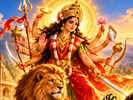
While Lord Rama’s victory is central to Dussehra celebrations in many parts of India, the festival also holds deep significance through the story of Maa Durga and Mahishasura.According to a widely told Hindu mythological tradition, Mahishasura was a powerful demon who gained a boon that made him believe he could not be defeated by a man or a god. Empowered by this protection, he challenged the gods and threatened their authority.Unable to overcome him, the gods united their divine energies to create Maa Durga, a powerful goddess who embodied their collective strength.
Armed with divine weapons and riding a lion, Maa Durga fought Mahishasura in a fierce battle. After a prolonged struggle, she defeated him, restoring balance and protecting the world from his oppression.Her victory is celebrated during Durga Puja and is closely associated with Vijayadashami, especially in eastern India, where devotees bid farewell to Maa Durga through immersion ceremonies.
Why is Maa Durga’s victory so powerful?
The story highlights a truth that remains meaningful across generations: evil may take many forms, but courage, unity, and righteousness can rise to challenge it
.Maa Durga’s victory also represents the power of the divine feminine. She is not merely a figure of beauty or compassion; she is also a symbol of strength, protection, and the courage to confront injustice.Her battle with Mahishasura reminds devotees that when destructive forces threaten harmony, the power to resist them must also awaken.
3. Two Stories, One Message: Why Are Both Victories Connected to Vijayadashami?
At first glance, the stories of Rama and Ravana and Maa Durga and Mahishasura may seem entirely different. One centres on a prince rescuing his wife, while the other describes a goddess fighting a powerful demon.Yet both stories lead to the same central idea: evil is not defined by strength alone, but by the misuse of power and the refusal to respect righteousness.Ravana’s downfall is linked to his pride and his actions against Sita. Mahishasura’s defeat follows his oppressive use of power against the gods and the cosmic order.
In both narratives, victory comes when destructive forces are confronted rather than allowed to dominate.These traditions also explain why Vijayadashami is celebrated in different ways across India. In many northern and western regions, Dussehra is associated with Rama’s victory and the burning of Ravana’s effigy. In Bengal and several eastern regions, Vijayadashami marks the emotional farewell to Maa Durga after Durga Puja.
The rituals may differ, but the underlying message remains remarkably similar: righteousness deserves to be defended, and no form of arrogance or injustice should be considered invincible.
4. The Ten Heads of Ravana: A Reminder to Conquer Our Inner Demons
![Ravana’s Ten Inner Demons]()
Ravana’s Ten Inner Demons
Image credit : AI
There is another reason Ravana’s effigy has become such a powerful symbol during Dussehra.
In popular interpretations, Ravana’s ten heads are associated with negative human tendencies such as anger, pride, greed, jealousy, attachment, and uncontrolled desire. Interpretations differ across traditions, but the imagery offers a way to reflect on the struggles within ourselves.The annual burning of Ravana’s effigy can therefore be understood as more than a dramatic public celebration. It can serve as a reminder to recognise and overcome the habits that harm our relationships, cloud our judgement, and distance us from our values.
After all, it is easy to identify evil in a mythological villain. It can be much harder to acknowledge the anger, dishonesty, or ego that appears in our own everyday decisions.This gives Dussehra a personal meaning: the victory of good begins not only in epic battles, but also in the choices we make each day.
5. What Does Vijayadashami Mean in Today’s World?
The stories behind Vijayadashami may come from ancient Hindu traditions, but their lessons continue to resonate in modern life.Today, the struggle between good and evil does not always involve a battlefield, divine weapons, or a ten-headed king. It may appear in everyday situations: standing up against bullying, refusing to participate in dishonesty, speaking up when someone is treated unfairly, or choosing integrity when taking a shortcut seems easier.
The festival invites us to ask ourselves a few important questions:
- Are we allowing pride to damage our relationships?
- Do we use our influence responsibly?
- Can we stand up for what is right, even when doing so is difficult?
- Are we willing to confront our own mistakes instead of blaming others?
Vijayadashami does not suggest that goodness makes life free from struggle. Rather, its stories remind us that doing what is right may require patience, courage, and sacrifice.
The victory of good is not always immediate, but the festival encourages us to keep choosing the path of righteousness.
The Deeper Meaning of Vijayadashami: A Victory We Must Choose Every Day
The burning of Ravana’s effigy, the celebration of Lord Rama’s return, and the farewell to Maa Durga may look different from one region to another. Yet each tradition carries a powerful message about the triumph of righteousness over destructive forces.The stories of Rama and Durga remind us that strength without wisdom can become dangerous, pride can lead to downfall, and injustice must eventually be challenged. They also encourage us to recognise that the struggle between good and evil is not limited to mythology.
It continues in our decisions, our behaviour, and the way we treat others.Perhaps the most meaningful way to celebrate Vijayadashami is not simply to watch evil burn in an effigy, but to identify what needs to change within ourselves.Because the true victory of good begins when we choose honesty over deception, compassion over cruelty, and courage over fear—one decision at a time.
Unlock insightful tips and inspiration on personal growth, productivity, and well-being. Stay motivated and updated with the latest at
My Life XP.