
Why Does Vishnu Hold a Conch and a Discus? The Truth
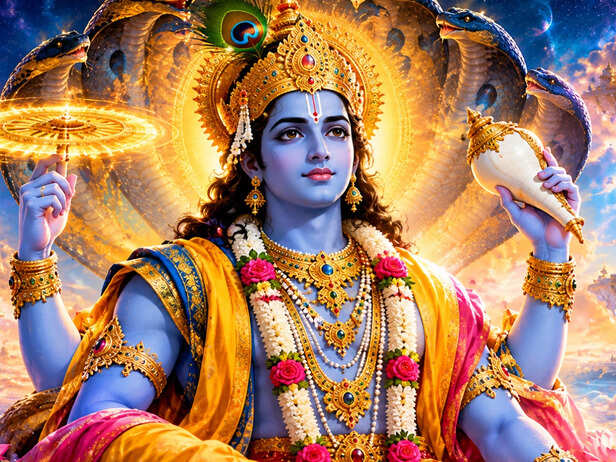
Look closely at an image of Lord Vishnu and two objects immediately stand out: a conch shell and a spinning discus. One produces a powerful sound, while the other represents a force capable of cutting through obstacles. Why does the preserver of the universe carry both? In Hindu tradition, these objects are not merely weapons or royal symbols. The Shankha and Sudarshan Chakra carry deeper meanings connected to creation, time, protection and the balance between peace and the power to restore order.
The Shankha: A Sound That Awakens the Universe
The Shankha, or conch shell, is one of Lord Vishnu’s best-known symbols. In many Hindu traditions, its sound is associated with the sacred syllable Om and the beginning of auspicious activities. Vishnu’s conch is commonly identified as Panchajanya. Its sound can be understood as a call to awaken, leave confusion behind and return to what is right. During Hindu worship, conch blowing often marks an important ritual and creates a devotional atmosphere. Its meaning goes beyond sound: the Shankha reminds devotees that awareness and clarity can be the first steps towards restoring peace.
The Sudarshan Chakra: A Symbol of Time and Order
The Sudarshan Chakra is not simply a discus used in divine battles. Its name is commonly understood through the Sanskrit words su, meaning good or proper, and darshan, meaning sight or vision. The Chakra is associated with divine insight, protection and the power to restore order when righteousness is threatened. Its circular form is also connected with the cycles of time and existence. In Hindu stories, Vishnu uses the Sudarshan Chakra to protect devotees and uphold dharma. Its deeper lesson is that seeing a problem clearly is not always enough; sometimes, the courage to act is also needed.
Why Does Vishnu Carry Both?
The conch and discus represent two different but complementary ideas. The Shankha announces, awakens and calls attention to the sacred, while the Sudarshan Chakra represents divine action and the protection of dharma. Together, they express the belief that preserving balance requires both awareness and action. In Hindu tradition, Lord Vishnu maintains cosmic order whenever it is threatened. His sacred objects make this role visible through symbols that devotees can recognise and reflect upon. The message is simple: understanding what is right matters, but protecting what is right also requires thoughtful action.
What Vishnu’s Other Two Objects Reveal
Lord Vishnu is commonly depicted with four arms, holding the Shankha, Sudarshan Chakra, lotus and Gada, or mace. Each object adds another layer to his symbolism. The lotus is associated with purity and spiritual growth, while the Gada, often called Kaumodaki, represents strength and the power to uphold dharma. Alongside the conch and discus, these objects present a fuller picture of Vishnu’s role. His symbolism combines awareness, discernment, purity and strength rather than relying on power alone. The four objects also give devotees different qualities to reflect on in their own lives.
The Everyday Lesson Behind These Sacred Symbols
The meaning of Vishnu’s sacred symbols can also guide everyday choices. The Shankha encourages you to pause, listen and become aware before reacting. The Sudarshan Chakra reminds you to examine a situation carefully and take the right action when something needs to change. The lotus offers a lesson in maintaining integrity amid difficulties, while the Gada represents the strength to stand by your values. These are spiritual interpretations rather than rules for every situation, but they offer a practical way to connect Hindu symbolism with daily life. Their shared message is to seek balance, act with purpose and choose dharma over confusion.
Unlock insightful tips and inspiration on personal growth, productivity, and well-being. Stay motivated and updated with the latest at My Life XP.