
Why Is This Tantric Form of Ganesha So Feared, Yet So Worshipped?
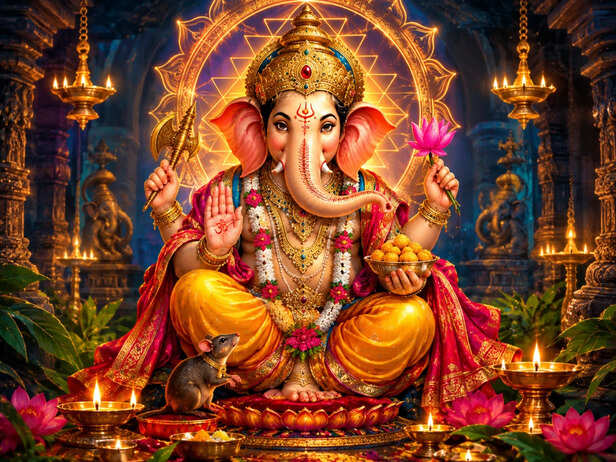
There is something very familiar about Hindu rituals. Whether it is a wedding, a housewarming, a festival or a special puja, Lord Ganesha is often remembered first. You may have heard elders say, "First pray to Ganesha, then begin the work." For many people, this has simply become part of tradition. But there is a reason behind it. In Hindu ritual traditions, Ganesha is seen as the one who helps us make a good and proper beginning. His worship is not only about asking for problems to go away. It is also about preparing ourselves before starting something important.
Why Is Ganesha Worshipped First?
Think about starting an important task when your mind is full of worries and distractions. Even a simple job can become difficult. Ritual traditions place importance on preparing the mind in the same way. Before deeper worship begins, devotees take a moment to focus and set aside everyday distractions. Ganesha is remembered at this point because he is seen as the guardian of beginnings and the one who helps clear the path. His first place in the ritual reminds the devotee to start with a calm mind and clear purpose.
What Does Vighneshwara Really Mean?
Ganesha is often called Vighneshwara. "Vighna" means an obstacle or something that comes in the way. "Ishwara" means lord or one who has authority. So, Vighneshwara can be understood as the Lord of obstacles. This meaning is slightly different from simply saying that Ganesha removes every problem. The idea is also that we should understand our obstacles. Sometimes the problem may be outside us, but sometimes it can come from our own fear, confusion, poor planning or lack of focus. So when people pray to Ganesha, they are not only asking for an easy path. They can also be asking for the wisdom to deal with whatever comes in the way.
Ganesha's Role Is More Than Removing Problems
Ganesha's place at the beginning of a ritual can be understood in a very simple way. First, devotees pray that unnecessary difficulties do not disturb their work. Second, his invocation tells everyone that the ritual is about to begin. It brings a sense of order and focus. Third, it gives people a chance to look at themselves. Are they doing this with the right intention? Are they focused? Are they prepared? This is why his worship can be seen as an important part of preparation.
Why Does Ritual Order Matter?
In Agamic and Tantric traditions, rituals are usually performed in a particular order. Each step has a purpose. The beginning matters because it prepares the person for what comes later. Ganesha's place at the start can therefore be understood as the first step toward creating a focused and respectful space for worship. It is not just about following a rule. It is about understanding why the ritual begins in a particular way.
What About Ganesha and Tantra?
Tantra is often misunderstood. Many people hear the word and immediately think of mysterious or powerful practices. In reality, Tantra and Agama include many different traditions, teachings and methods of worship. Some practices involve specific mantras, meditation, visualisation and other forms of ritual. These practices can be connected to particular lineages and teachers. They are not something that should be picked randomly from the internet or mixed together simply because they sound powerful. Traditional practice places importance on proper learning, discipline and guidance.
What Can We Learn From This Tradition?
Perhaps the simplest lesson is to prepare before you begin. Before taking up something important, stop for a moment. Ask yourself what you really want, whether you are ready and whether your intentions are clear. This is one way to understand Ganesha's role beyond the popular idea of simply removing obstacles. Sometimes, we do not need every problem to disappear. We need a clearer mind to face it.
Lord Ganesha being worshipped first is not just an old custom followed without a reason. His place at the beginning of a ritual carries an important message about preparation, focus and clear intention. The name Vighneshwara also gives this idea more depth. Obstacles are not always something we can simply remove. Sometimes, we need to understand them and learn how to deal with them. That may be the most practical lesson behind Ganesha's place at the beginning of worship: before you ask for the path to become easier, make sure you are ready to walk it.
Unlock insightful tips and inspiration on personal growth, productivity, and well-being. Stay motivated and updated with the latest at My Life XP.